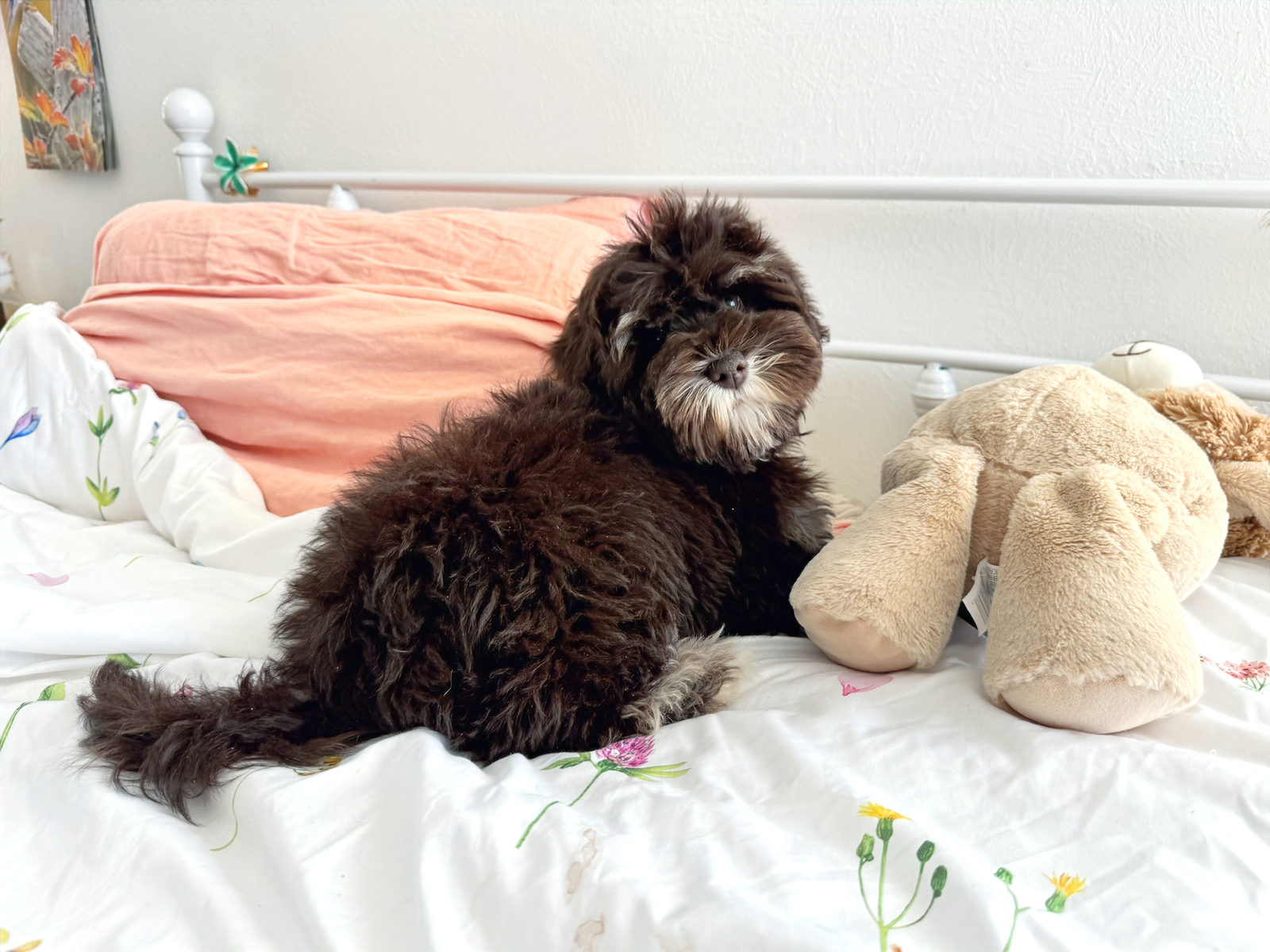
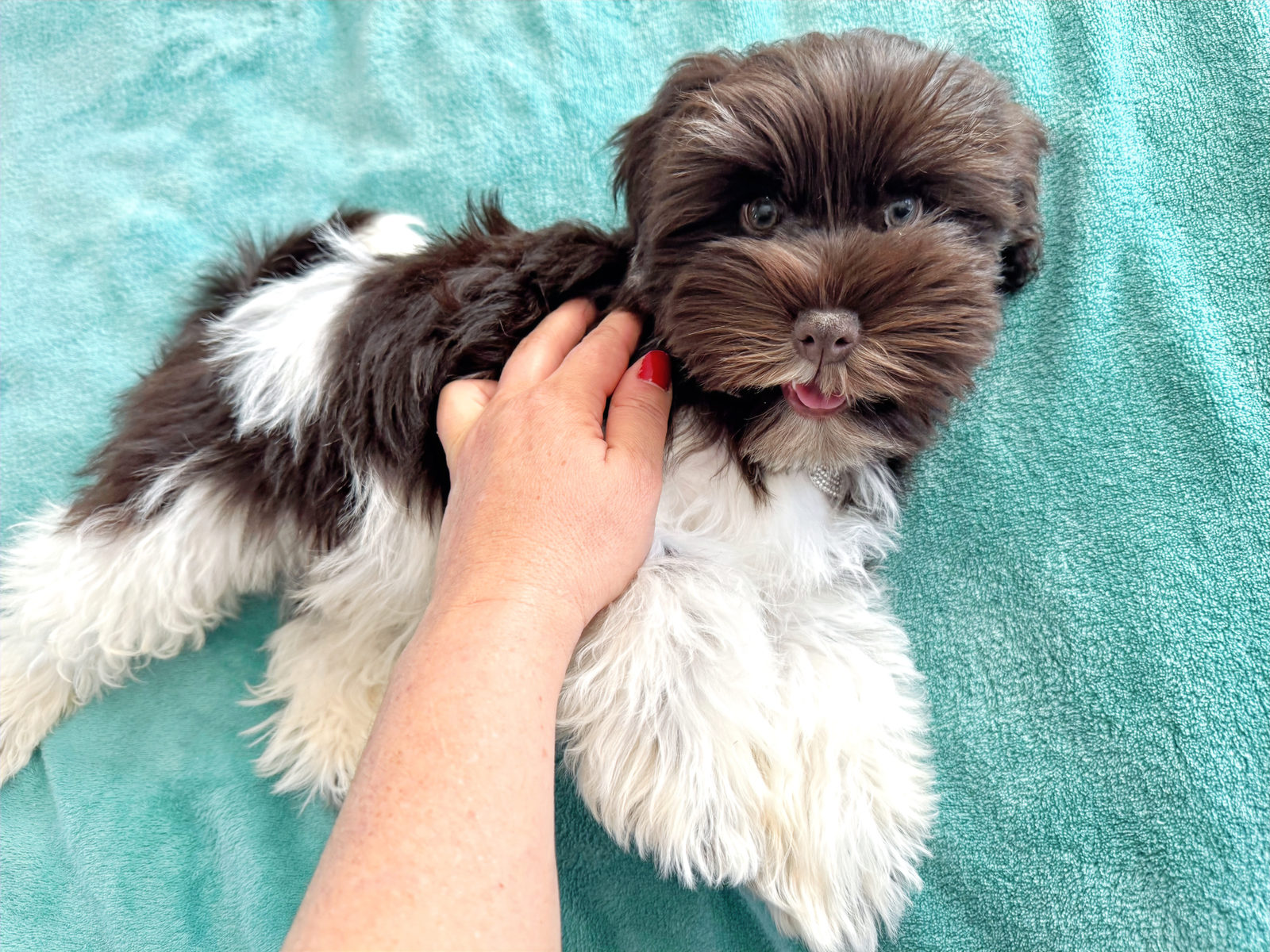
Sheepadoodles and Aussiedoodles both come from herding-dog ancestry crossed with a Poodle, which means they share more DNA-driven traits with each other than either does with a Goldendoodle or Labradoodle. That shared herding background also means a few genuinely important differences worth understanding before you choose.
Because both breeds carry herding instincts, some comparisons online treat them as nearly interchangeable. In practice, the specific herding breed behind each cross — and the genetic baggage that comes with it — makes a real, practical difference for buyers, not just a cosmetic one.
Sheepadoodle vs. Aussiedoodle: At a Glance
| Category | Sheepadoodle | Aussiedoodle |
|---|---|---|
| Non-Poodle Parent | Old English Sheepdog | Australian Shepherd |
| Standard Size (adult) | 55–85+ lbs | 45–70 lbs |
| Mini Size (adult) | 25–45 lbs | 15–35 lbs |
| Typical Lifespan | 10–16 years (by size) | 10–15 years |
| Energy Level | High, herding-instinct driven | Very high, strong prey drive |
| Merle Coloring | Rare | Common, defining trait |
| MDR1 Drug Sensitivity Risk | Not applicable | Real, testable risk |
Energy Level & Temperament
Both breeds are intelligent and can show independence during training, but Aussiedoodles generally edge out Sheepadoodles on raw energy and prey drive, reflecting the Australian Shepherd’s working ranch-dog background. Sheepadoodles are often described as more easygoing once past puppyhood, while Aussiedoodles tend to sustain higher drive and activity needs further into adulthood.
If you want a dog that’s genuinely tireless and thrives on a job to do, an Aussiedoodle’s energy can be a great match for the right active household. If you want a slightly calmer, still-active companion, a Sheepadoodle often settles a bit more.
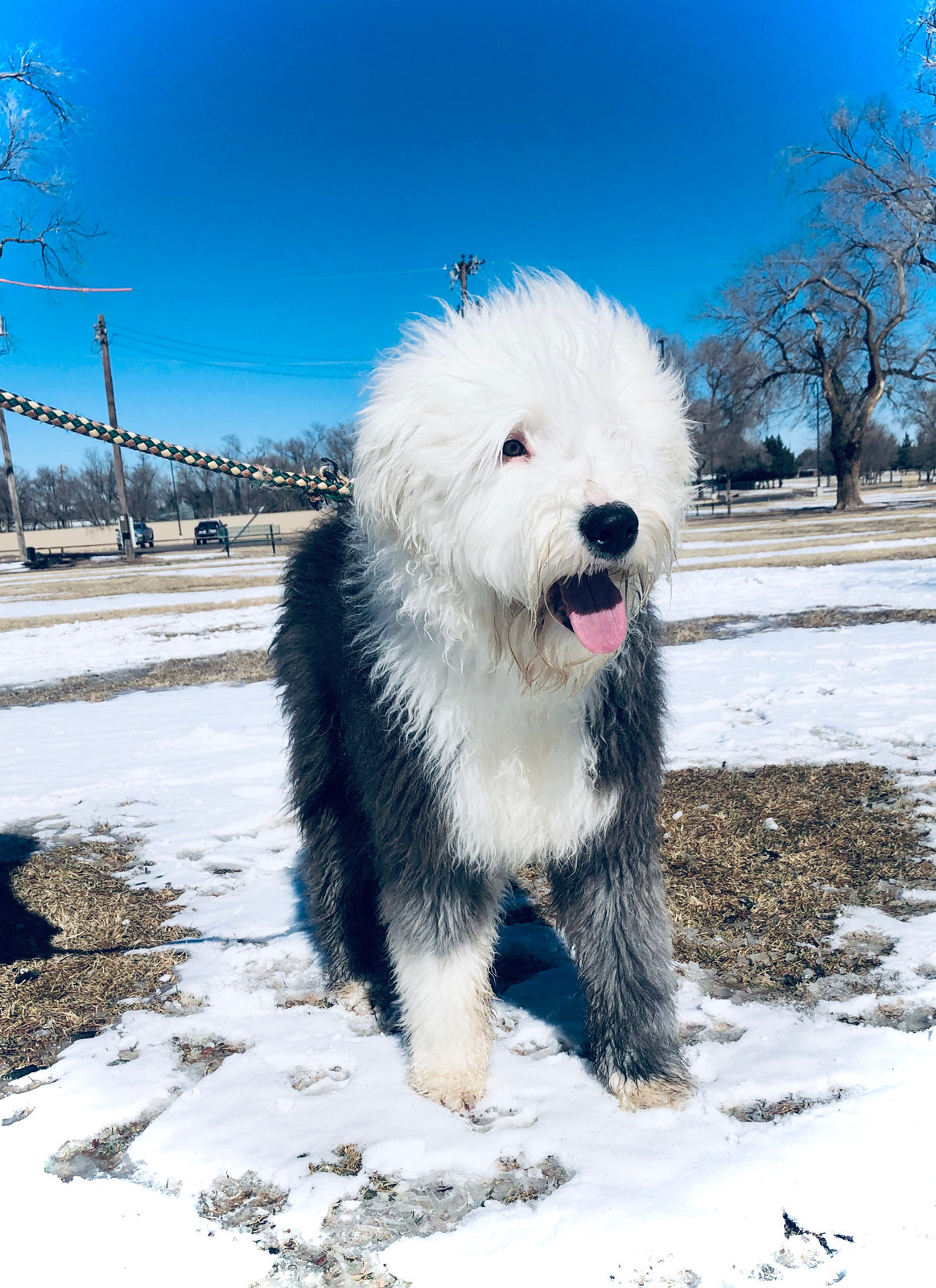
Sheepadoodles are often described as settling into a slightly calmer temperament than the higher-drive Aussiedoodle.
The MDR1 Gene: A Unique Aussiedoodle Consideration
This is one of the most important, and least discussed, differences between these two breeds. Because every Aussiedoodle carries Australian Shepherd lineage, the MDR1 (ABCB1) gene mutation is a routine consideration, not a rare edge case. According to the Collie Rescue Foundation, dogs with this mutation can have severe, potentially life-threatening reactions to certain common medications, including some antiparasitic drugs.
DNA testing for MDR1 status is straightforward and strongly recommended for any Aussiedoodle, so your veterinarian can avoid affected medications if the test comes back positive. Sheepadoodles, without Australian Shepherd ancestry, don’t carry this specific risk.
If you’re set on an Aussiedoodle, ask the breeder directly whether MDR1 testing was done on the parents, and make sure your own veterinarian notes the result in your dog’s file. It’s a simple, one-time test that meaningfully reduces medication risk for the life of the dog.
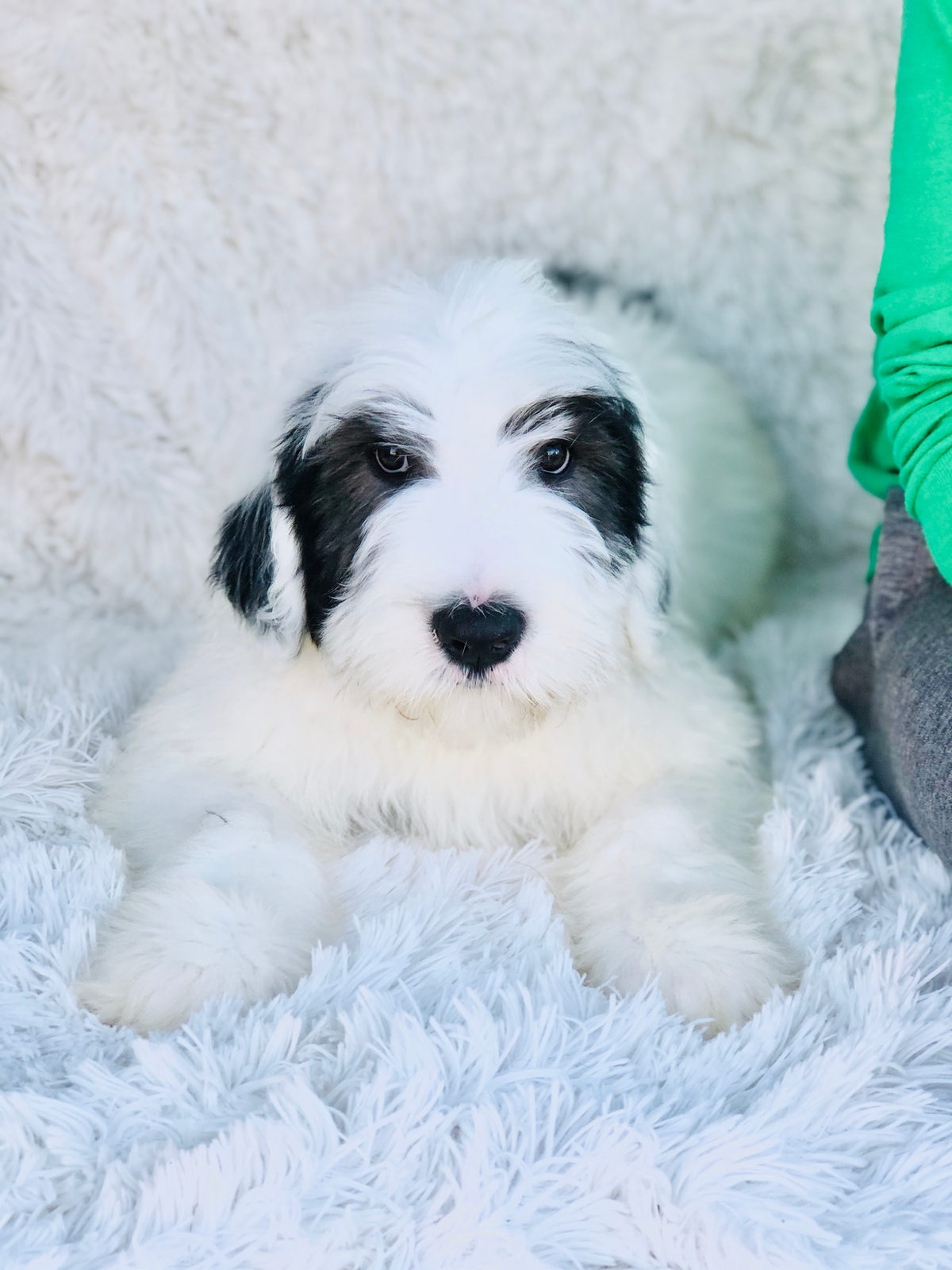
Sheepadoodles don’t carry the Australian Shepherd-linked MDR1 drug sensitivity gene that Aussiedoodles can inherit.
Merle Genetics in Both Breeds
Merle coloring shows up in both breeds, but with very different prevalence. In Sheepadoodles, merle is genuinely rare, since the gene isn’t common in either parent breed. In Aussiedoodles, merle is a defining, commonly seen trait, since it’s deeply embedded in Australian Shepherd genetics.
That higher prevalence makes responsible merle-to-merle avoidance even more important in Aussiedoodles specifically, since double merle pairings carry a well-documented risk of deafness and vision impairment. Whichever breed you’re considering, ask directly whether a merle puppy’s parents were both merle-carriers, and never accept a merle-to-merle pairing as acceptable practice.
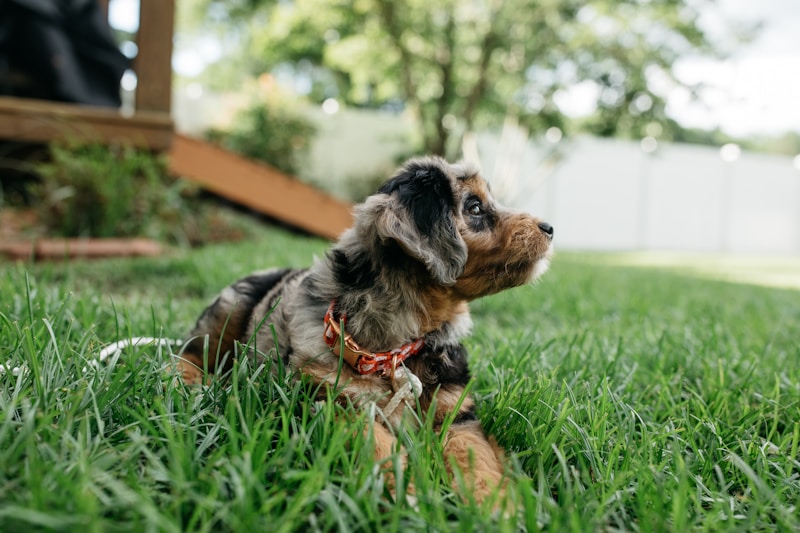
Merle coloring is far more common and defining in Aussiedoodles than in Sheepadoodles, where it remains rare.
Grooming & Lifespan
Both breeds need comparable grooming commitment — regular brushing and professional grooming every 6 to 8 weeks. Lifespan is broadly similar too, with both breeds commonly reaching 10 to 15 years depending on size, and smaller sizes in both breeds tending to live somewhat longer than standard sizes. Neither breed’s coat is meaningfully easier to maintain than the other on a week-to-week basis.

Grooming needs are broadly similar between the two breeds, regardless of coat color or pattern.
Training & Mental Stimulation Needs
Both breeds are highly intelligent, but that intelligence expresses differently. Aussiedoodles, bred from a true working ranch dog, often need a “job” to stay mentally satisfied — advanced obedience, agility, or herding-style games tend to work well. Without enough outlet, that same intelligence can turn into destructive or fixated behaviors like excessive chasing of shadows, cars, or other pets.
Sheepadoodles also need mental engagement, but tend to be more content with moderate puzzle toys and training refreshers rather than requiring a structured “job” in the same way. Neither breed does well with minimal mental stimulation, but the intensity of what’s needed differs meaningfully.
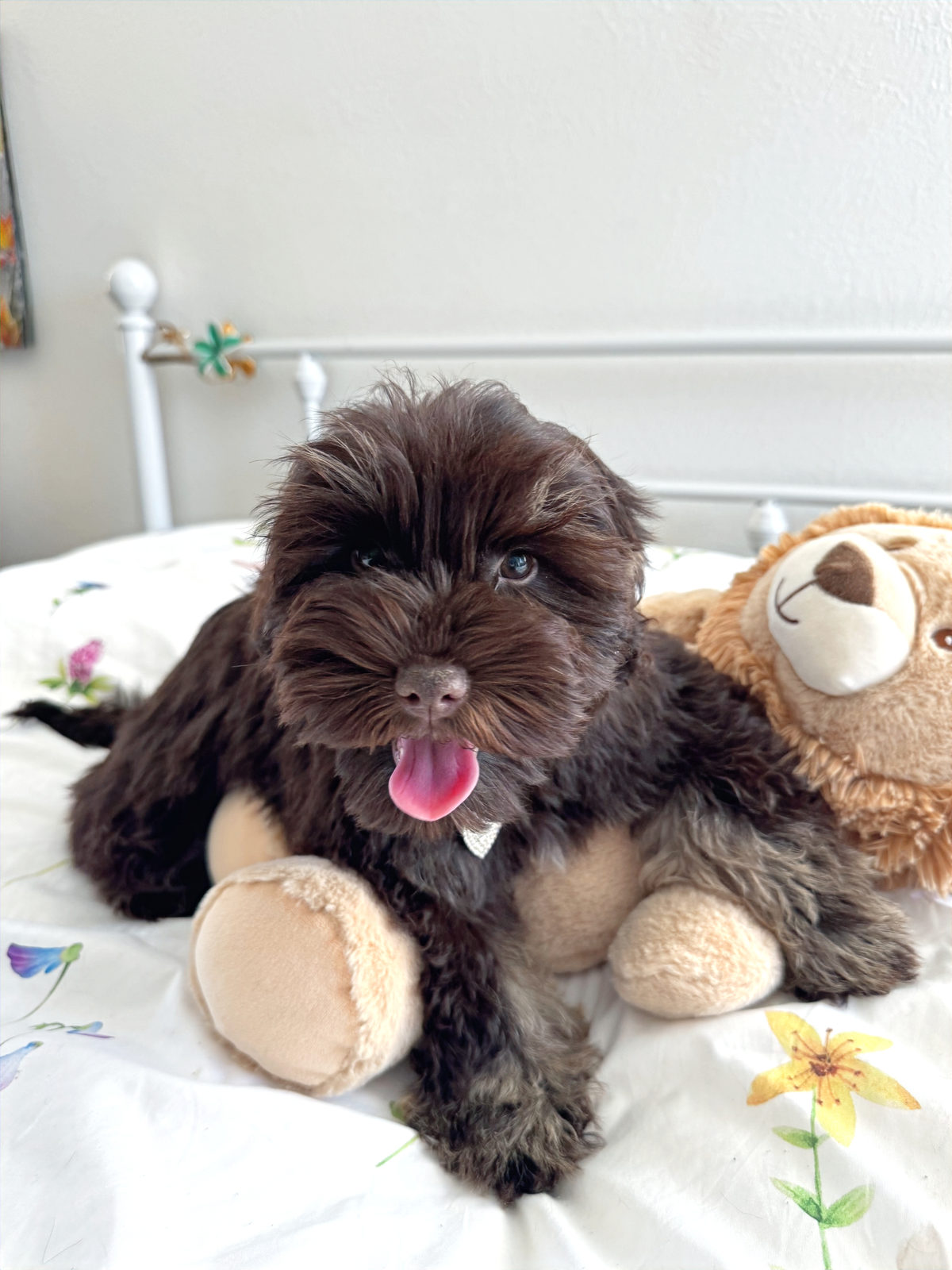
Sheepadoodles tend to be satisfied with moderate mental engagement, while Aussiedoodles often need a more structured “job.”
Which One Fits Your Lifestyle?
Consider a Sheepadoodle If
- You want a calmer adult temperament
- You prefer the classic shaggy sheepdog look
- You want to avoid MDR1-related medication concerns
Consider an Aussiedoodle If
- You want an extremely active, driven companion
- You’re drawn to merle coloring specifically
- You have significant time for daily physical and mental exercise
Meet a Sheepadoodle in Person
The best way to know if this breed’s calmer energy fits your family is to spend time with one. See our current litters and reach out with questions.
View Available PuppiesFrequently Asked Questions
Do Sheepadoodles have the MDR1 gene mutation?
No, MDR1 drug sensitivity is linked to Australian Shepherd and other herding-breed ancestry that Sheepadoodles don’t carry. This is specific to Aussiedoodles and similar Australian Shepherd crosses.
Which breed has more energy, a Sheepadoodle or an Aussiedoodle?
Aussiedoodles generally have higher energy and a stronger prey drive, reflecting their Australian Shepherd ranch-dog heritage. Sheepadoodles tend to settle into a somewhat calmer adult temperament.
Why is merle more common in Aussiedoodles than Sheepadoodles?
Merle is a deeply embedded, common trait in Australian Shepherd genetics, while the gene is rare in both Old English Sheepdogs and Poodles, making it uncommon in Sheepadoodles.
Are Aussiedoodles good for first-time dog owners?
They can be, but their high energy and drive require real commitment to daily exercise and mental stimulation. First-time owners wanting a calmer learning curve sometimes find a Sheepadoodle a more forgiving fit.
Curious how Sheepadoodle merle genetics compare? See our coat colors and patterns guide, or explore our Sheepadoodle vs. Bernedoodle and Sheepadoodle vs. Goldendoodle comparisons for more options.