
“Should I get a male or a female?” is one of the first questions families ask us once they’ve decided a Sheepadoodle is the right breed. It’s a fair question — but the honest answer is that sex plays a smaller role than most puppy shopping guides suggest. Individual personality, early socialization, and spay/neuter timing shape a Sheepadoodle’s temperament far more than whether it’s a boy or a girl.
That doesn’t mean there are zero differences. Below, we separate what’s actually backed by evidence from what’s folk wisdom, so you can make the decision with clear eyes instead of a coin flip.
Do Male and Female Sheepadoodles Really Differ?
A little, but not as much as the internet implies. The American Kennel Club has pushed back on the idea that “boy dogs” and “girl dogs” come with fixed personality packages, noting owners often project human gender norms onto their dogs. Sex only meaningfully matters in two situations: if you’re planning to breed, or when managing a multi-dog household.
What research does support is a modest average difference in boldness and sociability between intact males and females, alongside the physical size difference seen across most breeds. Everything else — stubbornness, cuddliness, trainability — varies far more dog to dog than sex to sex.
Size and Growth: The One Consistent Physical Difference
Within the same size line (mini, medium, or standard), male Sheepadoodles tend to finish toward the upper end of the breed’s weight and height range, while females more often land in the lower-to-middle portion. This mirrors typical sexual dimorphism seen across most dog breeds and isn’t specific to Sheepadoodles. It’s a tendency, not a rule — genetics from both parents matter more than sex alone.
For the full breakdown of mini, medium, and standard weight and height ranges, see our Sheepadoodle size guide, and track expected growth month by month with our Sheepadoodle growth and weight chart.
| Category | Males | Females |
|---|---|---|
| Adult size (same size line) | Tends toward the upper end of the range | Tends toward the lower-middle of the range |
| Maturity rate | Often slower to mentally mature | Often reaches mental maturity a bit sooner |
| Marking/roaming if left intact | More likely, especially after puberty | Occurs mainly around heat cycles |
| Difference after spay/neuter | Marking and roaming largely subside | Heat-related behaviors resolve entirely |
| Individual personality variation | Greater than the sex difference | Greater than the sex difference |
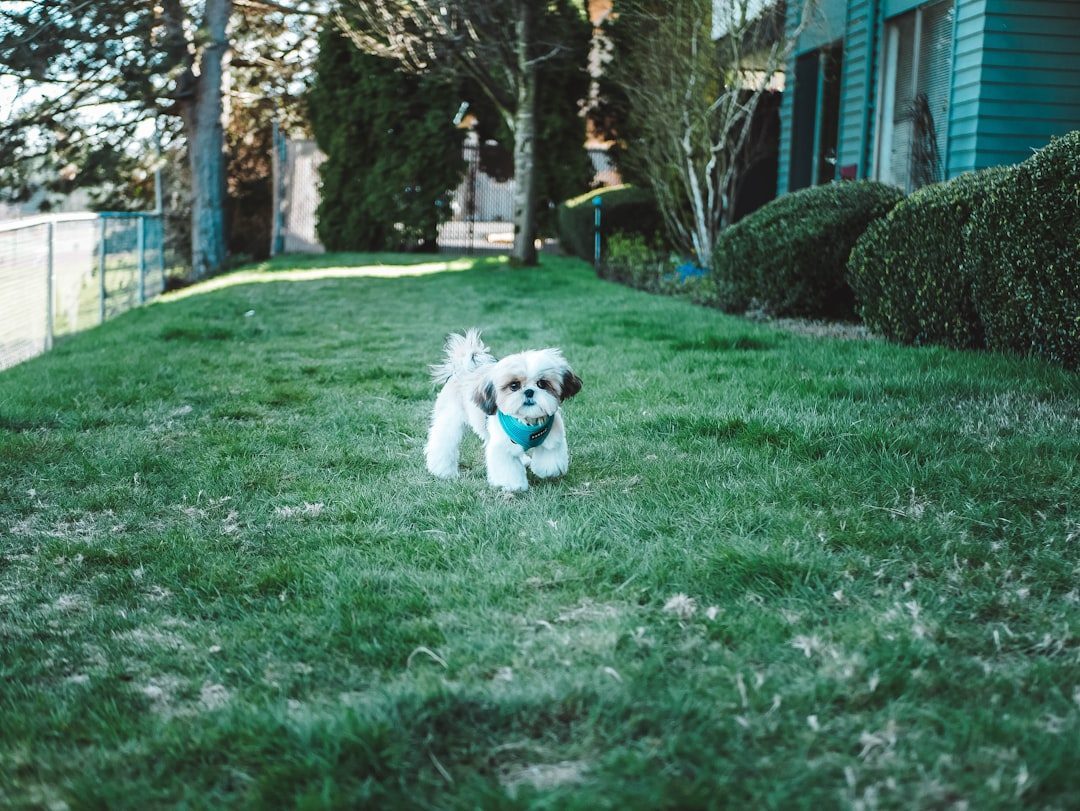
Individual personality varies more between littermates than between the sexes.
Temperament Tendencies: Evidence vs. Myth
Our Sheepadoodle temperament guide covers the breed’s overall personality — gentle, people-oriented, and eager to please regardless of sex. Here’s how the common male/female claims hold up.
Claims with some evidence behind them
- Intact males are somewhat more prone to marking, roaming, and mounting behavior driven by testosterone.
- Females in heat can attract unwanted attention from intact males and may act distracted or restless during a cycle.
- Average litter-to-litter, males often run a little larger within the same size line.
Popular claims with little real support
- “Males are more affectionate” — sociability studies show mixed results, not a consistent sex pattern.
- “Females are always easier to train” — one often-cited 2017 study found female dogs somewhat more obedient, but it hasn’t been replicated broadly and experts caution against generalizing.
- “Males are dumber” or “females are moodier” — these are stereotypes projected from human gender norms, not documented traits.
Marking, Roaming, and Intact Behavior
This is the category where sex differences are most real — but they’re tied to hormones, not gender as a personality trait. Intact male Sheepadoodles are more likely to mark territory indoors and outdoors once they reach puberty, and some will roam or become fixated on a female in heat nearby. Intact females typically show behavior changes concentrated around their heat cycles, roughly twice a year, rather than as an ongoing daily pattern.
Spaying or neutering at the appropriate age substantially reduces both of these hormone-driven behaviors in either sex. For a full walkthrough of recommended timing for Sheepadoodles (later than many vets historically suggested, to protect joint development in this larger breed) and what recovery looks like, see our Sheepadoodle spay and neuter guide.

Marking and roaming behavior in intact dogs is hormone-driven, not a fixed sex trait.
Trainability: Does Sex Actually Predict It?
Not reliably. The idea that female dogs are easier to train traces largely to a single 2017 study on obedience, and even its authors cautioned against overgeneralizing. What consistently predicts trainability is consistency of training, early socialization, and spay/neuter status — intact dogs of either sex are more easily distracted by hormone-driven urges.
If you’re weighing a Sheepadoodle puppy specifically, our Sheepadoodle puppy training guide covers the fundamentals that matter regardless of sex: consistency, positive reinforcement, and early exposure to new people, places, and sounds.
Household Fit: Adding a Sheepadoodle to Existing Pets
This is the one place where sex genuinely deserves weight in your decision. Behavioral research on multi-dog households has found that same-sex pairs, particularly two females, carry a higher risk of serious conflict than opposite-sex pairs, and that female-female conflicts are harder to resolve. Male-female and male-male pairings generally show better outcomes.
If you already have a female dog at home, many experienced owners and trainers lean toward a male Sheepadoodle puppy, and vice versa — though a calm, well-socialized puppy of either sex can usually integrate successfully with patient introductions. For a step-by-step approach to first introductions, see our guide to introducing a Sheepadoodle to other pets.

Sex is one factor worth weighing when a Sheepadoodle will join a household with an existing dog.
So, Which Should You Choose?
For a single-dog household, we tell families honestly: pick based on the individual puppy’s personality, not its sex. Come meet the litter, tell us about your lifestyle, and let our decades of breeding experience help match you with the right temperament fit — that predicts a happy outcome far better than a coin flip between “male” and “female.”
A male may suit you if…
- You want a puppy that may run slightly larger within the same size line.
- You have an existing female dog at home.
- You’re comfortable managing marking behavior until neutering.
A female may suit you if…
- You prefer a puppy likely to land in the lower-middle of the size range.
- You have an existing male dog at home.
- You’re prepared to manage heat cycles until spaying.

Consistent training matters more to outcomes than the puppy’s sex.
Meet Our Available Puppies
Come see the personalities for yourself — the best match is rarely about male versus female alone.
Contact Sunshine SheepadoodlesFrequently Asked Questions
Are male Sheepadoodles bigger than female Sheepadoodles?
Within the same size line, males tend to finish toward the upper end of the weight and height range while females more often land toward the lower-middle, but genetics from both parents affect final size more than sex alone. See our Sheepadoodle size guide for full range details by size category.
Do female Sheepadoodles really behave differently than males?
Some differences are real but modest, mostly tied to hormones in intact dogs, such as marking and roaming in males or heat-cycle behavior in females. Broader personality traits like affection, energy, and stubbornness vary far more between individual dogs than between the sexes.
Is it true that female dogs are easier to potty train?
Not reliably. This claim traces largely to a single 2017 study on obedience that hasn’t been broadly replicated. Consistency of training, early socialization, and spay/neuter status predict trainability far more than sex.
Should I get a male or female Sheepadoodle if I already have a dog?
Sex is worth weighing here. Research on multi-dog households shows opposite-sex pairs generally have a lower risk of serious conflict than same-sex pairs, particularly two females. A well-socialized puppy of either sex can still succeed with careful, gradual introductions.
Does spaying or neutering change the differences between male and female Sheepadoodles?
Yes, considerably. Spaying and neutering reduce most of the hormone-driven behaviors that separate the sexes, including marking, roaming, and heat-related restlessness. Our Sheepadoodle spay and neuter guide covers recommended timing and what to expect.
Which sex is better for a first-time Sheepadoodle owner?
Neither sex has a clear edge for first-time owners. Temperament, energy level, and how well a specific puppy matches your household matter more than whether it’s male or female.
Whichever sex you lean toward, temperament and fit within your household matter more than the label. If you’re ready to find your match, browse our available Sheepadoodle puppies or read through how to reserve a Sheepadoodle puppy to see how our matching process works.