
A dog that’s perfectly relaxed all evening can turn into a pacing, panting wreck the moment fireworks start popping or thunder rolls in. That reaction has a name, noise phobia, and it’s different from everyday barking or from the distress a dog feels when left home alone. It’s also common in the herding and mixed-herding breeds that make up half of a Sheepadoodle’s genetics, which is worth understanding before the next holiday or storm season catches you off guard.
Recognizing Noise Phobia in Your Sheepadoodle
Noise phobia shows up on a spectrum, and it’s easy to miss the early signs because they look like ordinary restlessness. Panting when it isn’t hot, following you from room to room, or flattened ears at a distant boom are all the same fear response in a milder form. Left unaddressed, that response tends to escalate over a dog’s lifetime rather than fade on its own.
| Severity | What You’ll See | Recommended Response |
|---|---|---|
| Mild | Panting, lip licking, yawning, seeking you out, mild pacing | Redirect with a calm activity; note the trigger for future prep |
| Moderate | Persistent pacing, drooling, whining, hiding, refusing food | Move to the safe space, add white noise, avoid comforting that reinforces panic |
| Severe | Trying to escape, destructive scratching at doors/crates, house soiling, injuring themselves | Talk to your veterinarian about a management plan before the next event |

Seeking you out and staying close is a common early sign, not a training failure.
Why Some Sheepadoodles Startle More Than Others
Old English Sheepdogs were bred to react instantly to sound and movement while working livestock, and that wiring shows up in some Sheepadoodles as heightened sound sensitivity. It’s not universal, plenty of Sheepadoodles sleep through storms, but genetics load the dice more in this breed mix than in, say, a low-reactive retriever line.
Limited exposure to varied sounds during the early puppy weeks raises the odds of noise fear developing later, and phobias can also first appear or worsen in adult or senior dogs with no clear puppyhood trigger. Our puppy socialization checklist covers the sound-exposure window that gives young puppies the best shot at growing into noise-tolerant adults.
Noise Phobia Isn’t Separation Anxiety or “Just Barking”
These three get lumped together, but they’re different problems with different fixes. Noise phobia is a fear response to a specific sound and can happen even when you’re sitting right next to your dog; separation anxiety is distress triggered by being alone, regardless of noise. Our separation anxiety guide breaks down that distinction in more depth.
Barking during fireworks also isn’t the same as the alert or attention barking covered in our barking triggers and management guide. Fear-driven barking tends to come with the panting, trembling, and hiding described above, not a dog standing confidently at the door.
Building a Safe Space and Desensitizing Your Dog
An interior room or crate away from windows, stocked with familiar bedding and a long-lasting chew, gives an anxious dog somewhere to retreat before panic sets in. A crate already associated with good things works especially well here; our crate training guide walks through building that positive association from scratch.
The longer-term fix is desensitization: play recordings of fireworks or thunder at a very low volume during calm, happy moments (mealtime, play), and gradually increase volume over weeks as your dog stays relaxed. Start this well before storm or fireworks season, since it doesn’t work as a same-day fix.
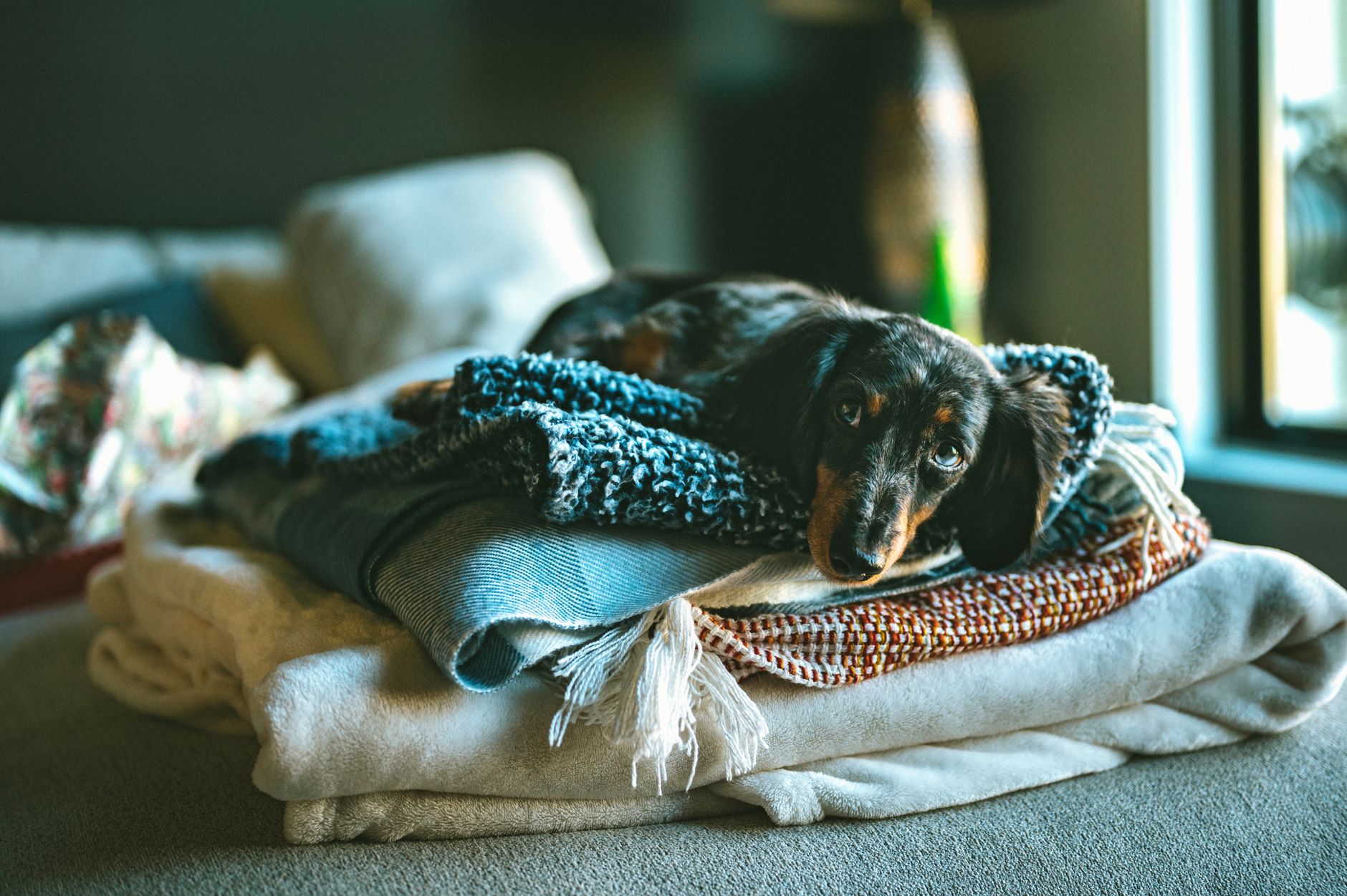
A crate or bedding nest that already means safety becomes a natural retreat during noise events.
Coping Tools Compared
No single tool works for every dog, and most owners end up combining two or three of these depending on how severe the reaction is.
| Tool | What It Does | Best Used For |
|---|---|---|
| Safe space / den | Gives a low-stimulus retreat away from windows and flashing light | Every dog, as a baseline, regardless of severity |
| Calming wrap | Applies gentle, constant pressure, similar to swaddling | Mild to moderate anxiety; introduce it before the event, not during |
| White noise / TV | Masks the sharp, unpredictable edges of booms and thunder cracks | Mild to moderate anxiety, paired with the safe space |
| Pheromone diffuser | Releases a synthetic calming pheromone into the room | Mild anxiety; works best as an add-on, not a standalone fix |
| Vet-guided anti-anxiety options | Addresses the underlying fear response medically | Moderate to severe anxiety that isn’t improving with management alone |
Whatever tool you use, calming wraps included, introduce it during a calm moment, not mid-panic.
Getting Ready for Fireworks Holidays
July 4th and New Year’s Eve are predictable dates, which means you can prep ahead instead of reacting in the moment.
Do Before the Holiday
- Tire your dog out with exercise earlier in the day
- Confirm ID tags and microchip info are current
- Set up the safe space and test any calming wrap beforehand
- Ask your vet about anti-anxiety options if last year was rough
Avoid
- Bringing your dog to fireworks shows or loud gatherings
- Leaving your dog outside or alone once fireworks start
- Scolding fear-driven pacing or hiding, it adds stress, not clarity
- Waiting until the show has started to close windows and curtains
Thunderstorms Are Different: Static, Pressure, and the Coat
Thunderstorms trigger a broader set of cues than fireworks: darkening skies, wind, dropping barometric pressure, and the smell of rain, all of which a dog can sense before you notice anything’s changed. That’s part of why storm anxiety often starts before the first thunderclap.
There’s also a coat-specific factor worth knowing if you own a Sheepadoodle. Research out of Tufts University has pointed to static electricity building up in the electrically charged air of a storm as a real contributor to storm-phobic behavior, and dogs with thick, long, or double coats are more prone to this buildup than short-haired breeds. A Sheepadoodle’s dense double coat can hold a noticeable static charge, so some owners find that briefly petting their dog with an anti-static dryer sheet or using an anti-static wrap before a storm takes the edge off a reaction that pure sound-masking doesn’t fully explain.
A dense double coat can hold static charge during storms, adding to sound-based fear.
Storm Panic Is Also an Escape Risk
A dog in full panic mode will dig, jump, or bolt through gaps a calm dog would never test, which is exactly when a marginal fence becomes a real problem. If your yard has any known weak points, our escape-proofing and fence guide covers the fixes worth making before storm season rather than after a scare.
When to Talk to Your Vet
Management tools help most dogs, but a dog with moderate to severe symptoms, especially one who injures themselves, soils the house, or seems to be getting worse over time, deserves a veterinary conversation. Vets can discuss situational anti-anxiety options for specific events as well as longer-term treatment for dogs whose fear has become a chronic welfare issue, always tailored to your individual dog rather than a one-size-fits-all dose. According to the American Veterinary Medical Association, more pets go missing around July 4th than any other time of year, which is one more reason not to wait until symptoms are severe to start the conversation. Cornell’s Riney Canine Health Center also has useful background on how these fears typically progress with age.
Bringing Home a Sheepadoodle Puppy?
Early sound exposure and a calm foundation make a real difference in how a Sheepadoodle handles noise as an adult.
Contact Sunshine SheepadoodlesFrequently Asked Questions
Are Sheepadoodles more prone to noise phobia than other breeds?
Their Old English Sheepdog heritage can predispose some individuals to heightened sound sensitivity, though it’s far from universal in the breed.
Should I comfort my dog when they’re scared of fireworks?
Yes. Calm, reassuring attention doesn’t reinforce fear the way older advice claimed; ignoring a genuinely frightened dog just leaves them more stressed.
Can noise phobia develop later in life, even without a bad puppyhood experience?
Yes, it commonly appears or worsens in adult and senior dogs with no identifiable trigger, likely tied to age-related changes in how the brain processes fear.
Do calming wraps actually work?
Many dogs respond well to the steady pressure, but results vary by individual, and it works best introduced calmly before the noise starts rather than mid-panic.
Is it worth trying desensitization if fireworks season is only a week away?
Start it anyway for long-term benefit, but lean on management tools like the safe space and white noise for this year’s event since desensitization takes weeks to work.
How is noise phobia different from separation anxiety?
Noise phobia is a fear response to a specific sound and can occur with you present; separation anxiety is distress from being left alone, noise or not.
A secure, well-managed home environment also matters for everyday confidence, not just storm days. Our crate training guide and puppy socialization checklist are both good starting points if you’re building these habits from puppyhood on.