Sheepadoodle Behavior Guide 7 min read
Understand What Your Sheepadoodle Is Trying to Tell You.
From a tucked tail to a playful bow, your Sheepadoodle is communicating long before they bark. Learn how to recognize the quiet signals hidden beneath all that fluff.
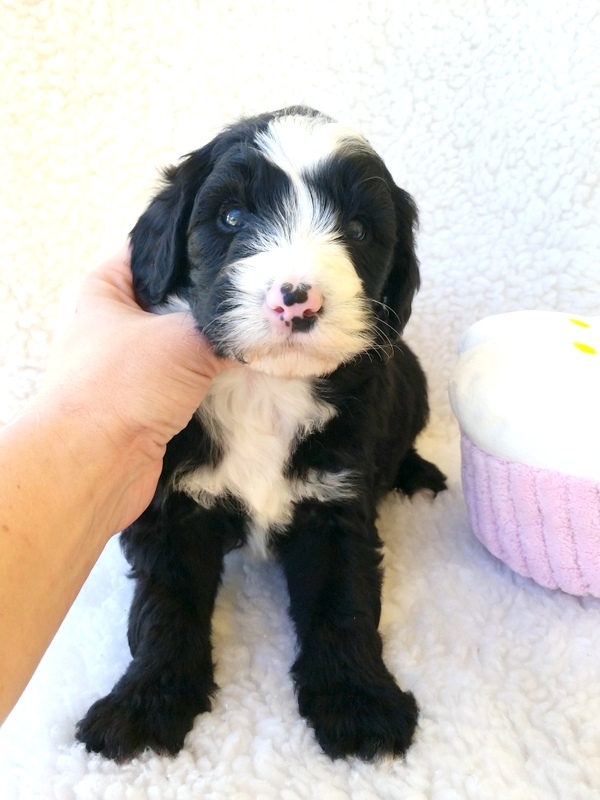
At a glance: what is your dog feeling?
-
Relaxed
Loose body
Soft eyes
Gentle tail -
Curious
Forward attention
Ears attentive
Exploring -
Excited
Bouncy movement
Wagging tail
Playful energy -
Uncertain
Looking away
Weight back
Ears to the side -
Stressed
Lip licking
Whale eye
Tense body -
Needs Space
Frozen posture
Hard stare
Avoiding
01 — The Coat Problem
Why Fluff Makes Signals Harder to Read
Most body-language advice assumes a short-coated dog, where a stiff tail or a flick of the ears is easy to spot. A Sheepadoodle’s thick, curly coat hides a lot of that signal under fluff, so owners often miss the early, quiet cues and only notice something is wrong once their dog is already barking, bolting, or shutting down.
The coat is dense, wavy or curly, and often left several inches long. That is wonderful for a low-shedding companion and a problem for reading mood. Here is where to look instead.
Ears
Look beneath the fluff for the actual ear leather, not the hair around it.
Eyes
Soft eyes show comfort. Whale eye, where the whites show, can signal stress.
Tail
Watch the base of the tail, not only the fluffy tip.
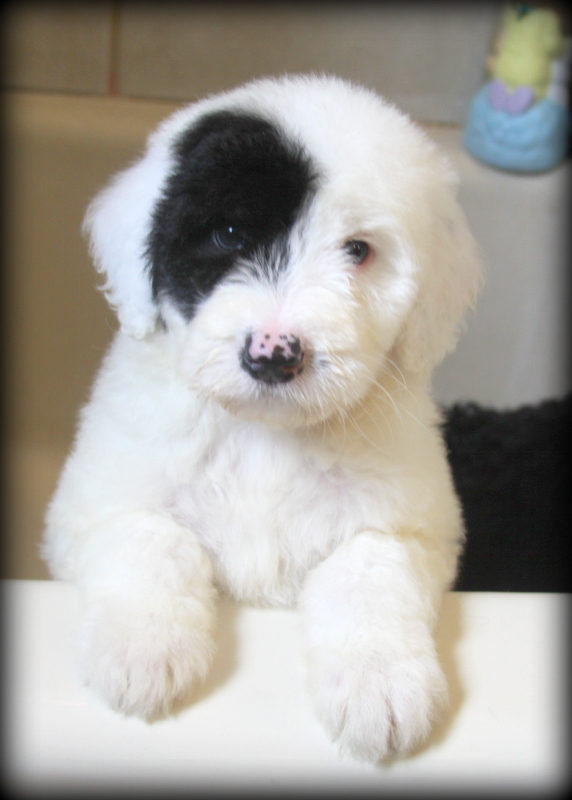
Mouth
Tongue, lips and jaw tension reveal a great deal.
Posture
A loose body means something very different from a frozen body.
Hackles
Raised hair can mean arousal, surprise or stress. Feel for it if you cannot see it.
02 — The Reference
Body Language Guide
Use this as a starting reference, then check it against your own dog’s normal baseline, since every dog has a slightly different resting state.
03 — Side by Side
Happy vs. Stressed
Rather than judging your dog on a single cue, scan the whole body for a cluster of signals.
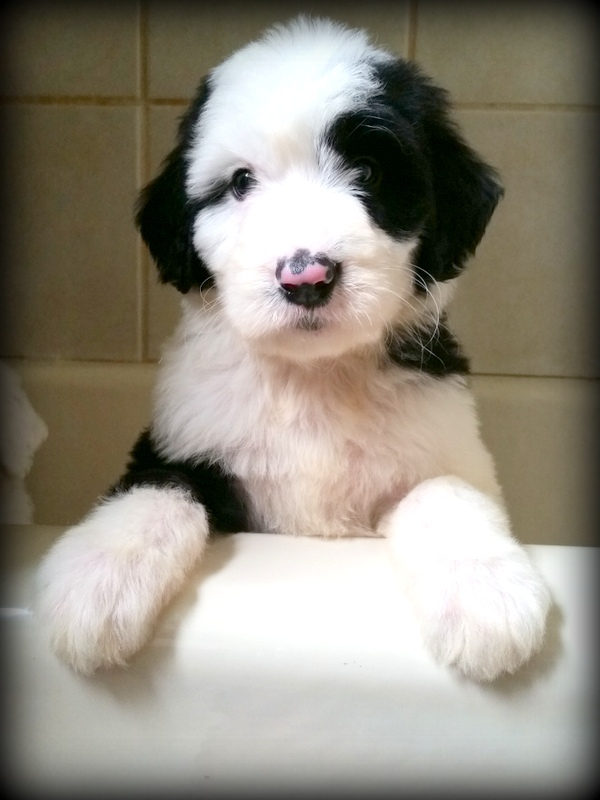
Happy & Relaxed
- Loose, wiggly body
- Soft eyes and relaxed face
- Ears in natural position
- Tail wagging comfortably
- Open mouth, relaxed pant
- Engages easily
Stressed & Uncomfortable
- Weight shifts backward
- Looking away or avoiding
- Lip licking or yawning
- Tucked or rigid tail
- Ears pinned back
- Body tense or frozen
04 — One of the easiest signals to recognize
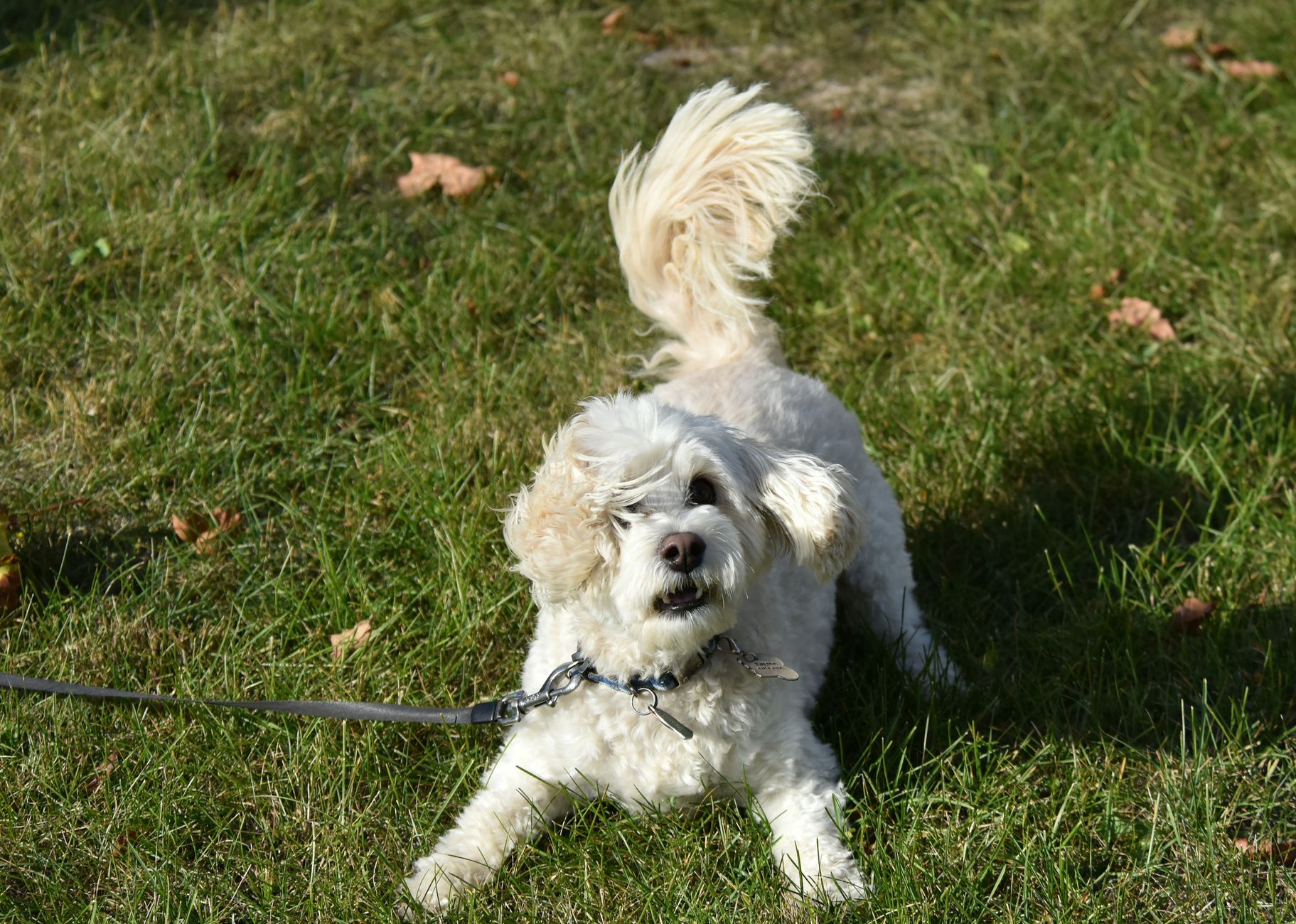
The Play Bow
When your Sheepadoodle lowers their front legs, keeps their rear end up, and holds a loose, bouncy posture, they are almost always inviting play. It is one of the few signals that survives a heavy coat intact, because it involves the whole body rather than a small change in one area.
Bouncy, exaggerated movements, brief pauses to check in, and rolling over during a game are invitations to keep going, not signs of submission. If your dog paw-swats, bounces back a step, then bows again, that is a dog asking for more.
05 — The Quiet Ones
Calming Signals
Calming signals are the subtle behaviours dogs use to lower tension in themselves, or in another dog or person nearby: a yawn when your dog is not tired, a quick lip lick with no food around, turning the head slightly away, or curving toward another dog rather than approaching head-on.
These are easy to dismiss as random habits, but they are worth watching for, especially during new experiences like meeting unfamiliar dogs or visitors. Catching them early lets you add distance or slow things down before your dog feels the need to escalate. Our puppy socialization checklist covers introducing new situations gradually so these signals do not turn into real fear.
06 — Context Is Everything
Signals People Commonly Misread
-
01
A Wagging Tail
A wagging tail does not automatically mean “I’m happy.” It means the dog is emotionally aroused. Interpret the speed, height and stiffness of the wag alongside the rest of the body.
-
02
Yawning
Yawning can indicate stress or discomfort, not only tiredness. A yawn in a busy or unfamiliar setting is worth noticing.
-
03
Looking Away
Looking away is often a calming signal or a polite request for more space, rather than the dog ignoring you.
-
04
Raised Hackles
Raised hackles can indicate arousal, surprise, excitement or stress. They are not automatically a sign of aggression. Always interpret them in context.
According to the American Kennel Club, dogs communicate through several signals at once, and interpreting the whole picture rather than one isolated cue is the most reliable approach. The ASPCA makes the same point about context and individual baseline.
Body language also works alongside vocalisation; our Sheepadoodle barking guide breaks down what different bark types typically mean. A dog left alone who paces, drools or shows whale eye near the door may be showing stress tied to being alone, which is worth reading alongside our guide to Sheepadoodle separation anxiety. Knowing your dog’s baseline personality helps too, and our Sheepadoodle temperament guide covers what is typical for the breed day to day.
Don’t read the tail.
Eyes + ears + posture + movement + environment
Read the whole dog.
From Experience
What We See From the Very Beginning
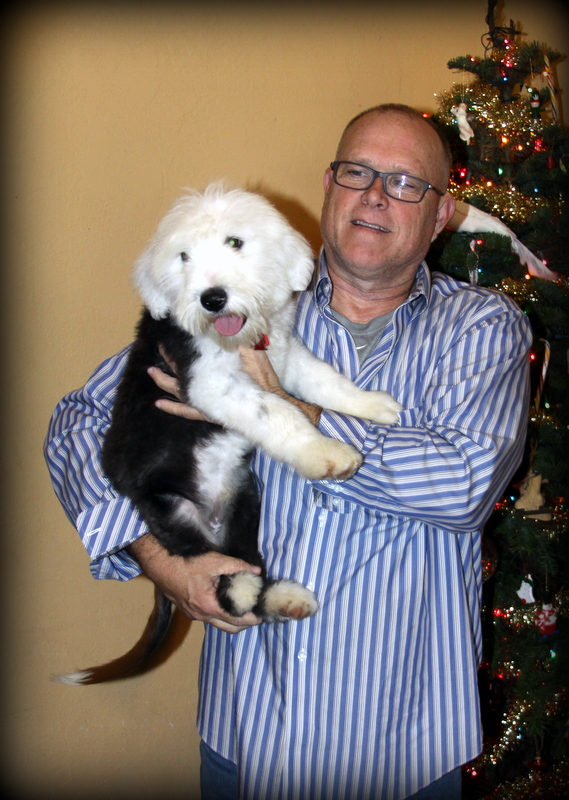
At Sunshine Sheepadoodles, observing personality starts long before a puppy joins their family. Understanding confidence, curiosity, sensitivity and social behaviour helps families find a puppy whose natural temperament complements their home.
08 — Common Questions
Questions Sheepadoodle Families Ask
01Does a wagging tail always mean my Sheepadoodle is happy?
No. A wagging tail only shows the dog is emotionally aroused, and the speed, height and stiffness of the wag, plus the rest of the body, determine whether that arousal is happy, excited or tense.
02What is whale eye?
Whale eye is when the whites of a dog’s eyes become visible, usually because the dog is turning its head away from something while keeping its eyes on it. It is a common early sign of stress or discomfort.
03How can I see raised hackles beneath a curly coat?
Feel along the spine rather than relying on sight alone. Raised hackles feel like the fur is standing away from the body instead of lying flat, especially near the shoulders and down the back.
04How is play different from aggression?
Play involves loose, bouncy movement, a play bow, and pauses where a dog checks back in, while real aggression tends to show stiff posture, hard staring and sustained tension rather than back-and-forth engagement.
05Should I worry about one stress signal, like a yawn?
Not usually on its own. Look for clusters of signals and changes from your dog’s normal baseline rather than reacting to any one behaviour in isolation.
06Why is body language harder to read on a Sheepadoodle?
The thick, curly coat hides raised hackles, buries the ears and adds bulk to the tail, so owners have to rely more on posture, eyes and overall context than on any single visible cue.
Still learning your puppy’s natural style? Our guide to choosing the right Sheepadoodle puppy and our grooming guide both help, since a coat kept out of the eyes makes every signal easier to see.
From Our Family to Yours
Ready to Meet Your Sheepadoodle?
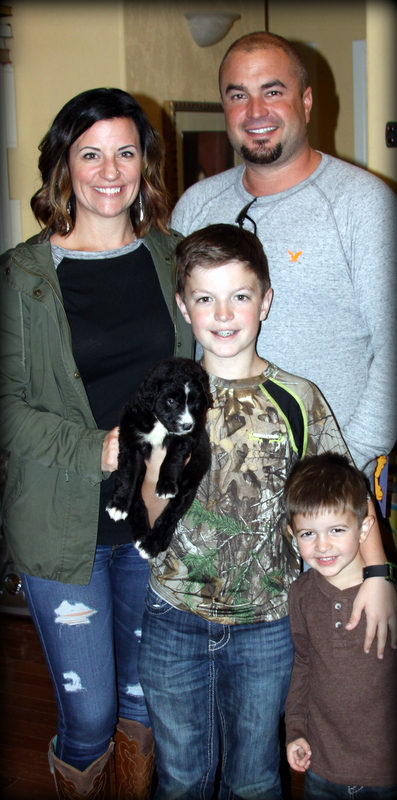
Thoughtfully raised, carefully socialised, and matched with families who will love them for life.
View Available Puppies Talk with Sunshine