

Lifespan and health are some of the most important, and least glamorous, questions to research before bringing home any dog. Here’s a grounded look at what science and veterinary sources say about Sheepadoodle longevity, common health considerations, and what genetic testing actually does and doesn’t guarantee.
Average Sheepadoodle Lifespan
Sheepadoodles typically live between 12 and 15 years, inheriting a fairly similar lifespan from both the Old English Sheepdog and Poodle sides. Size class makes some difference:
| Size Class | Typical Lifespan |
|---|---|
| Standard | 10–13 years |
| Medium (Moyen) | 12–14 years |
| Mini / Micro | 13–16 years |
As is generally true across dog breeds, smaller dogs tend to live somewhat longer than larger ones. Genetics, weight management, and overall care all play a role in where an individual dog lands within that range.
Where This Lifespan Comes From
Both parent breeds carry a similar baseline lifespan of roughly 12 to 15 years, and as a crossbreed, Sheepadoodles often benefit from what’s commonly called hybrid vigor — a broader genetic pool that can reduce the concentration of inherited conditions common in some purebred lines. That’s a general tendency, though, not a guarantee for any individual dog.
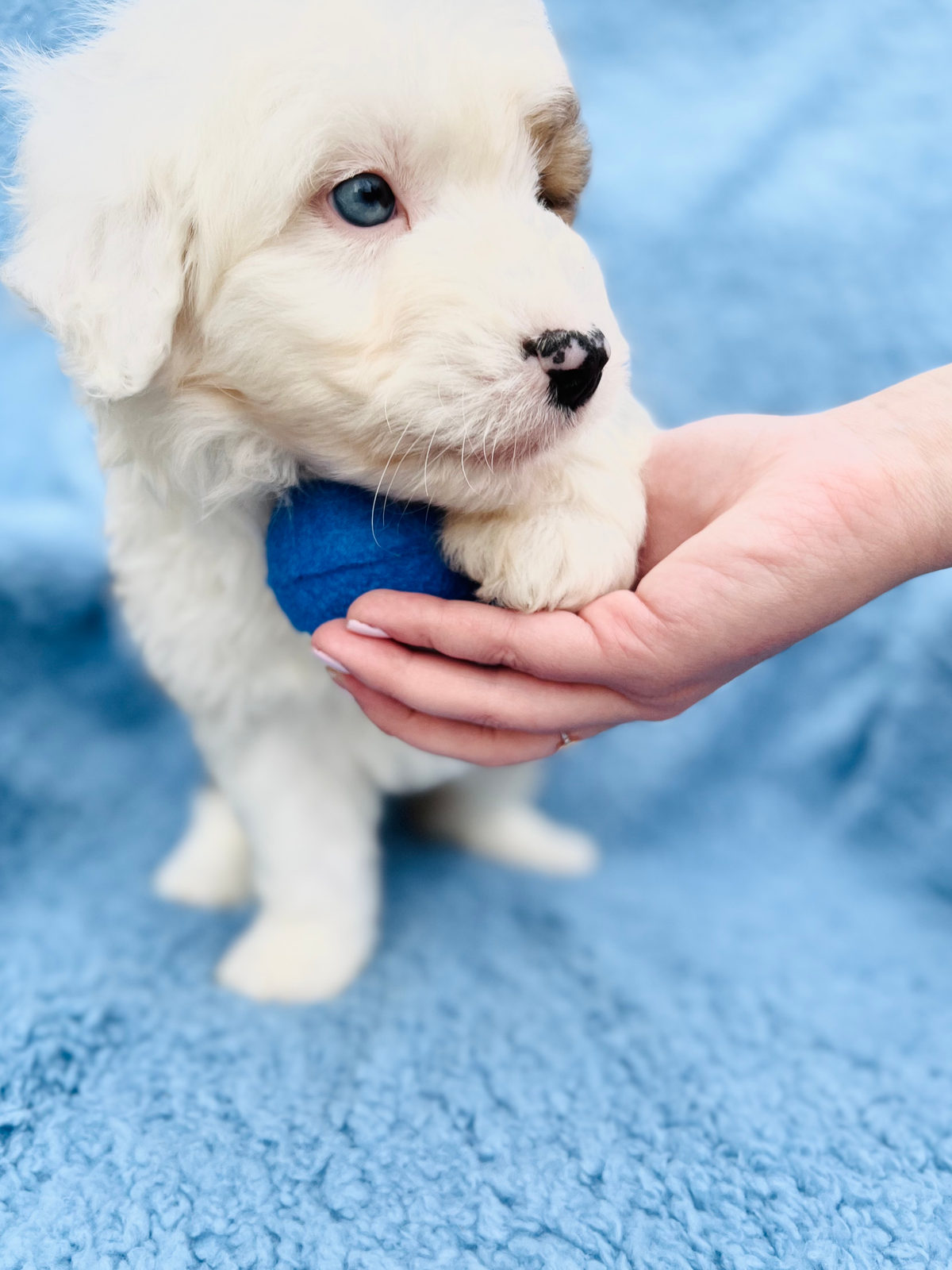
A Sheepadoodle’s genetic diversity from two distinct parent breeds is part of why the breed tends toward solid overall health.
Common Health Considerations
No breed is without risk. Being aware of what’s more common in Sheepadoodles helps you ask the right questions and catch issues early.
| Condition | What It Is | More Common In |
|---|---|---|
| Hip dysplasia | Malformation of the hip joint that can cause pain and mobility issues | Larger, heavier dogs; screenable via parent testing |
| Eye conditions | Cataracts and progressive retinal atrophy (PRA) | Can occur across sizes; often DNA-testable in parents |
| Bloat (gastric torsion) | A serious, fast-developing condition in deep-chested dogs | More often larger, deeper-chested standard-sized dogs |
| Hypothyroidism | An endocrine disorder affecting metabolism | Can occur at any size; manageable with veterinary care |
None of these conditions are unique to Sheepadoodles — they’re common considerations across many medium-to-large breeds and their mixes. Most Sheepadoodles from health-tested parents live full, uneventful lives.

Routine veterinary care and awareness of breed-common conditions go a long way toward a long, healthy life.
What Genetic Health Testing Actually Means
The Orthopedic Foundation for Animals (OFA) maintains the primary U.S. database for hip, elbow, cardiac, eye, and other hereditary health screenings in dogs. When a breeder says a parent dog is “OFA tested” or has a specific hip grade, it means that dog’s joints were formally evaluated and submitted to this database — not just a general vet checkup.
This kind of testing doesn’t guarantee a puppy will never develop a health issue, but it substantially lowers the odds by removing dogs with poor results from breeding programs. According to the Poodle Club of America, responsible breeders on the Poodle side of this cross also commonly screen for hip health, eye disease, and thyroid function before breeding.
Questions to Ask About Health Testing
- What health testing was done on both parents? Ask for specifics, not just “they’re healthy.”
- Can you share documentation or registry results? A responsible breeder should be able to provide this without hesitation.
- Has either parent produced litters with known health issues? An honest answer here says a lot about a breeder’s transparency.
- What ongoing veterinary care does the puppy receive before going home? Vaccination and wellness check records should be available.

A transparent breeder should welcome direct questions about health testing and documentation.
Keeping Your Sheepadoodle Healthy Longer
Genetics set a baseline, but day-to-day care meaningfully affects where a dog lands within its expected lifespan range:
- Maintain a healthy weight. Excess weight puts added strain on joints, particularly relevant given the breed’s hip dysplasia risk.
- Keep up with routine veterinary visits. Early detection makes most conditions far more manageable.
- Feed a balanced, age-appropriate diet. Nutrition needs shift from puppy to adult to senior life stages.
- Provide regular, moderate exercise. Consistent activity supports joint and cardiovascular health without overexertion.
- Stay current on grooming. A well-maintained coat prevents skin issues that can otherwise go unnoticed under matted fur.

Consistent, moderate exercise supports joint and cardiovascular health throughout a Sheepadoodle’s life.
Caring for a Senior Sheepadoodle
As Sheepadoodles move into their senior years, usually somewhere around age 8 to 10 depending on size, their care needs shift. Joint support becomes more important, especially for larger standard-sized dogs already carrying some hip dysplasia risk. Many owners transition to a senior-formulated diet and shorter, more frequent walks rather than long, high-impact exercise sessions.
Regular bloodwork becomes more valuable as a early-detection tool in senior dogs, since conditions like hypothyroidism and kidney changes are often manageable when caught early but harder to address once symptoms become obvious. Twice-yearly veterinary visits, rather than the standard annual checkup, are common recommendations once a Sheepadoodle reaches its senior years.

Adjusted diet, gentler exercise, and more frequent checkups help senior Sheepadoodles stay comfortable longer.
Have Health Questions About a Specific Litter?
We’re happy to talk through what you’d like to know before making a decision.
Contact Sunshine SheepadoodlesFrequently Asked Questions
Do Sheepadoodles have more health problems than purebred dogs?
Not necessarily. As a crossbreed, Sheepadoodles often benefit from hybrid vigor, which can reduce the concentration of certain inherited conditions common in some purebred lines, though no breed or mix is risk-free.
What is the oldest a Sheepadoodle has been known to live?
While most Sheepadoodles live within the typical 12 to 15 year range, individual dogs with excellent genetics and care can live longer, similar to variation seen in most breeds.
Is hip dysplasia guaranteed to affect a Sheepadoodle?
No. Hip dysplasia is a risk more common in larger, heavier dogs, but it’s screenable through parent testing (such as OFA evaluation), and many Sheepadoodles never develop the condition.
How often should a Sheepadoodle see a veterinarian?
Puppies typically need a series of vet visits for vaccinations in the first few months, then annual wellness checkups as adults, with more frequent visits recommended for senior dogs.
Curious how size affects health considerations? See our Sheepadoodle size guide, or learn about grooming and coat care to keep your dog comfortable long-term.