Sheepadoodle coats come in a wider range than most people expect. Between base colors, patterns, and the way puppy coats change as they mature, it’s easy to see a photo online and wonder whether what you’re looking at is common, rare, or something to ask more questions about. Here’s a clear breakdown.
Common Sheepadoodle Coat Colors
| Color | Description | Commonality |
|---|---|---|
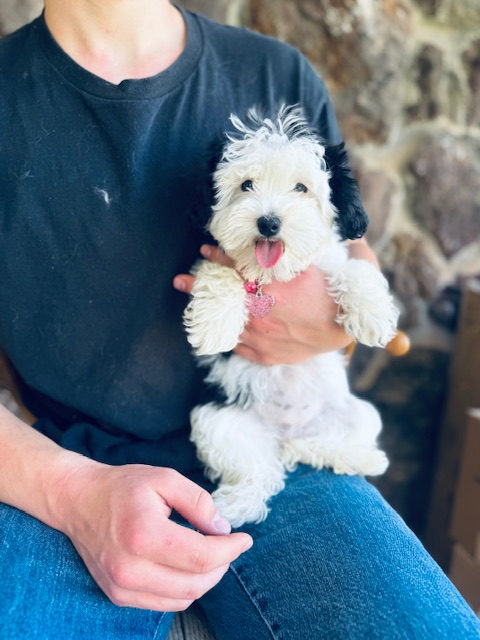
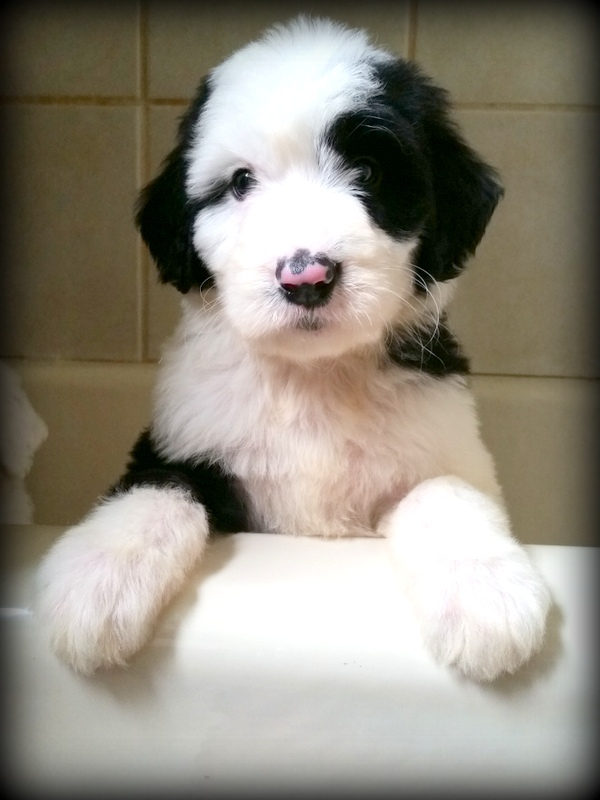
| Black & White | Bold, symmetrical black patches over a white base, closest to the classic Old English Sheepdog look | Most common |
| White / Cream | Little to no dark patching, sometimes with light tan shading around the ears or face | Common |
| Brown / Chocolate | Solid or patched deep brown coat, sometimes lightening with age | Less common |
| Silver / Gray | Lighter gray-toned coat, often a black puppy that has “cleared” (faded) with age | Less common |
| Merle | Marbled patches of color on a lighter base, often paired with blue or heterochromatic eyes | Rare |

Solid white and cream coats are common, especially in litters with a strong Poodle influence.
Coat Patterns Explained
Beyond base color, Sheepadoodles can carry a few distinct patterns:
- Parti: At least 50% white coat with large patches of another color.
- Tuxedo: A solid-colored body with a white chest, chin, and paws — the “classic” Sheepadoodle look.
- Abstract: Small, scattered patches of white on an otherwise solid-colored body.
- Merle: A mottled, marbled pattern caused by a specific gene, covered in more detail below.
These patterns aren’t exclusive to one base color — a tuxedo pattern can appear on a black, brown, or silver dog, and the same goes for parti and abstract markings. When you’re comparing puppies from the same litter, you’ll often see several different patterns show up even though every puppy shares the same two parents.
Brown & Chocolate Sheepadoodles
Brown-coated Sheepadoodles tend to be less common than black and white, since the coloring depends on both parents carrying the right combination of genes. Puppies born a deep chocolate brown sometimes lighten noticeably as their adult coat comes in.

Chocolate-coated Sheepadoodles are one of the less common color variations.
Do Sheepadoodle Colors Change As They Grow?
Often, yes. Many Sheepadoodle puppies inherit a “clearing” or “fading” gene from their Poodle side, which lightens the coat over the first one to two years. A puppy born jet black can mature into a silver or gray adult, and a dark brown puppy can lighten to a caramel or tan tone.
If a specific adult color matters to you, ask your breeder whether the parents’ coats changed color as they matured — that history is a far better predictor than the puppy’s coat at eight weeks old.

A puppy’s coat color at eight weeks isn’t always a reliable predictor of its adult color.
Blue Eyes in Sheepadoodles
Blue or partially blue eyes show up in some Sheepadoodles, most often (but not exclusively) alongside merle patterning or heavily white coats. Blue eyes alone aren’t inherently a health concern, but when they occur alongside the merle gene specifically, they’re worth understanding in the context below.
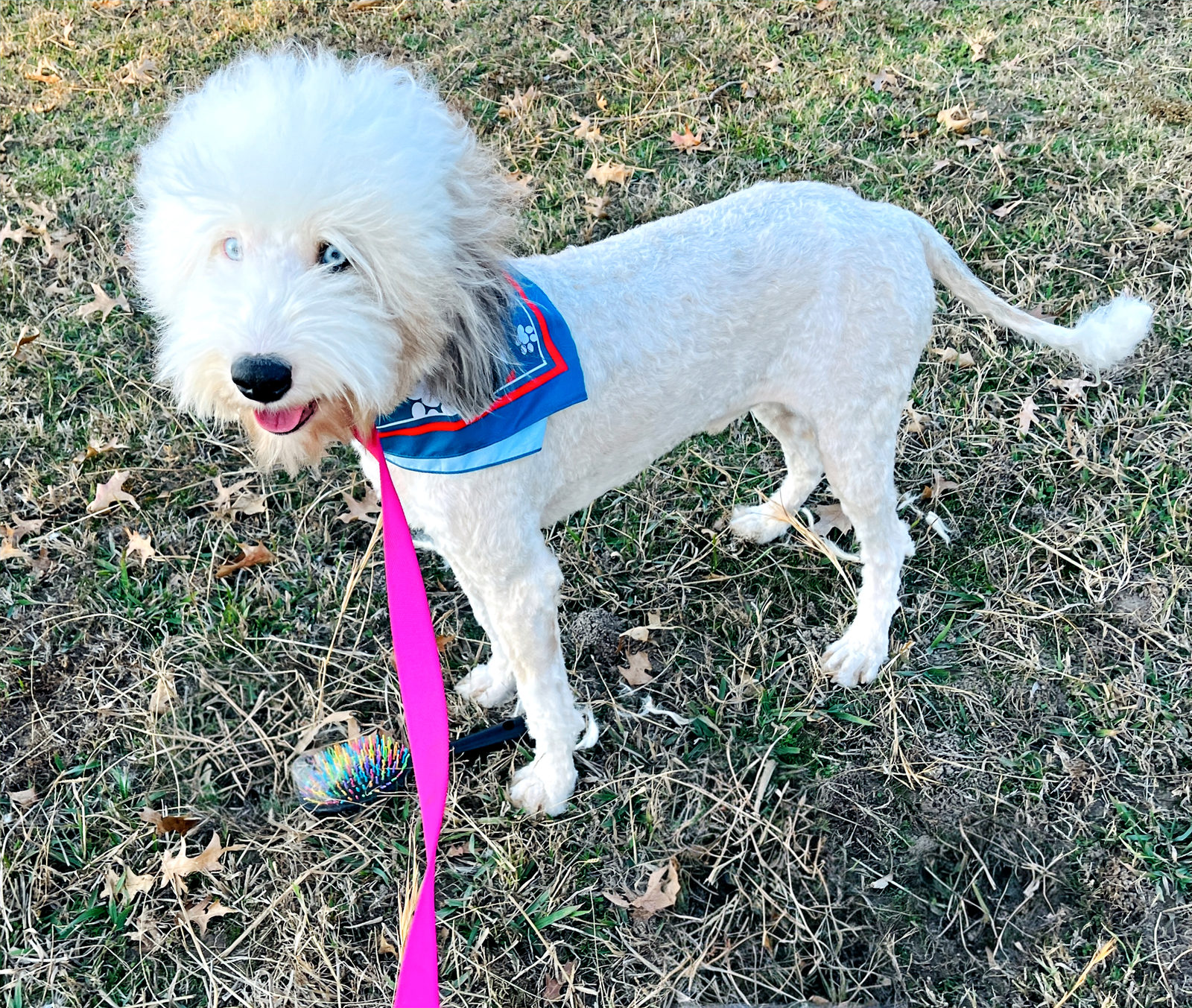
Blue eyes can occur in Sheepadoodles independent of coat color or pattern.
What About Merle Sheepadoodles?
Merle is a genetic pattern, not just a color — it creates marbled patches of darker pigment on a lighter base coat, often paired with blue or partially blue eyes. It’s genuinely rare in Sheepadoodles, since the merle gene isn’t common in Poodles and only occasionally appears in Old English Sheepdog lines.
Merle is also where responsible breeding matters most. According to the UC Davis Veterinary Genetics Laboratory, dogs that inherit two copies of the merle gene (a “double merle”) are at significantly higher risk of congenital deafness and vision problems, because the gene affects pigment development in the structures responsible for hearing and sight.
Signs of Responsible Merle Breeding
- Breeder never pairs two merle-carrying parents together
- DNA merle testing available on request
- BAER hearing test results for merle puppies
- Ophthalmic exam results available
Red Flags to Avoid
- No willingness to share genetic testing results
- Breeding merle-to-merle to “guarantee” merle puppies
- Marketing merle color without disclosing health testing
- Pressure to decide quickly on a merle puppy
If a merle puppy is what you’re after, asking direct questions about parent testing isn’t rude — it’s exactly what a responsible breeder expects and welcomes.
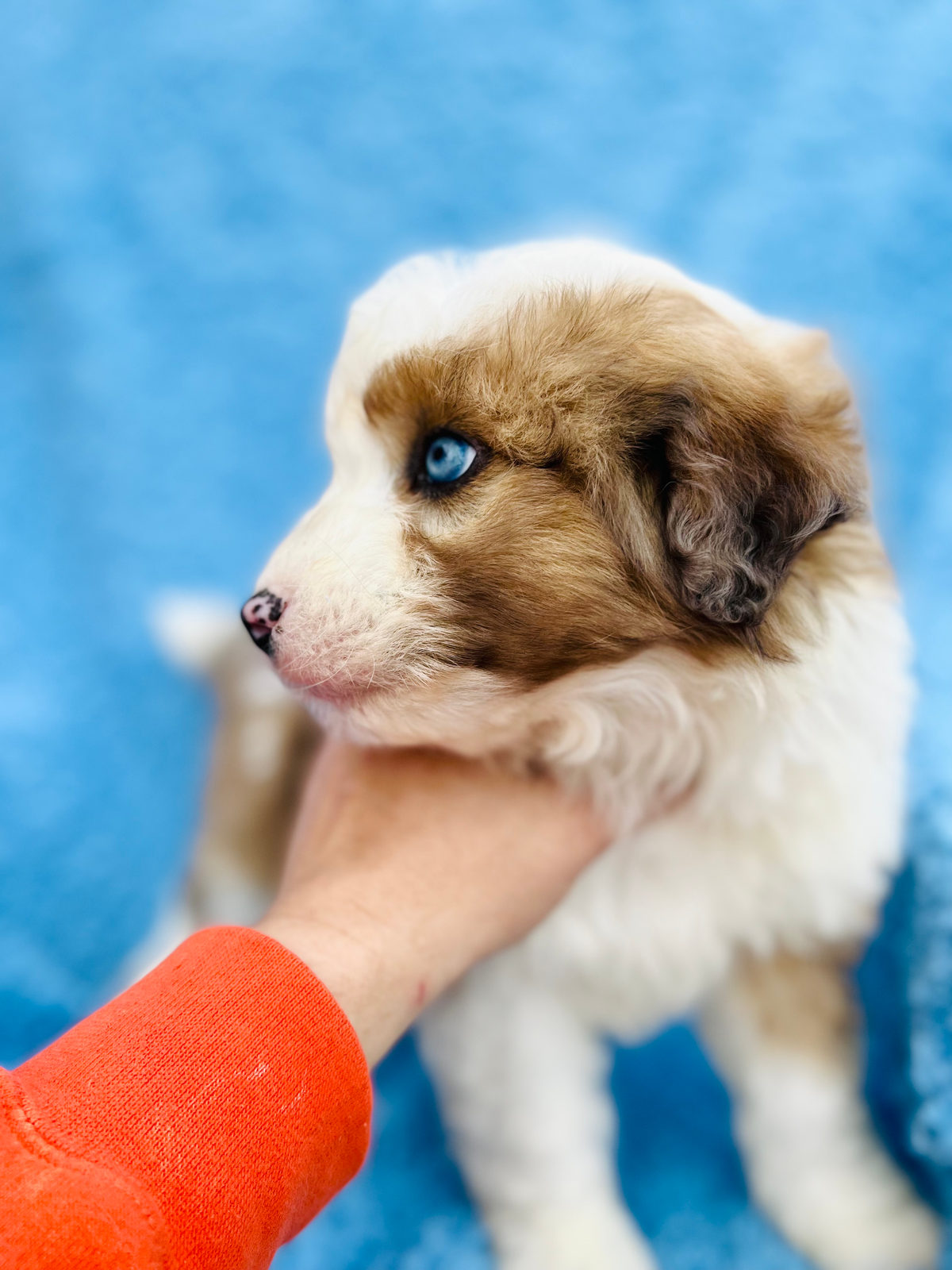
Coat markings and eye color vary widely between individual puppies, even within the same litter.
Choosing a Color Responsibly
It’s natural to have a color preference — plenty of buyers fall in love with a specific look before anything else. A few things worth keeping in mind as you shop:
- Color shouldn’t come before health testing. A striking coat is never a substitute for genetic screening, especially with merle.
- Rare colors often carry a premium price. That’s fine as a market reality, but it’s not itself evidence of quality or health.
- Ask to see the parents, not just the puppy. Parent coat and eye color is the best predictor of what a puppy will mature into.
- Stay flexible if you can. The healthiest, best-fit puppy in a litter isn’t always the one with the rarest coat.
Ask About Coat Color for a Specific Litter
Coat outcomes vary by pairing. Reach out and we can talk through what a current or upcoming litter is expected to produce.
Contact Sunshine SheepadoodlesFrequently Asked Questions
What is the rarest Sheepadoodle color?
Merle is generally considered the rarest Sheepadoodle coat pattern, since the gene is uncommon in both parent breeds. True chocolate/brown coats are also less common than black and white.
Is it safe to breed two merle Sheepadoodles together?
No. Breeding two merle dogs together statistically produces “double merle” offspring at a higher rate, which carries a significantly increased risk of deafness and vision problems. Responsible breeders never pair two merle dogs together.
Will my Sheepadoodle puppy’s coat color change?
Possibly. Many Sheepadoodles inherit a coat-clearing gene from their Poodle side that can lighten their color noticeably within the first one to two years.
Do blue eyes mean a Sheepadoodle is merle?
Not necessarily. Blue eyes can occur in Sheepadoodles independent of the merle gene, though the two do often appear together.
Coat color is just one part of the picture — see our Sheepadoodle size guide and temperament guide for the rest. Ready to see what’s currently available? Visit our available puppies page.