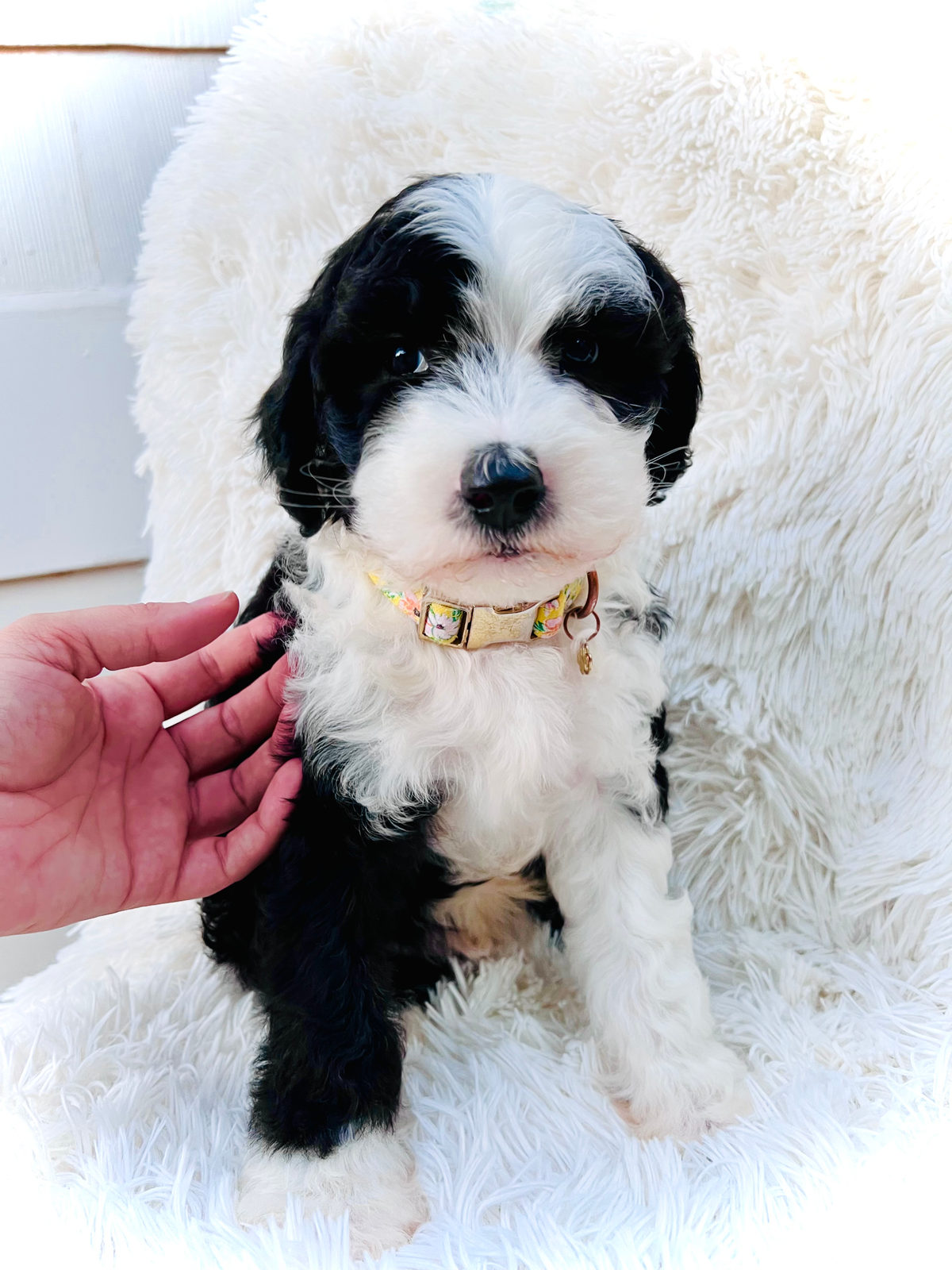

A dog’s temperament matters more day-to-day than its coat color or size. If you’re weighing whether a Sheepadoodle fits your household, here’s a grounded look at what this breed is actually like to live with — the good, and the parts that catch first-time owners off guard.
Where Sheepadoodle Temperament Comes From
A Sheepadoodle’s personality is a blend of its two parent breeds. The Old English Sheepdog contributes loyalty, a herding instinct, and a naturally protective streak toward family. The Poodle contributes sharp intelligence, trainability, and a more people-focused, eager-to-please attitude.
According to PetMD, Sheepadoodles are known for being affectionate, loyal, and highly attuned to their owners’ moods — a trait that shows up early, often by the time a puppy is a few months old.
Key Personality Traits
| Trait | What It Looks Like | Primarily Inherited From |
|---|---|---|
| Affectionate | Seeks physical closeness, leans in for pets, follows family room to room | Both parent breeds |
| Intelligent | Learns commands quickly, can get bored without mental challenge | Poodle |
| Protective | Alert to strangers, watchful over children in the household | Old English Sheepdog |
| Social | Friendly with new people and other dogs when well-socialized | Both parent breeds |
| Herding instinct | May nip heels, circle, or try to “gather” kids or other pets | Old English Sheepdog |
| People-oriented | Doesn’t do well left alone for long stretches | Both parent breeds |
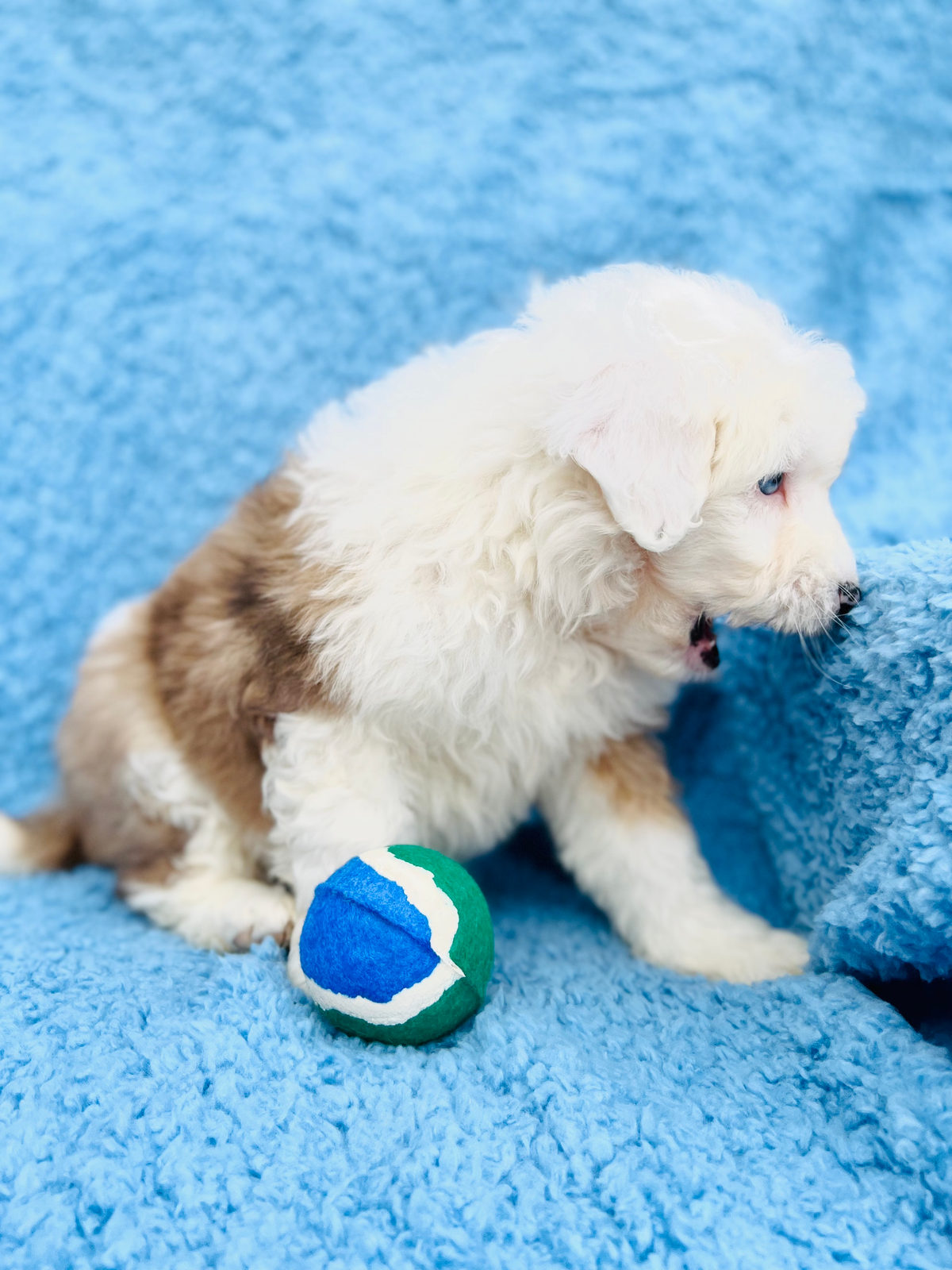
Sheepadoodles inherit trainability and eagerness to please largely from their Poodle lineage.
Are Sheepadoodles Good with Kids?
Generally, yes — with the usual caveats that apply to any dog around children. Well-socialized Sheepadoodles tend to be patient and gentle, and their herding instinct often shows up as a protective, watchful attitude toward younger family members rather than aggression.
That said, this is a genuinely active breed. Families looking for a low-energy dog to lounge around toddlers may find a Sheepadoodle’s enthusiasm a bit much without enough daily outlet for that energy. Supervised introductions and early socialization make a real difference regardless of age.

Well-socialized Sheepadoodles are typically patient and protective around children in the household.
Early Socialization Matters
Like most intelligent, people-focused breeds, Sheepadoodles benefit enormously from early exposure to new people, places, sounds, and other animals during the first several months of life. Puppy socialization classes, controlled introductions to kids of different ages, and regular exposure to everyday household chaos all help shape a well-adjusted adult dog.
Breeders who start this exposure before puppies go home give new owners a real head start — ask what a breeder does for early socialization before eight weeks, since that window matters more than most people realize.
Energy Level & Exercise Needs
Sheepadoodles are not a low-energy breed. Most need real daily exercise, not just a walk around the block, and their exercise needs shift as they grow:
| Life Stage | Daily Exercise | Notes |
|---|---|---|
| Puppy (8–16 weeks) | Short, frequent play sessions | Avoid over-exercising growing joints; follow the 5-minutes-per-month-of-age guideline |
| Adolescent (6mo–2yrs) | 60+ minutes | Peak energy and testing-boundaries phase; mental stimulation matters as much as physical |
| Adult | 45–90 minutes | Varies by size class; standards generally need more than minis |
| Senior | 30–45 minutes | Lower-impact activity, adjusted to joint health |
Training & Intelligence
Both parent breeds are highly trainable, and Sheepadoodles generally pick up commands, house training, and basic manners quickly with consistency. Positive reinforcement methods work well with this breed’s people-pleasing streak.
Where things get trickier is the independent streak some Sheepadoodles inherit from the Old English Sheepdog side. It doesn’t show up in every dog, but if it does, patience and consistency matter more than repetition alone.
Crate training, basic obedience, and puppy classes in the first six months tend to pay off well with this breed. Because Sheepadoodles are food- and praise-motivated, positive reinforcement almost always outperforms correction-based methods — and it tends to strengthen the bond you’re already building with a naturally affectionate dog.
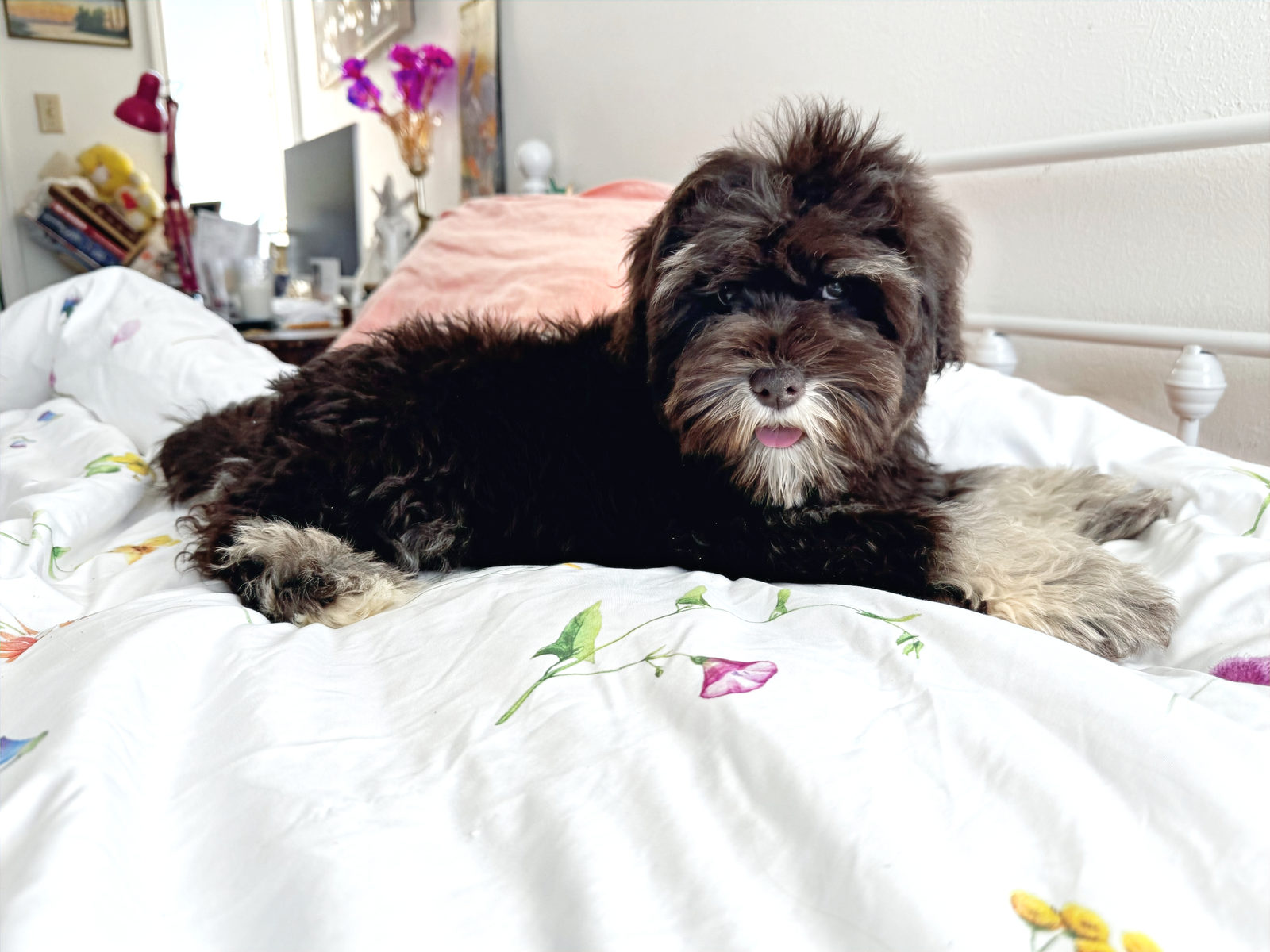
Consistent, positive-reinforcement training tends to work best with this breed’s people-pleasing temperament.
Common Behavior Challenges to Watch For
What Comes Naturally
- Bonding closely with the whole family
- Reading human emotions and responding to them
- Getting along with other pets when introduced properly
- Picking up new commands and routines quickly
What to Actively Manage
- Herding nips or chasing during play, especially with kids
- Separation anxiety if left alone too long, too often
- Boredom-driven mischief without enough mental stimulation
- Jumping or over-excitement when greeting new people
Is a Sheepadoodle Right for Your Household?
- You’re home often, or can arrange regular company: This breed doesn’t thrive on being left alone for long, unpredictable stretches.
- You can commit to daily exercise: Even mini Sheepadoodles need consistent physical and mental engagement.
- You have time for training in the first year: The payoff for early consistency is a well-mannered adult dog.
- You want a genuinely affectionate, in-your-space companion: If you want a more independent, aloof dog, this probably isn’t the right breed.

Adult Sheepadoodles often settle into a calmer, still-affectionate rhythm once past the high-energy adolescent phase.
Meet the Personality Behind a Specific Litter
Every litter has its own energy and temperament tendencies based on the parents. Reach out and we’re happy to talk through what to expect.
Contact Sunshine SheepadoodlesFrequently Asked Questions
Do Sheepadoodles bark a lot?
Sheepadoodles can be alert barkers, especially in response to strangers or unfamiliar noises, thanks to their Old English Sheepdog watchdog instincts. Consistent training can help manage excessive barking.
Can Sheepadoodles be left alone during the workday?
Sheepadoodles are people-oriented and generally don’t do well with long stretches of daily isolation. If you work full-time away from home, plan for a midday break, dog walker, or daycare, especially during puppyhood.
Are Sheepadoodles aggressive?
No, Sheepadoodles are not typically an aggressive breed. What can look like aggression — nipping or chasing during play — is usually herding instinct from the Old English Sheepdog side, which training can redirect.
How does temperament differ between mini and standard Sheepadoodles?
Temperament is driven more by individual genetics and upbringing than size class. That said, standard Sheepadoodles are sometimes described as slightly calmer as adults, while minis can retain puppy-like energy a bit longer.
Curious how temperament connects to size and coat type? Check out our Sheepadoodle size guide and our guide on Sheepadoodle shedding and allergies. When you’re ready to meet a puppy in person, our available puppies page is the best place to start. If you’re weighing us against the purebred parent breed, see how Sheepadoodles compare to their Old English Sheepdog parent breed. If you’re expecting a new baby, our guide to introducing a Sheepadoodle to a new baby covers the herding-nip instinct mentioned above in more depth. Once you’ve found a litter, our guide on how to choose the right puppy from a litter covers picking the individual puppy whose personality fits your household.