

The first month with a new puppy sets the tone for years of life together. Sheepadoodles are smart and eager to please, which makes training easier than with many breeds — but their herding instincts and high intelligence mean a little structure goes a long way. Here’s a realistic first-month plan.
Nothing here requires special equipment or a professional trainer on day one, though both can help. What matters most in these early weeks is consistency: the same potty spot, the same cues, and the same calm response to mistakes, repeated often enough that your puppy starts to predict what comes next.
Crate Training Schedule by Age
Crate training gives a puppy a safe, den-like space and is one of the fastest paths to reliable house training. A simple rule of thumb: take your puppy’s age in months, add one, and that’s roughly the maximum hours they can comfortably hold it.
| Puppy Age | Max Crate Time |
|---|---|
| 8–10 weeks | 1 hour |
| 3 months | 2–3 hours |
| 4 months | 4 hours |
| 6 months | 6 hours |
These are daytime maximums, not overnight sleep — most puppies can sleep longer stretches at night once house training is underway.

A crate should feel like a safe den, not a punishment — introduce it gradually with treats and short positive sessions.
Potty Training Timeline
According to the American Kennel Club, young puppies typically need a potty break every 30 to 60 minutes while awake, with roughly one additional hour of holding capacity per month of age. The most reliable times to take a puppy out are first thing in the morning, right before bed, and 10 to 20 minutes after meals.
- Take your puppy to the same spot outside every time to build a consistent association.
- Praise immediately when they go in the right place — timing matters more than the praise itself.
- Watch for signals like circling, sniffing, or sudden stillness during play.
- Expect accidents. They’re part of the process, not a sign of failure.
Managing the Herding Instinct
Sheepadoodle puppies often nip more than other breeds during play, and it’s usually not aggression — it’s an inherited herding instinct from the Old English Sheepdog side. Left unaddressed, that same instinct can show up as nipping at heels or circling kids and other pets.
The good news: Sheepadoodles are quick to redirect. Teaching a solid “leave it” and “sit” early gives you tools to interrupt herding behavior before it becomes a habit, and keeping an appropriate chew toy on hand gives that mouthy energy somewhere better to go.

Redirecting herding behavior with commands and appropriate chew toys works better than punishment for this breed.
Basic Commands to Start With
| Command | Why Start Here |
|---|---|
| Sit | Foundation command that makes every other cue easier to teach |
| Stay | Builds impulse control, useful for managing excitement at the door |
| Come | Critical for safety, especially in an unfenced yard |
| Leave it | Directly helps redirect nipping and herding behavior |
The Certification Council for Professional Dog Trainers emphasizes evidence-based, positive-reinforcement methods as the industry standard — and Sheepadoodles, with their people-pleasing streak, tend to respond especially well to this approach. Short, five-to-ten-minute sessions a few times a day work better than one long session.
A Sample First-Week Daily Schedule
| Time | Activity |
|---|---|
| Wake up | Potty break immediately, then playtime |
| Morning | Feed, potty break 10–20 min after eating |
| Midday | Short training session (5–10 min), nap in crate |
| Afternoon | Potty break, play, second short training session |
| Evening | Feed, potty break, calm wind-down time |
| Before bed | Final potty break, settle into crate for the night |
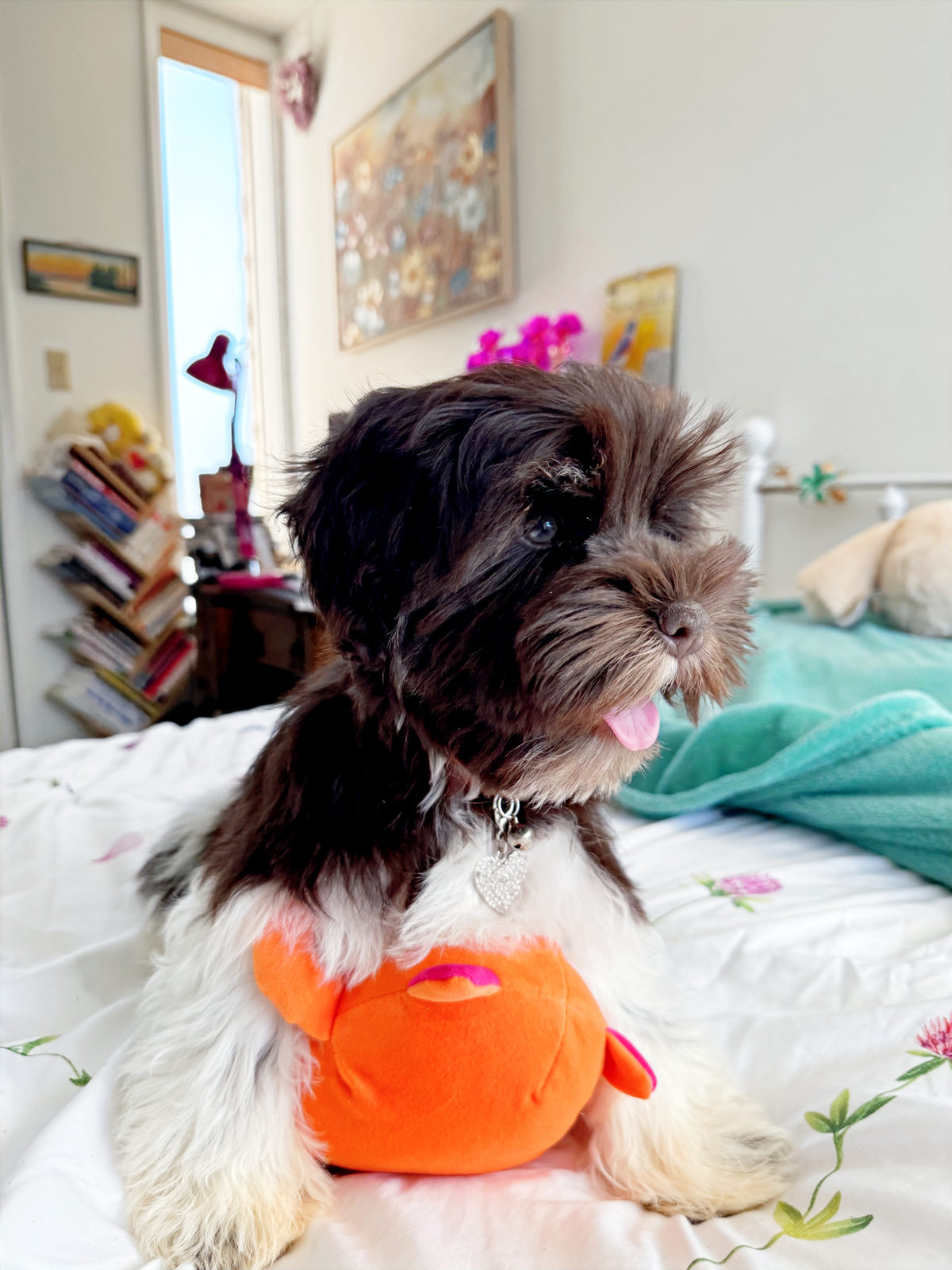
Consistency in timing matters more than perfection — the goal is a predictable rhythm your puppy can learn to anticipate.
Socialization Matters as Much as Commands
Training isn’t only about sit and stay. The first few months are also the most important window for socialization — exposing your puppy to new people, sounds, surfaces, and situations while they’re naturally more adaptable. A puppy that meets a variety of people, hears vacuum cleaners and traffic, and experiences car rides early tends to grow into a far more confident, less reactive adult.
Puppy classes are worth considering once your veterinarian confirms it’s safe based on your puppy’s vaccination schedule. Structured group settings give your Sheepadoodle controlled exposure to other dogs and people, alongside basic obedience work led by a trainer.
In the meantime, you can still socialize safely at home: invite friends over, expose your puppy to different flooring surfaces, play recordings of thunderstorms or fireworks at low volume, and take short car rides to new but calm environments. Small, low-stress exposures add up faster than most new owners expect.

Early, positive exposure to new people and situations shapes a confident adult temperament as much as any command does.
Common First-Month Mistakes to Avoid
What Tends to Work
- Short, frequent training sessions
- Consistent potty schedule and location
- Positive reinforcement with treats and praise
- Redirecting nipping to appropriate toys
What Tends to Backfire
- Punishing accidents after the fact
- Long, inconsistent crate stretches too early
- Skipping socialization during the early weeks
- Expecting overnight results from an intelligent, still-young puppy
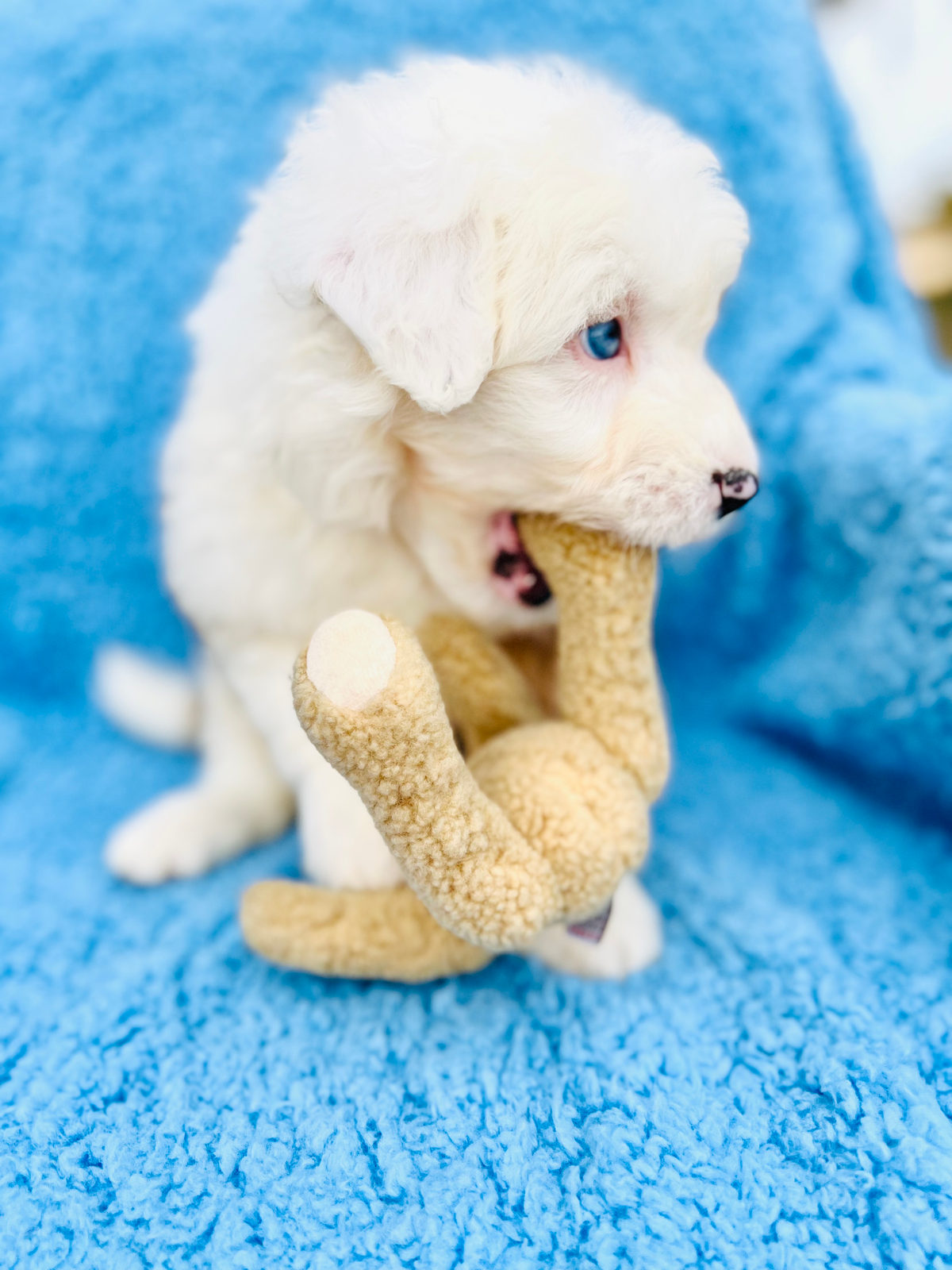
Consistency, not intensity, is what actually moves the needle in the first month.
Bringing Home a Sheepadoodle Soon?
We’re happy to talk through training expectations specific to your puppy’s personality before pickup day.
Contact Sunshine SheepadoodlesFrequently Asked Questions
How long does it take to potty train a Sheepadoodle puppy?
Most puppies show real progress within the first few weeks with a consistent schedule, though full reliability often takes 4 to 6 months depending on the individual dog.
Why does my Sheepadoodle puppy nip so much?
Nipping is usually rooted in herding instinct inherited from the Old English Sheepdog side, not aggression. Redirecting to appropriate toys and teaching “leave it” typically resolves it over time.
Is crate training necessary for a Sheepadoodle?
It’s not strictly required, but it’s one of the most effective tools for house training and gives your puppy a secure space of their own, which most Sheepadoodles adjust to quickly.
What’s the best training method for Sheepadoodles?
Positive reinforcement, using treats, praise, and consistency, is the industry-recommended standard and tends to work especially well with this breed’s people-pleasing temperament.
Curious how training connects to overall temperament? See our Sheepadoodle temperament guide, or review how to reserve a puppy if you haven’t brought one home yet. For full crate sizing and a week-by-week schedule, see our Sheepadoodle crate training guide. Training also extends to the yard: see our guide to Sheepadoodle yard escape-proofing and fence requirements for containment planning before puppy pickup day.