
A Sheepadoodle’s combination of Poodle intelligence and Old English Sheepdog work drive means this breed genuinely needs more than a squeaky toy tossed across the room. Here’s how to think about toy categories and enrichment by what your dog actually needs, rather than by what looks fun on a store shelf.
Why Enrichment Matters for This Breed
Both parent breeds bring real “jobs” to the mix — herding on one side, working alongside a handler on the other — and a Sheepadoodle without an outlet for that drive tends to find one on their own, usually in the form of chewed furniture, excessive barking, or restless pacing. Mental enrichment, not just physical exercise, is what actually satisfies that underlying need.
It’s a common misconception that a long walk or a tired body is enough on its own. Two dogs can get identical amounts of physical exercise and end up in very different moods by evening, depending on whether one of them also got meaningful mental engagement along the way. For a breed built from two historically working lines, that mental piece isn’t optional extra credit — it’s a core part of what keeps the dog genuinely settled.
According to the American Veterinary Society of Animal Behavior, food puzzle toys aren’t just entertainment; regular use builds frustration tolerance, encourages independent problem-solving, and tends to lower a dog’s overall arousal level, leading to calmer behavior even outside of active play sessions.
Toy Categories to Have on Hand
| Category | What It Satisfies | Good For |
|---|---|---|
| Food puzzles / treat dispensers | Problem-solving, slower eating | Mealtimes, alone time |
| Snuffle mats | Natural foraging instinct | Calm, independent enrichment |
| Durable chew toys | Jaw exercise, stress relief | Teething puppies, crate time |
| Fetch toys | Physical exercise, retrieving drive | Yard or park play sessions |
| Tug toys | Structured physical play, bonding | Supervised interactive play |
| Scent work kits | Nose-driven mental work | Rainy days, low-mobility days |

Rotating toy categories keeps enrichment novel instead of letting any one toy become background noise.
Matching Toys to Breed Traits
- High intelligence means puzzle and problem-solving toys tend to hold attention far longer than simple squeakers.
- Herding instinct can make fetch and tug especially satisfying outlets, giving that drive somewhere structured to go.
- A strong nose, inherited from both parent breeds, makes scent-based games and snuffle mats a natural fit.
- Poodle-driven athleticism means most adult Sheepadoodles need daily physical outlets in addition to mental ones, not instead of them.
Signs Your Sheepadoodle Needs More Enrichment
It’s not always obvious that boredom, rather than a training issue, is the root cause of a behavior problem. A few patterns worth watching for:
- Destructive chewing that’s focused on household items rather than appropriate toys, especially when it happens most during periods you’re occupied elsewhere.
- Restless pacing or attention-seeking that continues even after a walk or physical exercise session.
- Excessive barking at minimal or no real trigger, particularly during unstructured downtime.
- Fixation on one activity, like obsessively watching a door or window, that seems to fill an otherwise empty part of the day.
These patterns don’t always mean more exercise is the answer. Often, they signal that a dog’s mind is under-worked even if their body is reasonably tired, which is exactly the gap toy rotation and enrichment are designed to close.
Why Toy Rotation Matters
Keeping every toy available at all times is one of the fastest ways to make even good toys boring. Instead, keep a small rotation out at any given time, roughly three to five toys, and swap in previously “retired” ones every week or two. A toy that’s been out of sight for ten days often gets greeted with the same enthusiasm as something brand new.
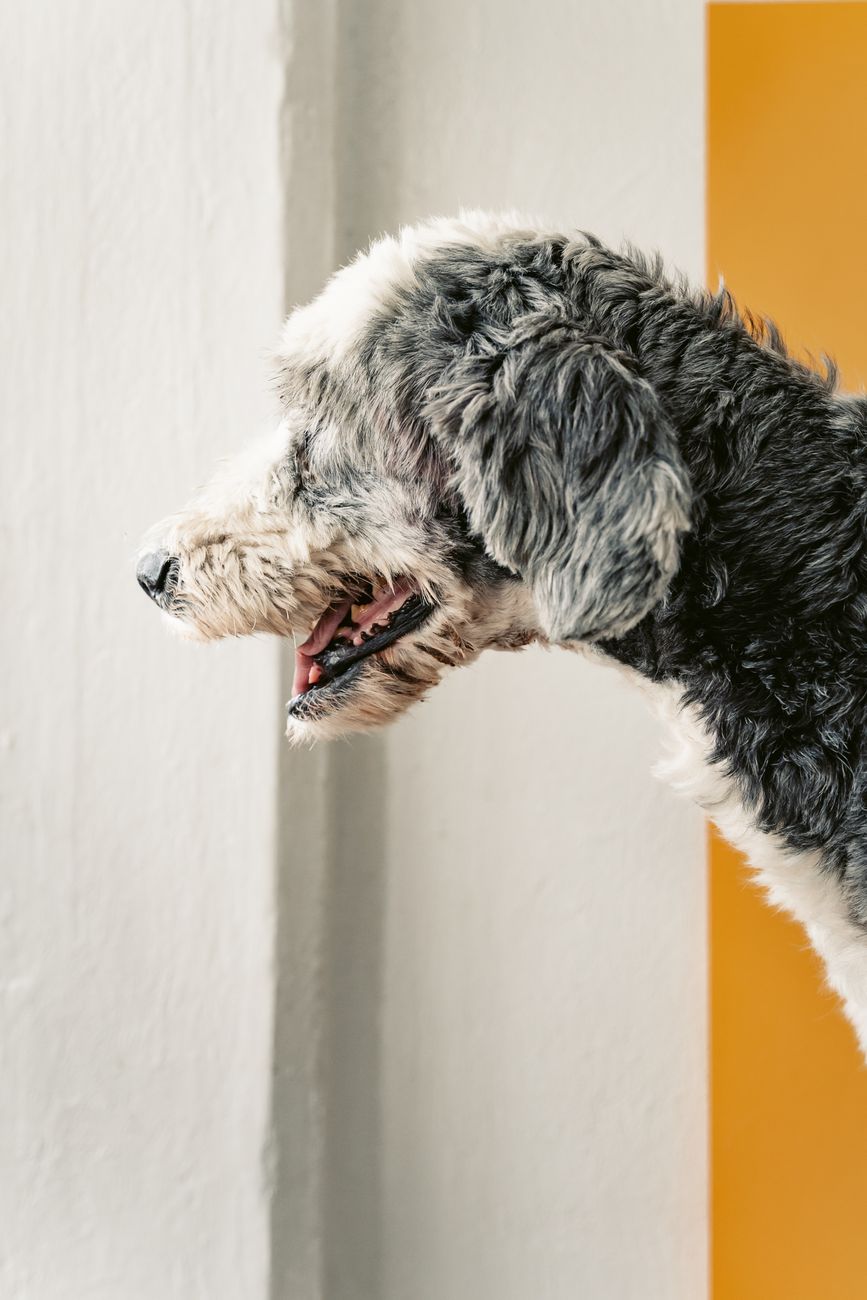
A rotated toy often gets a fresher reaction than one that’s been sitting out all week.
Simple DIY Enrichment Ideas
Low-Cost, No-Purchase Options
- Scatter kibble in grass for outdoor foraging practice
- Roll treats into a towel, accordion-style, as a homemade snuffle toy
- Freeze plain broth or wet food in a chew-safe container
- Hide treats around a room for a simple nose-work game
What to Avoid
- Rawhide, which can pose a choking or blockage risk
- Toys with small, easily detachable parts
- Leaving heavily chewed toys in circulation once damaged
- Relying on physical exercise alone without any mental component
The VCA Animal Hospitals enrichment guidance notes that turning part of a dog’s regular meal into a foraging or puzzle activity, rather than serving every meal in a bowl, is one of the simplest and most consistent ways to add enrichment without any extra time investment.

A satisfied, mentally engaged Sheepadoodle is generally a calmer one at home.
Puppies vs. Adults: What Changes
Puppies need softer, teething-appropriate chew options and shorter enrichment sessions, since attention spans are limited and overstimulation happens quickly. Adult Sheepadoodles can generally handle tougher chew toys, longer puzzle sessions, and more complex scent work. Regardless of age, always size toys appropriately and supervise chew sessions, especially with anything new, until you know how your specific dog interacts with it.
Senior Sheepadoodles benefit from a similar adjustment in the other direction. As joints and energy levels change with age, softer chew textures and slower-paced enrichment, like scent work or a gentle snuffle mat session, often become more appropriate than high-impact fetch or vigorous tug. The goal at every life stage is the same: enough mental challenge to stay satisfied, matched to what that dog’s body can comfortably handle.
Building a Simple Weekly Routine
You don’t need an elaborate schedule to make a real difference. A workable starting point looks something like: a food puzzle or snuffle mat session at one meal most days, a short scent-work or hide-and-seek game two or three times a week, and at least one dedicated fetch or tug session most days in addition to regular walks. Puppy training sessions, even brief five-minute ones, count as mental enrichment too, since learning something new is genuinely tiring in a good way.
The specific mix matters less than the consistency. A dog who reliably gets some form of mental engagement every day tends to settle into calmer default behavior than one who gets an intense enrichment day followed by several with none at all.
Curious What Your Puppy Will Need?
We’re happy to talk through enrichment and exercise needs based on your puppy’s individual energy level.
Contact Sunshine SheepadoodlesFrequently Asked Questions
How many toys does a Sheepadoodle actually need?
Fewer than you might think at any one time. A rotation of three to five toys, refreshed every week or two, tends to hold interest better than a large pile left out permanently.
Are puzzle toys really necessary, or is exercise enough?
Physical exercise alone often isn’t enough for this breed’s mental needs. Puzzle and food-based enrichment address problem-solving drive that running and walking don’t fully satisfy.
What toy categories are best for a teething puppy?
Softer, puppy-appropriate chew toys designed for developing teeth and gums, along with shorter enrichment sessions, since young puppies overstimulate more easily than adults.
Is tug-of-war safe to play with a Sheepadoodle?
Yes, when played with basic structure, such as a “drop it” cue and breaks built in. Supervised tug is a legitimate outlet for this breed’s physical and herding-driven energy.
For more on this breed’s energy needs overall, see our exercise and enrichment guide, and if boredom-driven barking is a pattern in your home, our barking guide covers that connection directly.
Leave a Reply