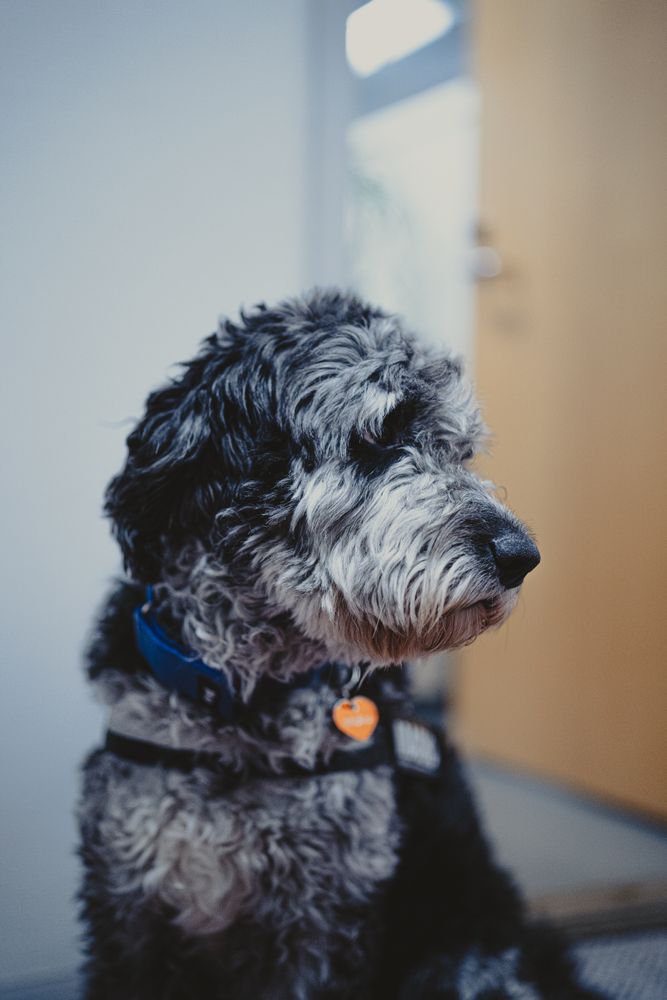
New owners are often surprised by just how fast a Sheepadoodle puppy grows in the first six months, and then how long the last stretch to full adult size can take. Here’s a realistic, stage-by-stage look at what to expect, and why overfeeding for faster growth can actually work against you.
The General Growth Timeline
Sheepadoodles do the bulk of their growing early. Most puppies reach roughly half their adult weight by around six months old, with the fastest growth phase happening between two and eight months. Growth then slows noticeably, tapering off gradually until full adult size is reached.
Exactly when that happens depends heavily on size. Smaller Sheepadoodles finish growing earlier, while larger ones take considerably longer to fill out completely.
| Size Category | Adult Weight Range | Typically Full Grown By |
|---|---|---|
| Mini | Roughly 25–45 lbs | 11–13 months |
| Medium | Roughly 35–55 lbs | 12–14 months |
| Standard | Roughly 55–85 lbs | 12.5–16 months |
These are general industry ranges rather than guarantees for any individual puppy — genetics from both the Old English Sheepdog and Poodle side, along with individual variation, mean two puppies from a similar pairing can still land at noticeably different adult sizes.

By five months, most puppies are already well into their fastest growth phase.
Growth Stage by Stage
| Age | What’s Happening |
|---|---|
| 8 weeks | Home with new family; smallest, most fragile stage |
| 3–4 months | Rapid weight gain begins; teething is often in full swing |
| 4–6 months | Fastest growth window; roughly half of adult weight reached |
| 6–9 months | Growth continues but noticeably slower than the prior stage |
| 9–12 months | Growth rate tapers further; adolescent behavior often peaks |
| 12–16 months | Reaching full adult height and weight, depending on size category |

Around six months, growth is still active but has already started to slow from its earlier pace.
A Rough Way to Predict Adult Size
One commonly used rule of thumb: take your puppy’s weight at 16 weeks old and roughly double it for a loose estimate of adult weight. This isn’t precise, since growth patterns vary between individual dogs, but it’s a reasonable ballpark figure for planning purposes — crate size, food budget, and so on.
If you want a more reliable answer, your breeder’s knowledge of the specific parents’ sizes, combined with your puppy’s growth trajectory in the first few months, is generally a better predictor than any single formula.
It’s worth tracking weight with an actual scale rather than relying on visual impressions alone, especially in the early months. A kitchen scale works fine for small puppies, and most veterinary clinics are happy to let you use theirs for a quick weigh-in between scheduled appointments. Recording a rough weight every couple of weeks builds a genuinely useful growth trend line, and it’s often the easiest way to notice early if something has changed.
Why Faster Growth Isn’t Better
It’s tempting to assume that a bigger, faster-growing puppy is a healthier one, but veterinary research points the other way. According to VCA Animal Hospitals, overfeeding a large-breed puppy leads to faster bone growth with abnormal remodeling, producing a larger skeleton that’s actually less dense and less able to support the dog’s own body weight properly.
Portion-controlled meal feeding, rather than free-feeding or maximizing growth, is the generally recommended approach. Keeping a growing Sheepadoodle at a lean, athletic body condition — not visibly thin, but with an easily felt waist and rib outline — supports healthier joint development than pushing for rapid size gains.

A lean, athletic build during the growth period supports healthier joints long-term than rapid weight gain.
Growth Rate and Joint Health
This connects directly to a genuinely important long-term health consideration for a breed this size. The Orthopedic Foundation for Animals tracks hip and elbow health screening across breeds, and growth-related developmental orthopedic conditions, including hip dysplasia, are consistently linked to excess weight gain and rapid growth during puppyhood, not just genetics alone.
In practical terms, this means the growth chart above is worth treating as a general guide rather than a target to hit or beat. A puppy tracking somewhat below average, but maintaining good body condition and energy, generally isn’t cause for concern.
This is also a good reason to be cautious about switching a growing puppy to an adult-formula food too early, or supplementing with extra calcium on your own without veterinary guidance. Both of these interventions are sometimes suggested informally as ways to help a puppy “catch up” in size, but neither is supported by the veterinary research on healthy skeletal development, and both can push a growing dog toward exactly the rapid-growth pattern that raises orthopedic risk.
Does Size Category Change Feeding Needs?
Yes, meaningfully. A mini Sheepadoodle expected to top out around 30 pounds has very different caloric and mineral needs during growth than a standard-sized dog headed toward 75 pounds. Large-breed puppy formulas exist specifically because bigger dogs benefit from more controlled calcium and phosphorus ratios during this window. If you’re not sure which category fits your puppy, your breeder or veterinarian can help you choose an appropriately formulated food rather than guessing based on age alone.
When Growth Patterns Are Worth a Vet Visit
- No weight gain at all over a two-to-three week stretch during the active growth period.
- Sudden lameness or reluctance to move that appears during a growth spurt.
- Visible ribs and spine despite a normal feeding schedule.
- A dramatic, sudden weight change in either direction.
Any of these patterns are worth a veterinary check rather than waiting to see if they resolve on their own, particularly during the fastest growth window between four and eight months.
It’s also worth mentioning growth pace at your puppy’s regular wellness visits, even when nothing seems obviously wrong. Vets weigh puppies at every appointment specifically to catch gradual patterns that aren’t visible day to day, and a trend line built from several visits is far more informative than any single weigh-in on its own.

Most Sheepadoodles reach their full adult size gradually over 12 to 16 months, not all at once.
Wondering What Size to Expect From Your Puppy?
We’re happy to talk through expected size based on a specific litter’s parents.
Contact Sunshine SheepadoodlesFrequently Asked Questions
At what age is a Sheepadoodle fully grown?
It depends on size, generally between 11 and 16 months, with larger Sheepadoodles taking longer to reach full adult size than smaller ones.
How can I estimate my puppy’s adult weight?
A rough rule of thumb is doubling their weight at 16 weeks old, though your breeder’s knowledge of the parents’ sizes is typically a more reliable estimate.
Is it better to feed my puppy more to help them grow faster?
No. Veterinary research links overfeeding and rapid growth to a higher risk of developmental orthopedic problems. Portion-controlled feeding supports healthier growth than maximizing weight gain.
Should I worry if my puppy seems smaller than the average for their age?
Not necessarily. Individual variation is normal. A puppy with good body condition and energy who’s tracking slightly below average isn’t automatically a concern.
For feeding-related questions during this stage, our first 24 hours home guide covers initial feeding continuity, and our lifespan and health guide covers other breed-common considerations worth knowing.