Author: Black & white

  • Senior Sheepadoodle Care: A Complete Guide to Aging Gracefully

    Senior Sheepadoodle Care: A Complete Guide to Aging Gracefully

    Sheepadoodle Guide · Sunshine Sheepadoodles

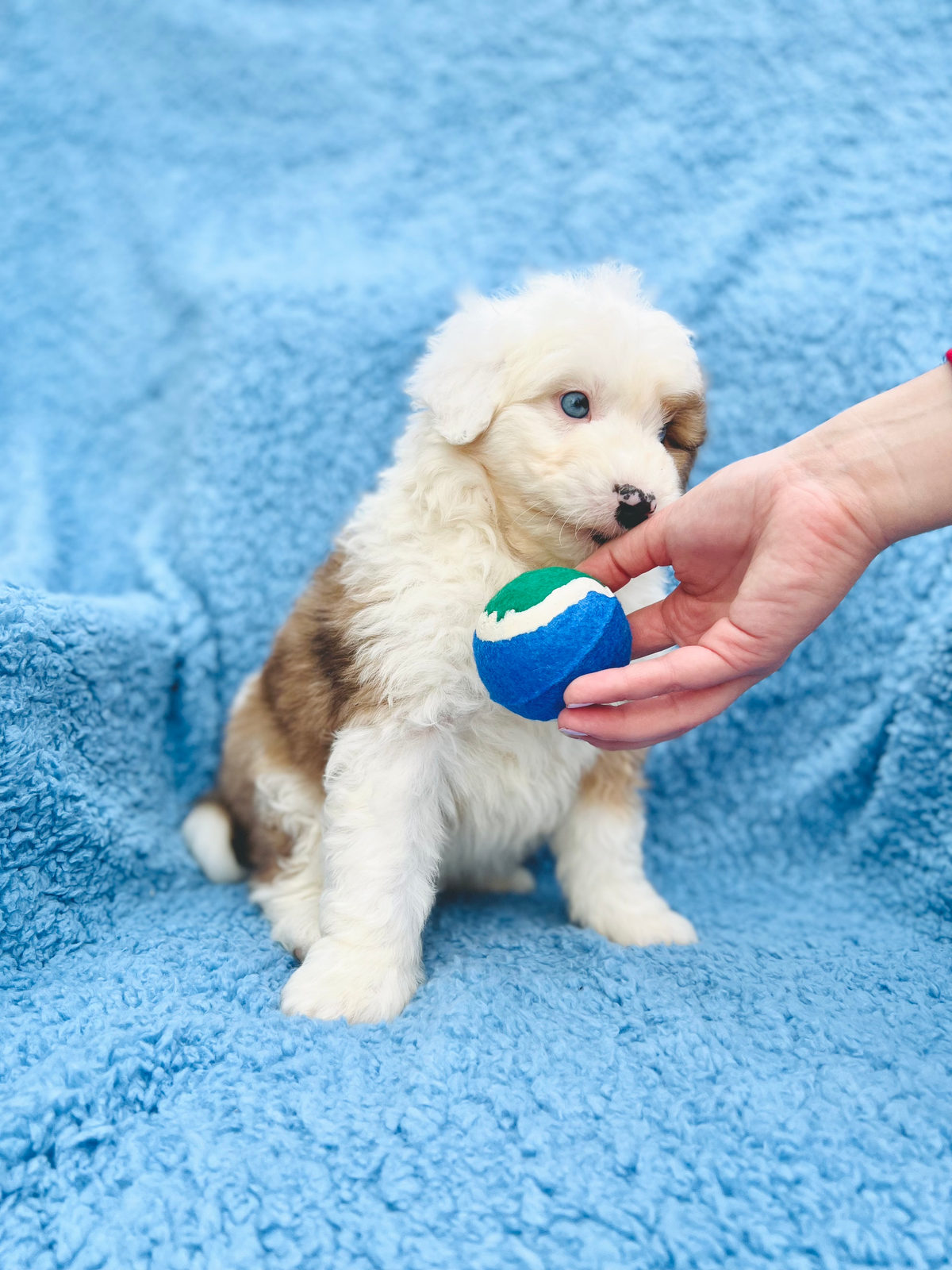
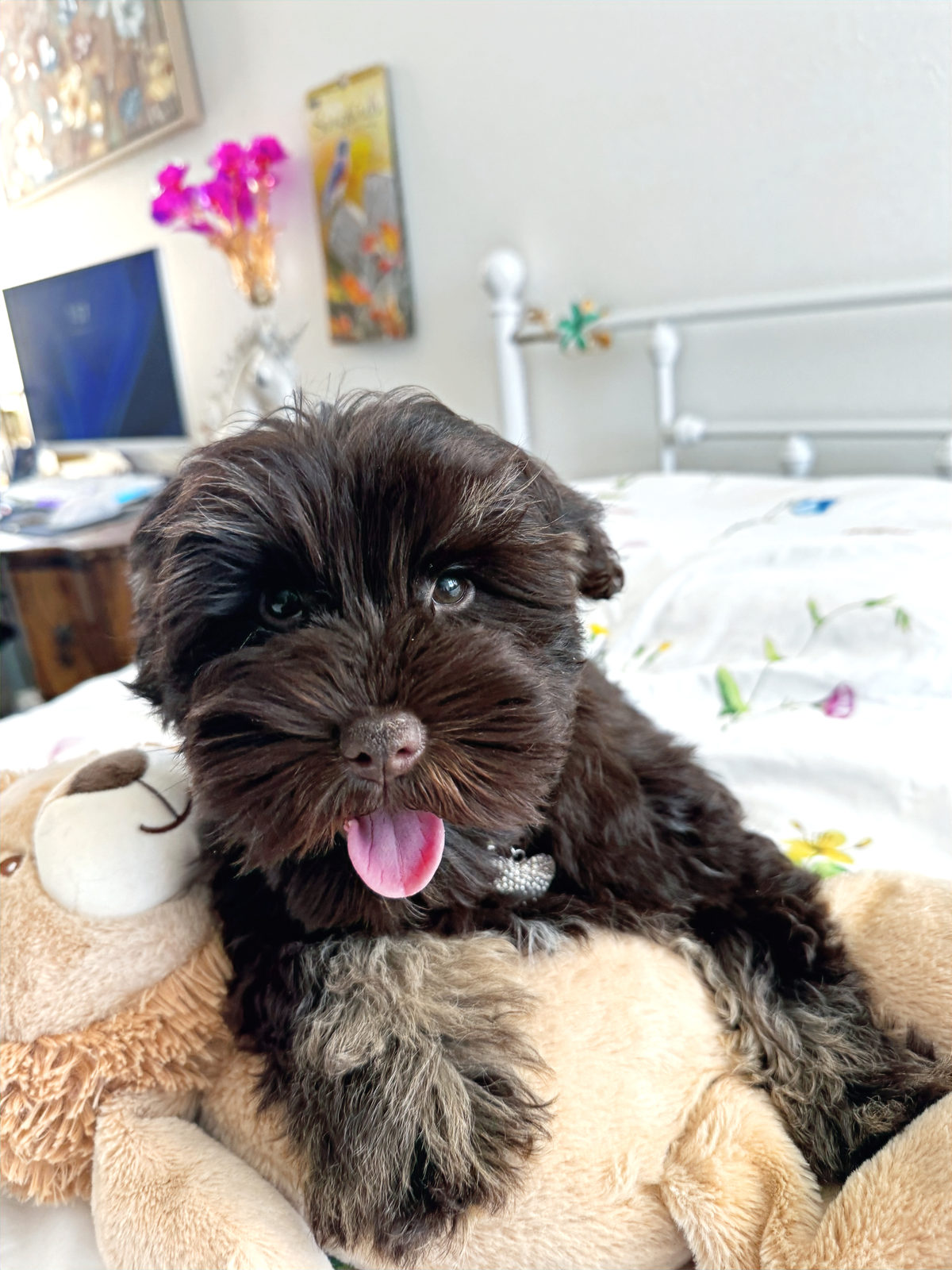
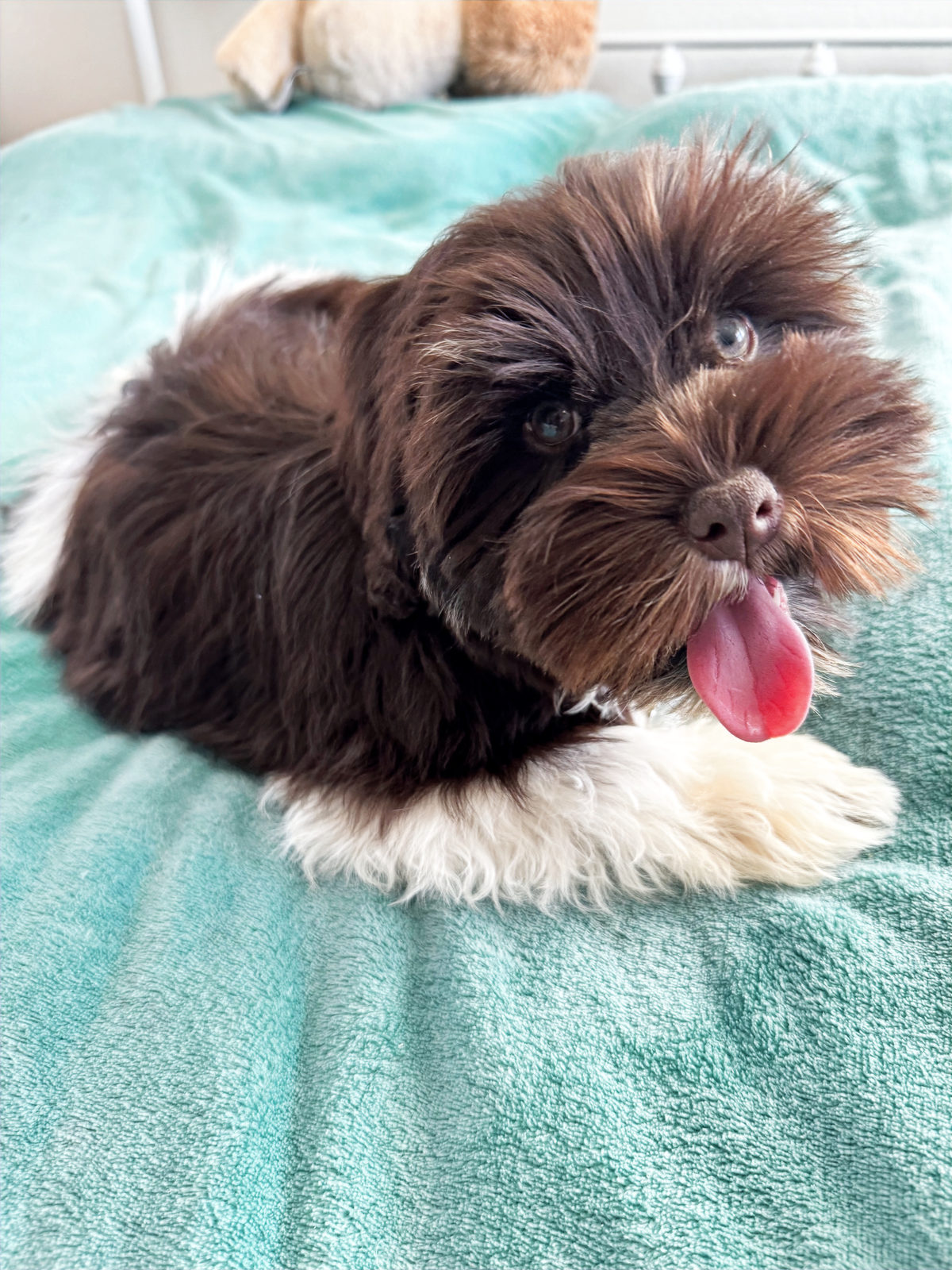
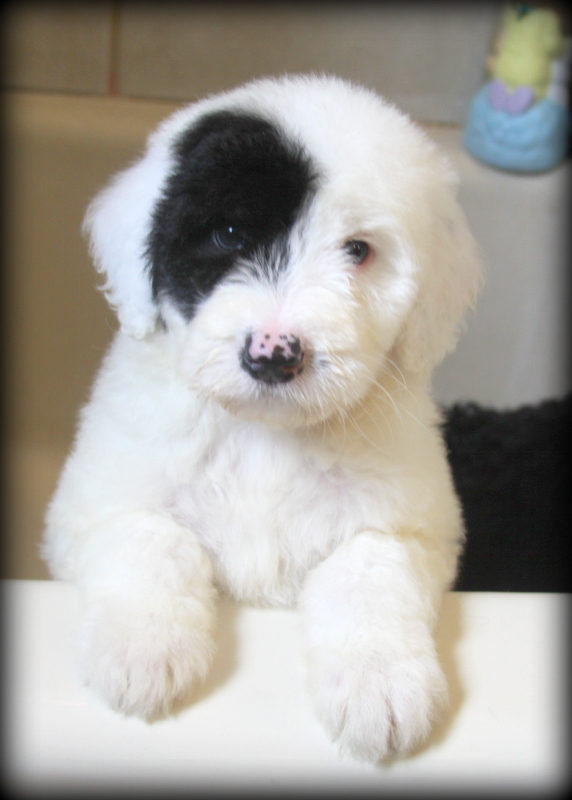
    Senior sheepadoodle dog enjoying comfortable aging care

    Aging sneaks up gradually, then all at once. One year your Sheepadoodle is bounding up the stairs, and the next you notice a slight hesitation before jumping on the couch. Here’s a practical guide to the care adjustments that actually help — mobility, diet, cognitive support, and what to watch for.

    This guide focuses on day-to-day care adjustments rather than diagnosing specific conditions. If you’re looking for information on breed-common health risks and genetic testing, our Sheepadoodle lifespan and health guide covers that ground in more depth.

    When Is a Sheepadoodle Considered “Senior”?

    Larger dogs tend to enter their senior years earlier than smaller ones, which matters for a breed with as much size variation as the Sheepadoodle.

    Approximate senior age onset by Sheepadoodle size
    Size ClassSenior Age Onset
    StandardAround 6–7 years
    Medium (Moyen)Around 7–8 years
    Mini / MicroAround 8–10 years

    These are general guidelines, not hard cutoffs — some dogs show senior-related changes earlier or later than their size class would suggest.

    Physical Changes to Expect

    • Joint stiffness, especially after rest, most noticeable in standard-sized dogs carrying more weight on their hips.
    • Slower to rise or hesitant on stairs and slick flooring.
    • Coat changes, including graying around the muzzle and sometimes a coarser or thinner overall texture.
    • Reduced hearing or vision, often gradual enough that it’s easy to miss at first.
    • Dental wear, making regular dental checks more important with age.
    Senior sheepadoodle dog showing graying muzzle and slower movement

    Graying around the muzzle and slower movement are among the first visible signs of aging.

    Diet Adjustments for Senior Sheepadoodles

    Nutritional needs shift meaningfully with age. According to the American Kennel Club, senior dogs generally need fewer calories as activity decreases, but still benefit from high-quality protein to help preserve muscle mass, which naturally declines with age.

    • Watch calorie intake closely, since a slower metabolism plus the same portion size often leads to weight gain.
    • Prioritize named protein sources to help offset natural age-related muscle loss.
    • Consider joint-support supplements like glucosamine, chondroitin, and omega-3 fatty acids, ideally discussed with your veterinarian first.
    • Reassess portions after weight checks, not on a fixed schedule — needs change gradually and individually.
    Senior sheepadoodle dog eating age-appropriate senior food

    Fewer calories but more attention to protein quality is the general direction most senior diets should shift.

    Recognizing Cognitive Decline

    Cognitive changes are easy to mistake for “just getting old” when they actually warrant a veterinary conversation.

    Normal Aging

    • Sleeping more overall
    • Slightly slower to respond to commands
    • Less interest in vigorous play

    Possible Cognitive Decline

    • Sudden house soiling in a previously trained dog
    • Disorientation, staring at walls, or getting “stuck” in corners
    • Disrupted sleep patterns or nighttime pacing
    • Noticeable withdrawal from family interaction

    According to the American Animal Hospital Association, predictable routines and consistent mental stimulation are among the most effective supportive strategies for dogs showing early cognitive changes, alongside veterinary guidance.

    Senior sheepadoodle dog with calm cognitive engagement

    Predictable routines and gentle mental stimulation support cognitive health as dogs age.

    Home Modifications for Comfort & Mobility

    • Pet ramps or steps for beds, couches, and vehicles to reduce joint strain from jumping.
    • Non-slip flooring or rugs in high-traffic areas, especially over hardwood or tile.
    • Orthopedic bedding that supports joints better than standard cushioning.
    • Raised food and water bowls to reduce neck and shoulder strain during meals.
    • Nightlights if vision is declining, to help navigate familiar spaces after dark.

    None of these changes need to happen all at once. Most owners introduce them gradually as specific needs become apparent, rather than overhauling the whole home the moment a dog crosses into “senior” territory. A ramp by the favorite couch spot or a rug over slick tile is often enough to start.
    Senior sheepadoodle dog resting comfortably at home with mobility support

    Small, gradual home adjustments often make a bigger comfort difference than a full overhaul all at once.

    Updated Vet Visit Schedule

    Most veterinarians recommend shifting from annual to twice-yearly wellness visits once a dog reaches senior status, often including senior-specific bloodwork panels. Catching kidney, thyroid, or heart changes early frequently makes them far more manageable than waiting for visible symptoms to appear.
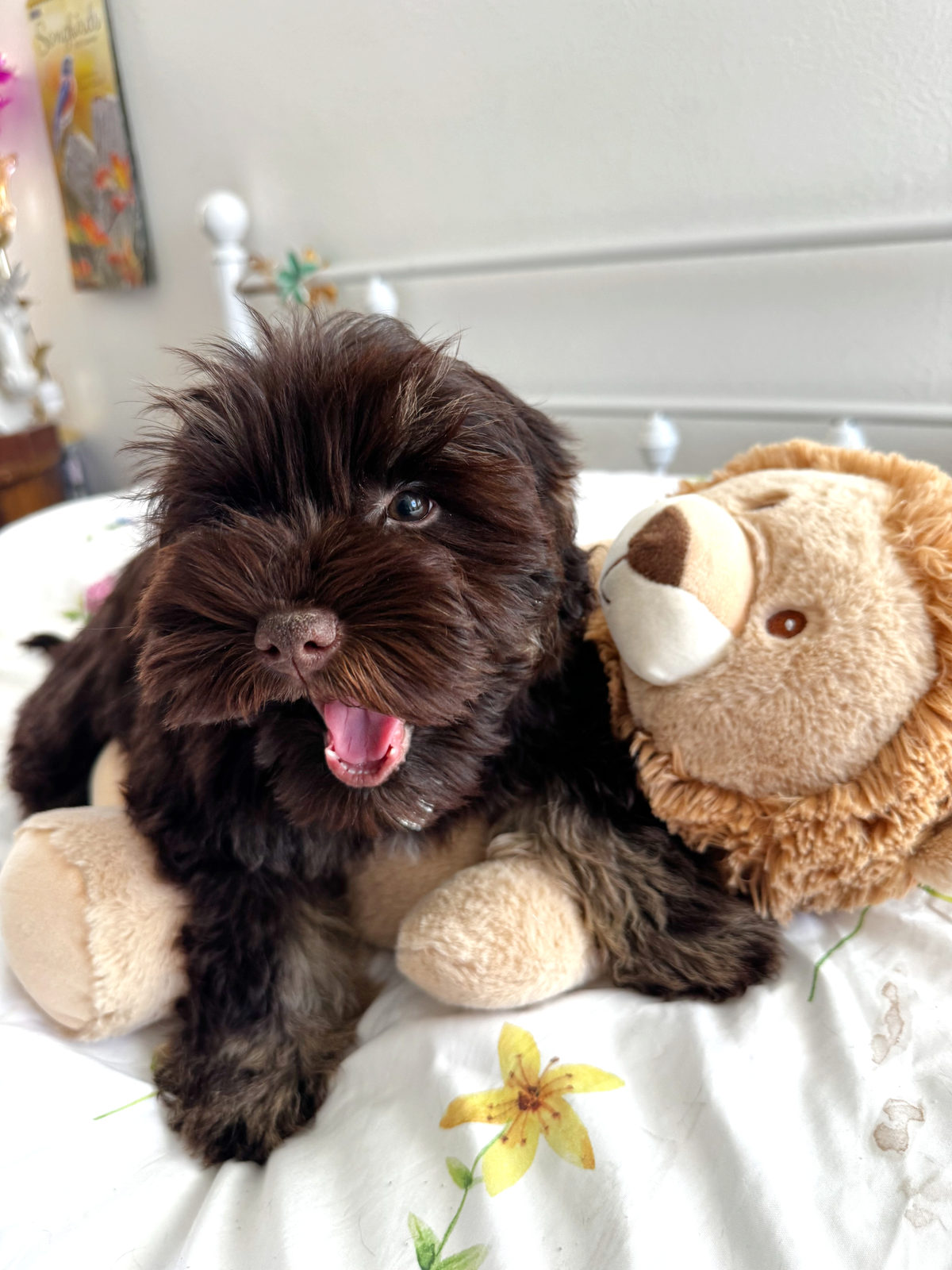
    Senior sheepadoodle dog at veterinary checkup for wellness care

    Twice-yearly wellness visits with senior bloodwork help catch age-related changes before symptoms become obvious.

    Keeping a Senior Sheepadoodle Mentally Engaged

    Mental engagement matters as much in the senior years as it did in puppyhood, just in a gentler form. Rather than retiring enrichment activities altogether, scale them down to match physical comfort:

    • Shorter, more frequent walks rather than one long outing, which is easier on joints while still providing mental stimulation from new scents and surroundings.
    • Low-impact puzzle feeders that don’t require jumping or fast movement.
    • Gentle scent games, which stay engaging even as physical mobility declines.
    • Consistent daily routines, which are especially calming for dogs experiencing early cognitive changes.
    • Continued social interaction with family and, when appropriate, other calm, familiar dogs.

    The goal isn’t to match a younger dog’s activity level — it’s to keep a senior Sheepadoodle’s mind and body as comfortable and engaged as their changing abilities allow.

    Questions About Caring for an Aging Sheepadoodle?

    We’re happy to talk through what to expect as your Sunshine Sheepadoodles puppy grows into their senior years.

    Contact Sunshine Sheepadoodles

    Frequently Asked Questions

    At what age is a Sheepadoodle considered a senior?

    It varies by size, generally around 6 to 7 years for standard-sized dogs and 8 to 10 years for mini and micro Sheepadoodles, since larger dogs tend to age faster than smaller ones.

    Should I switch my senior Sheepadoodle to senior dog food?

    Often, yes, though the right timing depends on your individual dog’s weight, activity level, and any health conditions. Discuss the switch with your veterinarian rather than following a fixed age.

    How can I tell if my senior dog has dementia versus normal aging?

    Normal aging usually means slowing down gradually. Sudden house soiling, disorientation, or significant behavior changes are signs worth discussing with your veterinarian rather than dismissing as simple aging.

    Do senior Sheepadoodles still need daily exercise?

    Yes, though the type and intensity should shift toward lower-impact activity, like shorter walks and gentle mental enrichment, rather than the higher-intensity exercise appropriate for younger dogs.

    For more on overall health considerations, see our Sheepadoodle lifespan and health guide, and adjust exercise routines using our exercise and enrichment guide as a starting point for lower-impact activity ideas.
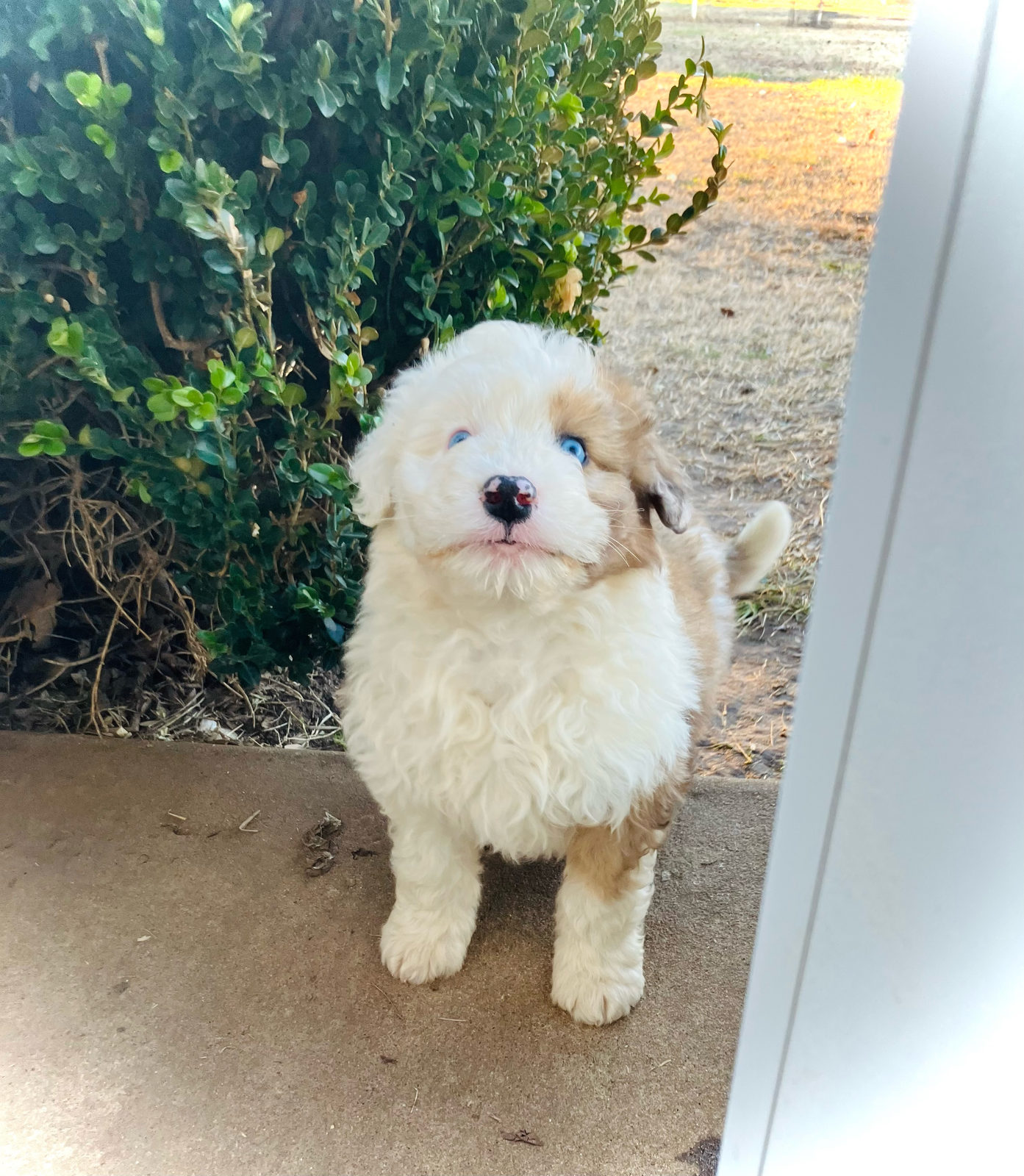

  • Sheepadoodle vs. Standard Poodle: Which Should You Choose?

    Sheepadoodle vs. Standard Poodle: Which Should You Choose?

    Sheepadoodle Guide · Sunshine Sheepadoodles

    Sheepadoodle puppy compared to Standard Poodle breed

    If you’re researching Sheepadoodles, you’ve probably come across the Standard Poodle itself as an option too — after all, half of a Sheepadoodle’s genetics come directly from that breed. So why choose the mix over the purebred parent? Here’s an honest comparison.

    This isn’t a question with an objectively “correct” answer. Both breeds are intelligent, trainable, and well-suited to family life. The differences below are mostly about which trade-offs matter most to your specific household.

    Sheepadoodle vs. Standard Poodle: At a Glance

    Sheepadoodle vs. Standard Poodle comparison
    CategorySheepadoodle (Standard)Standard Poodle
    ParentageOld English Sheepdog x PoodlePurebred
    Weight55–85+ lbs45–70 lbs
    SheddingLow, varies by generationVirtually none (true non-shedding coat)
    Coat PredictabilityVariable, even within a litterHighly consistent
    TemperamentCalm, gentle, protectiveEager to please, highly trainable
    Typical Lifespan10–13 years (standard size)11–15 years

    Shedding & Hypoallergenic Comparison

    This is the single biggest practical difference. A Standard Poodle is a true non-shedding, single-coated breed — there’s no genetic variation to account for, since it’s not a cross. A Sheepadoodle inherits a mix of Poodle and Old English Sheepdog coat genetics, and even within one litter, coat type and shedding level can vary noticeably between puppies.

    If minimizing shedding and allergen exposure is your absolute top priority, a Standard Poodle offers more certainty. If you’re drawn to the shaggier, more “sheepdog” look and can accept some variability in exchange, a Sheepadoodle is the trade-off many families choose anyway. Our Sheepadoodle hypoallergenic guide covers how generation (F1 vs. F1B) affects that variability in more detail.

    Later-generation and F1B Sheepadoodles narrow this gap considerably, since they carry a higher percentage of Poodle genetics. If shedding is a concern but you still want the Sheepadoodle look, asking a breeder specifically about F1B or multigenerational litters is worth the conversation.

    Standard Poodle white non-shedding curly coat texture

    A purebred Standard Poodle’s non-shedding coat is genetically consistent in a way a crossbreed’s coat can’t fully guarantee.

    Temperament Differences

    Both breeds are intelligent and people-oriented, but they express it a bit differently. Standard Poodles are famously eager to please and highly trainable, often excelling in obedience and service work. Sheepadoodles carry that same Poodle trainability, blended with the Old English Sheepdog’s more protective, watchful instinct — which can also mean a touch more independence during training.

    Neither is the “easier” choice universally. Some owners find the Poodle’s singular focus on pleasing its handler more straightforward to train, while others prefer the Sheepadoodle’s blended personality and slightly calmer adult demeanor.

    Sheepadoodle puppy showing calm protective temperament

    Sheepadoodles blend Poodle trainability with the Old English Sheepdog’s more protective, watchful nature.

    Size Comparison

    Standard Sheepadoodles typically run larger than Standard Poodles, since the Old English Sheepdog side adds both height and substantial bone structure. A Standard Poodle tops out around 70 pounds, while a Standard Sheepadoodle can reach 85 pounds or more depending on the specific parents.

    Grooming Needs

    Both breeds need real grooming commitment — there’s no low-maintenance option here. According to the Poodle Club of America, Standard Poodles need brushing several times weekly and professional grooming every 4 to 6 weeks to prevent matting in their dense, continuously growing coat. Sheepadoodles need a broadly similar routine, detailed in our Sheepadoodle grooming guide.

    Standard Poodle dog with curly cream coat requiring regular grooming

    Both breeds require comparable grooming commitments — neither is a low-maintenance coat choice.

    Health & Lifespan

    Standard Poodles average 11 to 15 years and are generally healthy, though they can be prone to hip dysplasia, certain eye conditions, and Addison’s disease. Standard Sheepadoodles average slightly shorter at 10 to 13 years, partly reflecting their larger typical size, and share some of the same joint-related risk from the Old English Sheepdog side.

    As a crossbreed, Sheepadoodles may benefit from hybrid vigor that can reduce the concentration of certain inherited conditions common in purebred lines — though responsible breeding and health testing matter more than breed status alone for either option.

    It’s worth noting that “purebred” doesn’t automatically mean higher health risk, nor does “crossbreed” automatically mean healthier. What actually predicts a puppy’s long-term health outlook is the specific health testing done on its individual parents, regardless of which category the breed falls into. Ask for documentation either way.

    Appearance: The Most Obvious Difference

    Even setting aside shedding and temperament, the two breeds simply look different. Standard Poodles carry a single, uniform curl pattern and are often shown or groomed in distinctive clips that emphasize their elegant, athletic build. Sheepadoodles almost never look “poodle-clipped” — the Old English Sheepdog influence gives them a shaggier, rounder-faced, more tousled appearance regardless of grooming style.

    This is often the deciding factor for buyers who’ve researched every practical difference and still can’t decide: which look do you actually want living in your home for the next decade-plus?

    Sheepadoodle puppy with shaggy tousled coat appearance

    The Sheepadoodle’s shaggier, more tousled look is one of the clearest visual differences from a groomed Standard Poodle.

    Which One Fits You?

    Consider a Standard Poodle If

    • Truly minimal shedding is a non-negotiable priority
    • You want maximum coat and temperament predictability
    • You’re drawn to the classic Poodle silhouette

    Consider a Sheepadoodle If

    • You love the shaggy sheepdog look
    • You’re comfortable with some coat/shedding variability
    • You want the Old English Sheepdog’s protective, family-oriented streak
    Adult sheepadoodle dog showing family-friendly temperament and appearance

    Both breeds make wonderful companions — the right choice comes down to your priorities on shedding, size, and look.

    Meet a Sheepadoodle in Person

    The best way to know if this breed’s blend of traits fits your family is to spend time with one. See our current litters and reach out with questions.

    View Available Puppies

    Frequently Asked Questions

    Is a Standard Poodle more hypoallergenic than a Sheepadoodle?

    Generally, yes, since a purebred Poodle’s non-shedding coat is genetically consistent, while a Sheepadoodle’s coat and shedding level can vary depending on generation and the specific puppy.

    Are Sheepadoodles bigger than Standard Poodles?

    Typically, yes. Standard Sheepadoodles often weigh more than Standard Poodles, since the Old English Sheepdog parent adds substantial size and bone structure to the cross.

    Why choose a Sheepadoodle over a purebred Poodle?

    Many buyers are drawn to the Sheepadoodle’s shaggier, sheepdog-like appearance and the calmer, protective temperament the Old English Sheepdog side contributes, even accepting some coat unpredictability in exchange.

    Do Standard Poodles live longer than Sheepadoodles?

    On average, slightly, with Standard Poodles typically living 11 to 15 years compared to 10 to 13 years for standard-sized Sheepadoodles, partly reflecting the Sheepadoodle’s larger average size.

    Curious how Sheepadoodle temperament compares to other breeds? See our Sheepadoodle vs. Goldendoodle and Sheepadoodle vs. Bernedoodle comparisons for more options.

  • Sheepadoodle Exercise & Enrichment Guide: Keeping Your Dog Happy

    Sheepadoodle Exercise & Enrichment Guide: Keeping Your Dog Happy

    Sheepadoodle Guide · Sunshine Sheepadoodles

    Sheepadoodle dog playing outdoors during exercise and enrichment

    Knowing your Sheepadoodle needs “high energy” exercise doesn’t tell you what to actually do with that energy. Here’s a practical set of activities, mental enrichment ideas, and a Texas-specific note on exercising safely once summer temperatures climb.

    This isn’t a repeat of general energy-level information you may have already seen — it’s a working list of specific activities, a realistic weekly rotation, and safety guidance for exercising this particular breed in Texas conditions.

    Daily Exercise Guidelines by Age

    Recommended daily exercise by life stage
    Life StagePhysical ExerciseNotes
    Puppy (under 6 months)Short, frequent play sessionsAvoid forced runs or jumping; growing joints need protection
    Adolescent (6mo–2yrs)45–60+ minutesPeak energy phase; combine physical and mental activity
    Adult30–60 minutesTwo moderate walks plus play sessions works well for most
    Senior20–40 minutesLower-impact activity, adjusted for joint comfort

    Best Physical Activities

    • Fetch. Simple, portable, and works in a yard, park, or hallway for quick indoor sessions.
    • Tug-of-war. Taps into natural instincts and burns energy fast, with clear rules to keep it structured.
    • Hiking. A change of scenery and new scents make hikes far more mentally tiring than a routine walk.
    • Swimming. Low-impact on joints, useful for standard-sized dogs carrying more weight on their hips.
    • Agility or flyball. Structured dog sports combine physical exertion with mental focus and training reinforcement.
    Sheepadoodle dog playing fetch for physical exercise

    Fetch and tug-of-war are simple, effective ways to burn energy in short bursts throughout the day.

    Mental Enrichment Ideas

    Sheepadoodles are thinkers, inheriting sharp intelligence from the Poodle side. Mental work can tire them out just as effectively as physical exercise — sometimes more so.

    Mental enrichment activities for Sheepadoodles
    ActivityWhat It Does
    Puzzle feedersTurns mealtime into a problem-solving task
    Scent games (find-it, hidden treats)Taps into natural scenting instincts, mentally tiring in short sessions
    Training refreshersReinforces obedience while providing mental challenge
    Snuffle matsSlows down eating while engaging the nose
    New environmentsA new walking route alone can meaningfully increase mental stimulation

    According to the American Kennel Club, intelligent, people-oriented breeds like Sheepadoodles often benefit as much from structured training sessions as from pure physical exertion — a five-minute training refresher can be as tiring as a much longer walk.

    Sheepadoodle puppy with puzzle toy for mental enrichment

    Puzzle feeders and scent games provide mental stimulation that physical exercise alone can’t replicate.

    Exercising Safely in Texas Heat

    Sheepadoodles carry a dense double coat, which makes summer exercise timing especially important here in Texas. According to Cornell University’s College of Veterinary Medicine, dogs primarily cool themselves through panting rather than sweating, which makes them considerably more vulnerable to overheating than people are in the same conditions.

    • Exercise early morning or late evening during Texas summer months, avoiding peak afternoon heat entirely.
    • Use the seven-second pavement test: if you can’t comfortably hold the back of your hand on the pavement for seven seconds, it’s too hot for paw pads.
    • Bring water on every outing, even short ones, once temperatures climb.
    • Watch for excessive panting, drooling, or lethargy, which can signal early heat stress.
    • Don’t skip exercise entirely — shift to indoor mental enrichment on the hottest days instead.
    Sheepadoodle dog resting in shade during hot Texas weather

    A dense double coat makes early morning or evening exercise especially important during Texas summers.

    Signs of Overexertion or Heat Stress

    Normal After Exercise

    • Moderate panting that slows within 10–15 minutes
    • Eagerness to drink water and rest
    • Normal gum color and alertness

    Warrants Immediate Attention

    • Heavy panting that doesn’t subside with rest
    • Excessive drooling, vomiting, or wobbliness
    • Bright red gums or tongue, or collapse

    If you see any signs in the second column, move your dog to a cool space, offer water, and contact your veterinarian immediately — heatstroke can progress quickly and is a genuine emergency.

    Overexertion isn’t limited to heat, either. Even in cooler weather, a young or growing puppy can be pushed too hard during high-impact activities like extended running or repetitive jumping. Limiting forced exercise until growth plates close, generally somewhere between 12 and 18 months depending on size, helps protect developing joints from unnecessary strain.

    Sheepadoodle puppy resting after appropriate low-impact exercise

    Growing puppies benefit from shorter, lower-impact play sessions rather than forced runs until their joints fully develop.

    A Sample Weekly Enrichment Plan

    Variety matters more than intensity. Rotating activity types throughout the week tends to keep an intelligent dog more consistently satisfied than repeating the same walk every day.

    Example weekly exercise and enrichment rotation
    DayPrimary Activity
    MondayStandard walk + 10-minute training refresher
    TuesdayFetch or tug session + puzzle feeder at dinner
    WednesdayNew walking route (novel scents/environment)
    ThursdayScent game (find-it or hidden treats indoors)
    FridayHike, swim, or longer outdoor session
    SaturdayPlaydate or dog park (if well-socialized)
    SundayLower-key day: short walk + calm enrichment

    This is a starting template, not a strict schedule — adjust based on your dog’s age, the weather, and your own routine. The goal is variety across the week, not perfection on any single day.

    Sheepadoodle dog enjoying varied weekly enrichment activities

    Rotating activity types throughout the week tends to keep an intelligent breed like this more consistently satisfied.

    Have Questions About Your Puppy’s Energy Level?

    We’re happy to talk through what to expect from a specific litter’s activity level and temperament.

    Contact Sunshine Sheepadoodles

    Frequently Asked Questions

    How much exercise does a mini Sheepadoodle need?

    Similar to other sizes, most mini Sheepadoodles do well with 30 to 60 minutes of daily exercise, though smaller size doesn’t necessarily mean lower energy in this breed.

    Is it safe to walk a Sheepadoodle in Texas summer heat?

    It can be, if timed for early morning or evening and monitored closely. Midday summer heat in Texas is genuinely risky for this breed’s dense coat, and indoor enrichment is a safer substitute on the hottest days.

    What happens if a Sheepadoodle doesn’t get enough exercise?

    Pent-up energy in an intelligent, active breed often shows up as destructive chewing, excessive barking, or restlessness. Mental enrichment can help fill gaps on days when physical exercise is limited.

    Are puzzle toys really as effective as a walk?

    For mental fatigue, often yes. Many owners find that combining shorter physical exercise with regular mental enrichment tires an intelligent dog out more completely than physical exercise alone.

    Curious how exercise needs connect to overall temperament? See our Sheepadoodle temperament guide, or review our puppy training guide for how enrichment fits into the first month at home.

  • Sheepadoodle vs. Labradoodle: Which Doodle Is Right for You?

    Sheepadoodle vs. Labradoodle: Which Doodle Is Right for You?

    Sheepadoodle Guide · Sunshine Sheepadoodles

    Sheepadoodle puppy compared to Labradoodle breed

    Labradoodles are arguably the doodle that started it all, and Sheepadoodles are one of the breeds that followed. Both are beloved family dogs, but they come from very different working backgrounds — a retriever versus a herding dog — and that history shows up in real, practical differences.

    The Labradoodle’s origins trace back to Australia in the 1980s, originally developed to create a guide dog suitable for people with allergies. That working, service-oriented lineage still shows up in the breed’s temperament today. Sheepadoodles, by contrast, don’t have a single documented “founding” moment in the same way, but consistently draw on the Old English Sheepdog’s herding background for their more watchful, protective streak.

    Sheepadoodle vs. Labradoodle: At a Glance

    Sheepadoodle vs. Labradoodle comparison
    CategorySheepadoodleLabradoodle
    Non-Poodle ParentOld English SheepdogLabrador Retriever
    Original PurposeHerdingGuide/service dog
    Standard Size (adult)55–85+ lbs50–65 lbs
    Mini Size (adult)25–45 lbs15–30 lbs
    Typical Lifespan10–16 years (by size)12–15 years
    TemperamentCalm, gentle, protectiveExcitable, enthusiastic, active
    Living SituationAdapts well to most homesNeeds more space and exercise room

    Temperament Differences

    This comparison flips a common assumption. Sheepadoodles are often described as the “gentle giant” of the doodle world — calm, patient, and easygoing, which makes them a popular first-dog choice. Labradoodles, bred originally from working guide-dog lines, tend to bring more natural enthusiasm and excitability, with high intelligence and an eagerness that some owners describe as a bit more intense day to day.

    Neither temperament is better across the board. Families with young children sometimes lean toward the calmer Sheepadoodle temperament, while active households with older kids or frequent outdoor time often enjoy the Labradoodle’s playful energy.

    Sheepadoodle puppy showing calm gentle temperament

    Sheepadoodles are often described as the calmer, more gentle-giant temperament of the two breeds.

    Coat Types: A Labradoodle-Specific Consideration

    One area where Labradoodles have more built-in variety is coat type. Labradoodle coats generally fall into three categories:

    Labradoodle coat types compared
    Coat TypeTextureShedding
    Hair coatSimilar to a Labrador’s coat, thicker and straighterHigher
    Fleece coatSilky, straight to wavyLow to none
    Wool coatDense, tight curls similar to a Poodle’sLow to none

    Sheepadoodles have less formal coat-type categorization, but generally range from flat/wavy to tightly curled depending on generation, similar in spirit to the fleece-vs-wool distinction in Labradoodles. In both breeds, curlier coats shed less but need more frequent brushing.

    Labradoodle dog with tight curly wool coat texture

    Labradoodle wool coats, with tight Poodle-like curls, shed the least but require the most grooming.

    Living Situation & Exercise Needs

    Sheepadoodles tend to adapt fairly well to a range of living situations, from apartments (with mini sizes) to homes with yards. Labradoodles, with their retriever-driven energy, generally need more consistent daily exercise and don’t adapt as easily to smaller spaces without a real exercise routine to match.

    If your lifestyle includes long daily runs, swimming, or fetch sessions, a Labradoodle’s retriever instincts may make those activities feel more natural to the dog. If you want a companion that’s equally happy on a walk or curled up at home, a Sheepadoodle often fits that more flexible role.

    Sheepadoodle dog adapting well to home living situation

    Sheepadoodles tend to adapt more flexibly across different home sizes and activity levels.

    Health & Lifespan

    Both breeds are generally healthy crossbreeds, though each inherits some risk from its non-Poodle parent. Labradoodles can be prone to hip dysplasia, progressive retinal atrophy, and ear infections tied to their Labrador heritage. Sheepadoodles carry similar joint-related risk (hip dysplasia) from the Old English Sheepdog side, along with some eye conditions.

    The Australian Labradoodle Association of America requires member breeders to complete hip, elbow, eye, and genetic DNA testing, and participates in the OFA’s CHIC health database — the same kind of testing standard worth looking for in any Sheepadoodle breeder as well.

    Whichever breed you’re comparing, the presence of a formal testing standard from an association like this is a stronger signal than the breed name itself. Ask any breeder, regardless of which doodle you’re considering, whether they participate in an equivalent program.

    Training & Family Fit

    Both breeds are highly trainable, drawing on Poodle intelligence from both sides. Labradoodles, with their guide-dog ancestry, are frequently used in service and therapy work, which speaks to how reliably trainable the breed can be when given consistent structure. Sheepadoodles are equally intelligent but can show more of an independent streak inherited from the Old English Sheepdog, occasionally requiring a bit more patience during training.

    For families with very young children, the calmer baseline temperament of a Sheepadoodle can mean less redirection needed around toddlers, though early socialization matters more than breed generalizations for any individual dog.

    Labradoodle dog showing trainable enthusiastic temperament

    Labradoodles’ guide-dog heritage contributes to their reputation as highly reliable, trainable companions.

    Which One Fits Your Lifestyle?

    Consider a Sheepadoodle If

    • You want a calmer, gentle-giant temperament
    • Your household has young children or a more relaxed pace
    • You like the classic shaggy sheepdog look

    Consider a Labradoodle If

    • You want a highly active, enthusiastic companion
    • You have space and time for consistent daily exercise
    • You want more built-in coat-type predictability
    Adult sheepadoodle dog showing family-friendly temperament

    Both breeds make excellent family companions — the right fit comes down to energy level and lifestyle match.

    Meet a Sheepadoodle in Person

    The best way to know if this breed’s temperament fits your family is to spend time with one. See our current litters and reach out with questions.

    View Available Puppies

    Frequently Asked Questions

    Are Sheepadoodles calmer than Labradoodles?

    Generally, yes. Sheepadoodles are often described as the calmer, more gentle-giant temperament, while Labradoodles tend to bring more natural enthusiasm and energy from their retriever heritage.

    Which breed is better for apartment living?

    Sheepadoodles, especially mini sizes, tend to adapt more easily to apartment living. Labradoodles generally need more consistent daily exercise and space to match their higher energy level.

    Do Labradoodles or Sheepadoodles shed more?

    Both are low-shedding overall, but it depends heavily on coat type and generation in both breeds rather than the breed name alone. Wool-coated Labradoodles and curlier F1B Sheepadoodles both shed the least.

    Which breed has a longer lifespan?

    Both breeds average 12 to 15 years, though smaller Sheepadoodle sizes can sometimes reach 16 years, similar to the general trend of smaller dogs living longer across most breeds.

    Curious how Sheepadoodle temperament compares in more depth? See our Sheepadoodle temperament guide, or explore our Sheepadoodle vs. Goldendoodle and Sheepadoodle vs. Bernedoodle comparisons if you’re weighing multiple options.

  • How Much Does a Sheepadoodle Puppy Cost? Complete Price Guide

    How Much Does a Sheepadoodle Puppy Cost? Complete Price Guide

    Sheepadoodle Guide · Sunshine Sheepadoodles

    Sheepadoodle puppy representing cost and budgeting guide

    Price is one of the first questions most people ask, and one of the hardest to get a straight answer to online. Here’s an honest look at what actually drives Sheepadoodle pricing industry-wide, what to budget beyond the purchase price, and how to tell when a low price is a red flag rather than a deal.

    Average Sheepadoodle Puppy Price Range

    Across the industry, Sheepadoodle puppies from health-tested breeders generally fall into a fairly wide range depending on size, coat, and location.

    Typical Sheepadoodle puppy price ranges by category
    CategoryTypical Range
    Standard, common colors$2,000–$4,000
    Mini / Micro$2,500–$4,500
    Rare colors/patterns (merle, tri-color, phantom)$3,000–$5,000+
    Rescue/adoption route$200–$600

    These are general market figures, not a quote — pricing varies by breeder, region, and the specific litter. For current pricing on our own puppies, the fastest way to get an accurate answer is to reach out directly.

    It’s worth resisting the urge to shop purely by price when comparing breeders. Two puppies priced a thousand dollars apart can represent very different levels of investment in health testing, socialization, and ongoing support, so the number alone rarely tells the full story.

    What Affects the Price

    Factors that influence Sheepadoodle pricing
    FactorWhy It Matters
    Health testingOFA, eye, and cardiac testing on parent dogs adds real cost per litter
    Coat color/patternRarer patterns like merle or tri-color often carry a premium
    Size classMini and micro sizes can require more breeding generations to stabilize
    Early socializationStructured, in-home socialization takes real time and effort
    LocationRegional cost of living and demand both shift local pricing
    Breeder reputationEstablished breeders with a track record often price accordingly
    Sheepadoodle puppy with health-tested parents affecting price

    Health testing on parent dogs is one of the biggest legitimate cost drivers behind puppy pricing.

    Why Health-Tested Puppies Cost More

    Genetic and orthopedic health testing isn’t cheap. Industry estimates put comprehensive health testing (hips, eyes, cardiac, and relevant genetic panels) at $3,000 to $10,000 or more per litter when done thoroughly. That cost gets built into puppy pricing, which is exactly why a breeder charging significantly less often hasn’t done this testing at all.

    This is the core trade-off behind most “why is this puppy so expensive” questions: a higher price, when paired with real documentation, usually reflects real investment rather than markup for its own sake.

    Red Flags: When a Low Price Should Concern You

    According to the Humane Society, responsible breeders don’t sell to the first buyer with cash in hand, allow visits to see the puppy’s parents and living conditions, and never sell through pet stores or third parties. Suspiciously low prices often correlate with skipped health testing, poor early socialization, or worse.

    Signs of Fair, Legitimate Pricing

    • Health testing documentation available on request
    • Willingness to let you visit and meet the parents
    • Consistent pricing, not constant “sales” or discounts
    • Puppies never sold before 8 weeks old

    Red Flags Regardless of Price

    • No health records or vague answers about parent testing
    • Pressure to decide or pay quickly
    • Refusal to let you see where puppies are raised
    • Multiple “rare” breeds or colors always available
    Responsibly bred sheepadoodle puppy from health-tested parents

    A fair price paired with real documentation is a better indicator of value than the number alone.

    Beyond the Purchase Price: First-Year Costs

    The purchase price is only the beginning. Budgeting for the first year of ownership helps avoid surprises:

    Estimated first-year ownership costs (general estimates, varies by region)
    ExpenseEstimated Annual Range
    Food (large-breed formula)$400–$800
    Veterinary care & vaccinations$300–$700
    Professional grooming$400–$900
    Supplies (crate, leash, toys, bedding)$200–$500
    Training classes (optional)$100–$400

    These figures are general estimates that vary significantly by region and individual choices — they’re meant to help you budget realistically, not as a precise forecast.

    Rescue and Adoption as an Alternative

    If budget is the primary concern, rescue and breed-specific adoption groups are worth considering. Adoption fees for Sheepadoodles and similar doodle mixes typically run $200 to $600, and often include spay/neuter, initial vaccinations, and sometimes microchipping already completed.

    The trade-off is availability and predictability. Puppies of this specific mix are less commonly found through general shelters, and rescue dogs are often adults or adolescents rather than young puppies, with less known about early history and parentage. It’s a genuinely good option for the right household, just a different one than buying from a breeder.

    Sheepadoodle available for adoption as budget-friendly alternative

    Rescue and adoption routes typically cost less but come with less predictability around age and background.

    What Your Investment Should Include

    Regardless of the exact number, a fair price from a responsible breeder should come with more than just the puppy:

    • Documentation of parent health testing
    • Current vaccinations and microchipping
    • Evidence of early socialization and in-home raising
    • A breeder willing to answer questions before and after you bring your puppy home
    Sheepadoodle puppy with complete documentation and health testing

    Documentation and ongoing breeder support are just as much a part of a fair price as the puppy itself.

    Adult sheepadoodle dog representing long-term cost of ownership

    The purchase price is just the starting point — budgeting for the full picture makes for a smoother first year.

    Ask About Current Pricing

    Pricing varies by litter, size, and coat. Reach out and we’re happy to answer questions about a current or upcoming litter.

    Contact Sunshine Sheepadoodles

    Frequently Asked Questions

    Why do Sheepadoodle puppies cost so much?

    Most of the cost reflects real investment: health testing on parent dogs, veterinary care, and structured early socialization, all of which add up to thousands of dollars per litter before puppies are ever sold.

    Is a cheaper Sheepadoodle puppy ever a good deal?

    Sometimes, but a significantly below-market price is more often a sign that health testing or proper socialization was skipped, which can lead to higher veterinary costs down the road.

    Do merle or rare-colored Sheepadoodles always cost more?

    Often, yes, due to demand, but color alone shouldn’t be the deciding factor. Health testing and responsible merle-specific screening matter more than the premium price itself.

    What’s the cheapest way to get a Sheepadoodle?

    Rescue or adoption organizations typically charge $200 to $600, significantly less than buying from a breeder, though availability of this specific mix through rescues varies by region and timing.

    Curious what the full financial picture looks like beyond food and vet visits? See our Sheepadoodle feeding guide and grooming guide for more detail on ongoing costs.

  • Sheepadoodle Feeding Guide: What & How Much to Feed by Age

    Sheepadoodle Feeding Guide: What & How Much to Feed by Age

    Sheepadoodle Guide · Sunshine Sheepadoodles

    Sheepadoodle puppy eating from feeding guide portions

    Feeding questions come up constantly with a new puppy: how much, how often, and which food actually matters. Here’s a practical breakdown by age and size, along with the two things that matter most for this specific breed — large-breed nutrition and bloat prevention.

    How Much to Feed a Sheepadoodle Puppy

    Puppies need more frequent, calorie-dense meals than adults to support rapid early growth.

    Sheepadoodle puppy feeding guide by age
    AgeMeals Per DayApprox. Portion
    8–12 weeks48–10% of body weight daily, split across meals
    3–6 months3–4Gradually reducing percentage as weight increases
    6–12 months2–3Transitioning toward adult portion sizes
    12–24 months2Adult portions, still on large-breed formula until growth plates close

    A good visual check regardless of the chart: your puppy’s ribs should be easy to feel but not visibly sticking out, with a slight waist tuck when viewed from above.

    Sheepadoodle puppy at healthy weight showing proper feeding portions

    Ribs that are easy to feel but not visible is a reliable, breed-independent way to judge portion size.

    Adult Feeding Guidelines

    Adult Sheepadoodle feeding guide by size class
    Size ClassApprox. Daily AmountMeals Per Day
    Micro / Mini1.5–2.5 cups2
    Medium2.5–3.5 cups2
    Standard3–4.5 cups2

    These figures are starting points, not fixed rules — activity level, metabolism, and the specific food’s calorie density all shift the right amount for an individual dog. Free-feeding (leaving food out all day) isn’t recommended for this breed, partly because portion control matters and partly because of the bloat considerations below.

    What “Complete and Balanced” Actually Means

    Not all dog food labels mean the same thing. According to AAFCO (the Association of American Feed Control Officials), a food can only be labeled “complete and balanced” for a specific life stage if it meets defined nutrient minimums, either through lab analysis or feeding trials. Foods labeled “for all life stages” must meet both the growth (puppy) and adult maintenance standards, which are the most demanding option nutritionally.

    Checking for an AAFCO statement on the label is one of the simplest ways to confirm a food meets baseline nutritional standards, regardless of brand or price point.

    Sheepadoodle puppy with large breed puppy food formula

    Checking for an AAFCO nutritional adequacy statement is a quick way to verify any food’s baseline standards.

    Choosing a Large-Breed Formula

    Even mini and micro Sheepadoodles often benefit from a large-breed puppy formula, and standard-sized puppies genuinely need one. According to the American Kennel Club, large-breed puppy foods are formulated with controlled calcium and phosphorus levels to support slower, steadier bone growth — growing too fast on standard puppy food can increase the risk of skeletal issues in bigger dogs.

    • Look for named meat sources (chicken, lamb, salmon) rather than vague “meat meal” or plant-protein fillers.
    • Check the calcium-to-phosphorus ratio if your puppy is on the larger end of the size spectrum.
    • Stay on large-breed puppy food until growth plates close, typically 12 to 18 months depending on final adult size.

    Reducing Bloat Risk

    Bloat (gastric dilatation-volvulus, or GDV) is a serious, fast-developing emergency in deep-chested breeds, and Sheepadoodles inherit some of that risk from both the Old English Sheepdog and Standard Poodle sides. A few feeding habits meaningfully lower the risk:

    • Feed smaller, more frequent meals rather than one large daily portion.
    • Use a slow-feeder bowl if your dog tends to gulp food quickly.
    • Avoid vigorous exercise for at least an hour before and after meals.
    • Elevate feeding, or not, based on your vet’s guidance — this one is genuinely debated in veterinary literature, so ask your vet directly rather than assuming either approach is safer.
    Sheepadoodle dog eating from slow feeder bowl to reduce bloat risk

    Smaller, more frequent meals and slower eating both help reduce bloat risk in deep-chested breeds.

    Human Foods to Avoid

    It’s tempting to share table scraps with an eager, food-motivated dog, but several common foods are genuinely dangerous for Sheepadoodles:

    Generally Safe in Moderation

    • Plain cooked chicken or turkey
    • Carrots, green beans, blueberries
    • Plain pumpkin puree
    • Small amounts of plain rice

    Never Feed

    • Chocolate, grapes, and raisins
    • Onions, garlic, and chives
    • Xylitol (common in sugar-free gum and some peanut butters)
    • Cooked bones, which can splinter

    If you suspect your dog has eaten something on the “never feed” list, contact your veterinarian or an animal poison control hotline immediately rather than waiting to see if symptoms appear.

    Sheepadoodle puppy with safe healthy treats and food

    Even food-motivated Sheepadoodles should stick to dog-safe treats rather than table scraps that can contain hidden dangers.

    Transitioning Between Foods

    Whether you’re switching from puppy to adult food, or just changing brands, a gradual transition over 7 to 10 days helps avoid digestive upset. A simple approach: mix 25% new food with 75% old for a few days, move to 50/50, then 75/25, before fully switching.

    Watch for loose stool or reduced appetite during any transition, and slow the process down further if you notice either. Sheepadoodles generally have resilient digestion, but rushing a food change is one of the most common avoidable causes of an upset stomach.

    Sheepadoodle puppy transitioning between dog food brands gradually

    A slow, gradual transition over a week or more helps avoid digestive upset when switching foods.

    Questions About Feeding a Sunshine Sheepadoodles Puppy?

    We’re happy to talk through what your specific puppy has been eating and how to transition smoothly.

    Contact Sunshine Sheepadoodles

    Frequently Asked Questions

    How many cups of food does an adult Sheepadoodle need?

    It varies by size class, roughly 1.5 to 2.5 cups daily for mini/micro sizes and 3 to 4.5 cups for standard sizes, split across two meals. Activity level and the specific food’s calorie density shift this range.

    Should Sheepadoodles eat large-breed puppy food?

    Standard-sized Sheepadoodles generally should, and many mini/micro Sheepadoodles benefit too, since large-breed formulas control calcium and phosphorus levels to support healthier bone growth.

    Is grain-free food better for Sheepadoodles?

    Not necessarily. Grain-free isn’t inherently healthier, and some research has raised questions about a possible link between certain grain-free diets and heart issues in dogs. Discuss any specific dietary choice with your veterinarian.

    How do I know if my Sheepadoodle is at a healthy weight?

    You should be able to easily feel (but not see) the ribs, and there should be a visible waist tuck when viewed from above. Your veterinarian can also assess body condition score at routine visits.

    Curious how nutrition connects to overall health? See our Sheepadoodle lifespan and health guide, or review our puppy training guide for the first-month routine feeding fits into.

  • Sheepadoodle vs. Bernedoodle: Which Doodle Breed Is Right for You?

    Sheepadoodle vs. Bernedoodle: Which Doodle Breed Is Right for You?

    Sheepadoodle Guide · Sunshine Sheepadoodles

    Sheepadoodle puppy compared to Bernedoodle breed

    Sheepadoodles and Bernedoodles are both shaggy, low-shedding Poodle mixes that show up on nearly every “best family dog” list. They can look surprisingly similar in photos, but the non-Poodle parent behind each one shapes real differences in temperament, size, and — importantly — health outlook.

    If you’re comparing these two specifically, you’ve likely already ruled out the more common Goldendoodle comparison and want a closer look at two breeds that overlap even more in size and coat maintenance. The differences below are more subtle, but they’re worth understanding before you decide.

    Sheepadoodle vs. Bernedoodle: At a Glance

    Sheepadoodle vs. Bernedoodle comparison
    CategorySheepadoodleBernedoodle
    Non-Poodle ParentOld English SheepdogBernese Mountain Dog
    Typical CoatBlack & white, shaggyBlack, white & tan tri-color, curly
    Standard Size (adult)55–85+ lbs70–90 lbs
    Mini Size (adult)25–45 lbs20–45 lbs
    Typical Lifespan (standard)10–13 years7–12 years
    Typical Lifespan (mini)13–16 years12–15 years
    TemperamentPlayful, protective, alertGentle, calm, easygoing
    Energy LevelHigh, herding-instinct drivenModerate

    Appearance & Coat Colors

    This is often the fastest way to tell them apart. Sheepadoodles typically come in black and white, echoing the Old English Sheepdog’s classic look. Bernedoodles usually carry the Bernese Mountain Dog’s signature tri-color pattern — black, white, and rust/tan markings, often around the face, chest, and legs.

    Bernedoodle dog with black white and tan tri-color curly coat

    The tri-color coat is a Bernedoodle’s most recognizable trait, inherited directly from the Bernese Mountain Dog parent.

    Temperament Differences

    Sheepadoodle owners often describe their dogs as playful, protective, and a little silly, with real herding-driven energy that shows up as nudging, circling, or chasing movement. Bernedoodles tend to run gentler and calmer, reflecting the famously easygoing Bernese Mountain Dog temperament.

    Neither is the “wrong” choice for an active household, but if you want a dog with more watchdog alertness and drive, Sheepadoodles usually lean that direction. If you want a calmer presence from an earlier age, Bernedoodles often get there sooner.

    Sheepadoodle puppy showing playful protective temperament

    Sheepadoodles tend to bring more herding-driven energy and alertness than the typically calmer Bernedoodle.

    Size Comparison

    Both breeds come in mini and standard sizes, and the ranges overlap substantially. Standard Bernedoodles run slightly heavier on average, sometimes reaching 90+ pounds, while mini sizes in both breeds land in a broadly similar 20 to 45 pound range depending on the specific Poodle parent used.

    Lifespan & Health: The Difference That Matters Most

    This is where the two breeds diverge most meaningfully. According to the Bernese Mountain Dog Club of America, cancer is a major and well-documented health concern in the Bernese line, with certain cancers, including histiocytic sarcoma, showing a genetic basis in the breed. This is a significant reason standard Bernedoodles tend to have a shorter typical lifespan (7–12 years) than standard Sheepadoodles (10–13 years).

    This doesn’t mean every Bernedoodle will face these issues — responsible breeders screen heavily for it — but it’s a real, documented consideration specific to this breed’s ancestry that’s worth knowing going in. Sheepadoodles carry their own considerations too, including hip dysplasia risk from the Old English Sheepdog side, which our Sheepadoodle lifespan and health guide covers in more detail.

    Healthy adult sheepadoodle dog from health-tested parents

    Whichever breed you’re considering, ask directly about the specific health screening done on both parents.

    Grooming Needs

    Both breeds need comparable grooming commitments: daily-to-frequent brushing, and professional grooming roughly every 6 to 12 weeks. Neither is shed-free, and both benefit from the same core toolkit — slicker brush, metal comb, and a high-velocity dryer to prevent post-bath matting. Our Sheepadoodle grooming guide covers tools and technique in detail.

    Training & Trainability

    Both breeds inherit strong trainability from their Poodle genetics, and both respond best to positive reinforcement. Sheepadoodles’ herding instinct means early redirection of nipping and chasing behaviors matters more in the first several months. Bernedoodles, with their calmer disposition, are sometimes described as slightly easier for first-time owners specifically because there’s less instinct-driven behavior to actively manage.

    That said, “easier” doesn’t mean “lower maintenance” overall — both breeds are intelligent and need consistent mental stimulation regardless of temperament differences.

    Bernedoodle dog resting indoors showing calm temperament

    Bernedoodles are often described as easier for first-time owners due to their generally calmer disposition.

    Cost & Availability Considerations

    Pricing for both breeds varies widely by region, breeder reputation, coat color/pattern rarity, and health testing depth — there’s no single “standard” price across the doodle world for either breed. What matters more than comparing sticker prices between breeds is comparing what’s actually included: health testing documentation, early socialization, and ongoing breeder support. A lower price with none of that is rarely the better value.

    Which One Fits Your Lifestyle?

    Consider a Sheepadoodle If

    • You want a more alert, watchful family companion
    • You like the classic black-and-white sheepdog look
    • You’re prepared for herding-driven energy in puppyhood

    Consider a Bernedoodle If

    • You want a calmer temperament from an earlier age
    • You’re drawn to the tri-color coat pattern
    • You’ve researched the breed’s cancer risk and are comfortable with it
    Sheepadoodle family dog showing affectionate temperament

    Whichever breed you choose, temperament fit and health testing matter more than coat pattern alone.

    Meet a Sheepadoodle in Person

    The best way to know if this breed fits your family is to spend time with one. See our current litters and reach out with questions.

    View Available Puppies

    Frequently Asked Questions

    Do Bernedoodles really have a shorter lifespan than Sheepadoodles?

    On average, yes, particularly at the standard size. This is largely tied to the Bernese Mountain Dog’s documented predisposition to certain cancers. Responsible breeders screen heavily for this, but it remains a meaningful consideration.

    Which breed is calmer, a Sheepadoodle or a Bernedoodle?

    Bernedoodles are generally described as calmer and gentler, reflecting the easygoing Bernese Mountain Dog temperament. Sheepadoodles tend to bring more energy and herding-driven alertness, especially as puppies and adolescents.

    Are Sheepadoodles or Bernedoodles bigger?

    Standard Bernedoodles run slightly heavier on average, sometimes exceeding 90 pounds, while standard Sheepadoodles typically top out around 85 pounds. Mini sizes in both breeds overlap significantly.

    Do both breeds shed the same amount?

    Both are considered low-shedding thanks to their Poodle genetics, and shedding in either breed depends more on generation (F1 vs. F1B) and individual coat type than on which breed you choose.

    Curious how Sheepadoodle temperament compares in more depth? See our Sheepadoodle temperament guide, or explore the Sheepadoodle vs. Goldendoodle comparison if you’re weighing a third option.

  • New Sheepadoodle Puppy Training Guide: The First Month

    New Sheepadoodle Puppy Training Guide: The First Month

    Sheepadoodle Guide · Sunshine Sheepadoodles

    New sheepadoodle puppy during first month training at home

    The first month with a new puppy sets the tone for years of life together. Sheepadoodles are smart and eager to please, which makes training easier than with many breeds — but their herding instincts and high intelligence mean a little structure goes a long way. Here’s a realistic first-month plan.

    Nothing here requires special equipment or a professional trainer on day one, though both can help. What matters most in these early weeks is consistency: the same potty spot, the same cues, and the same calm response to mistakes, repeated often enough that your puppy starts to predict what comes next.

    Crate Training Schedule by Age

    Crate training gives a puppy a safe, den-like space and is one of the fastest paths to reliable house training. A simple rule of thumb: take your puppy’s age in months, add one, and that’s roughly the maximum hours they can comfortably hold it.

    Maximum comfortable crate time by puppy age
    Puppy AgeMax Crate Time
    8–10 weeks1 hour
    3 months2–3 hours
    4 months4 hours
    6 months6 hours

    These are daytime maximums, not overnight sleep — most puppies can sleep longer stretches at night once house training is underway.

    Sheepadoodle puppy in crate during training

    A crate should feel like a safe den, not a punishment — introduce it gradually with treats and short positive sessions.

    Potty Training Timeline

    According to the American Kennel Club, young puppies typically need a potty break every 30 to 60 minutes while awake, with roughly one additional hour of holding capacity per month of age. The most reliable times to take a puppy out are first thing in the morning, right before bed, and 10 to 20 minutes after meals.

    • Take your puppy to the same spot outside every time to build a consistent association.
    • Praise immediately when they go in the right place — timing matters more than the praise itself.
    • Watch for signals like circling, sniffing, or sudden stillness during play.
    • Expect accidents. They’re part of the process, not a sign of failure.

    Managing the Herding Instinct

    Sheepadoodle puppies often nip more than other breeds during play, and it’s usually not aggression — it’s an inherited herding instinct from the Old English Sheepdog side. Left unaddressed, that same instinct can show up as nipping at heels or circling kids and other pets.

    The good news: Sheepadoodles are quick to redirect. Teaching a solid “leave it” and “sit” early gives you tools to interrupt herding behavior before it becomes a habit, and keeping an appropriate chew toy on hand gives that mouthy energy somewhere better to go.

    Sheepadoodle puppy learning basic commands during training session

    Redirecting herding behavior with commands and appropriate chew toys works better than punishment for this breed.

    Basic Commands to Start With

    First-month commands and why they matter
    CommandWhy Start Here
    SitFoundation command that makes every other cue easier to teach
    StayBuilds impulse control, useful for managing excitement at the door
    ComeCritical for safety, especially in an unfenced yard
    Leave itDirectly helps redirect nipping and herding behavior

    The Certification Council for Professional Dog Trainers emphasizes evidence-based, positive-reinforcement methods as the industry standard — and Sheepadoodles, with their people-pleasing streak, tend to respond especially well to this approach. Short, five-to-ten-minute sessions a few times a day work better than one long session.

    A Sample First-Week Daily Schedule

    Example daily routine for a new puppy’s first week
    TimeActivity
    Wake upPotty break immediately, then playtime
    MorningFeed, potty break 10–20 min after eating
    MiddayShort training session (5–10 min), nap in crate
    AfternoonPotty break, play, second short training session
    EveningFeed, potty break, calm wind-down time
    Before bedFinal potty break, settle into crate for the night
    Sheepadoodle puppy following daily training and potty schedule

    Consistency in timing matters more than perfection — the goal is a predictable rhythm your puppy can learn to anticipate.

    Socialization Matters as Much as Commands

    Training isn’t only about sit and stay. The first few months are also the most important window for socialization — exposing your puppy to new people, sounds, surfaces, and situations while they’re naturally more adaptable. A puppy that meets a variety of people, hears vacuum cleaners and traffic, and experiences car rides early tends to grow into a far more confident, less reactive adult.

    Puppy classes are worth considering once your veterinarian confirms it’s safe based on your puppy’s vaccination schedule. Structured group settings give your Sheepadoodle controlled exposure to other dogs and people, alongside basic obedience work led by a trainer.

    In the meantime, you can still socialize safely at home: invite friends over, expose your puppy to different flooring surfaces, play recordings of thunderstorms or fireworks at low volume, and take short car rides to new but calm environments. Small, low-stress exposures add up faster than most new owners expect.

    Sheepadoodle puppy being socialized with new experiences during training

    Early, positive exposure to new people and situations shapes a confident adult temperament as much as any command does.

    Common First-Month Mistakes to Avoid

    What Tends to Work

    • Short, frequent training sessions
    • Consistent potty schedule and location
    • Positive reinforcement with treats and praise
    • Redirecting nipping to appropriate toys

    What Tends to Backfire

    • Punishing accidents after the fact
    • Long, inconsistent crate stretches too early
    • Skipping socialization during the early weeks
    • Expecting overnight results from an intelligent, still-young puppy
    Well-trained sheepadoodle puppy showing progress from consistent first-month training

    Consistency, not intensity, is what actually moves the needle in the first month.

    Bringing Home a Sheepadoodle Soon?

    We’re happy to talk through training expectations specific to your puppy’s personality before pickup day.

    Contact Sunshine Sheepadoodles

    Frequently Asked Questions

    How long does it take to potty train a Sheepadoodle puppy?

    Most puppies show real progress within the first few weeks with a consistent schedule, though full reliability often takes 4 to 6 months depending on the individual dog.

    Why does my Sheepadoodle puppy nip so much?

    Nipping is usually rooted in herding instinct inherited from the Old English Sheepdog side, not aggression. Redirecting to appropriate toys and teaching “leave it” typically resolves it over time.

    Is crate training necessary for a Sheepadoodle?

    It’s not strictly required, but it’s one of the most effective tools for house training and gives your puppy a secure space of their own, which most Sheepadoodles adjust to quickly.

    What’s the best training method for Sheepadoodles?

    Positive reinforcement, using treats, praise, and consistency, is the industry-recommended standard and tends to work especially well with this breed’s people-pleasing temperament.

    Curious how training connects to overall temperament? See our Sheepadoodle temperament guide, or review how to reserve a puppy if you haven’t brought one home yet.

  • Sheepadoodle Lifespan & Health: What to Expect

    Sheepadoodle Lifespan & Health: What to Expect

    Sheepadoodle Guide · Sunshine Sheepadoodles

    Healthy sheepadoodle dog showing typical breed lifespan and vitality

    Lifespan and health are some of the most important, and least glamorous, questions to research before bringing home any dog. Here’s a grounded look at what science and veterinary sources say about Sheepadoodle longevity, common health considerations, and what genetic testing actually does and doesn’t guarantee.

    Average Sheepadoodle Lifespan

    Sheepadoodles typically live between 12 and 15 years, inheriting a fairly similar lifespan from both the Old English Sheepdog and Poodle sides. Size class makes some difference:

    Average Sheepadoodle lifespan by size class
    Size ClassTypical Lifespan
    Standard10–13 years
    Medium (Moyen)12–14 years
    Mini / Micro13–16 years

    As is generally true across dog breeds, smaller dogs tend to live somewhat longer than larger ones. Genetics, weight management, and overall care all play a role in where an individual dog lands within that range.

    Where This Lifespan Comes From

    Both parent breeds carry a similar baseline lifespan of roughly 12 to 15 years, and as a crossbreed, Sheepadoodles often benefit from what’s commonly called hybrid vigor — a broader genetic pool that can reduce the concentration of inherited conditions common in some purebred lines. That’s a general tendency, though, not a guarantee for any individual dog.

    Sheepadoodle puppy with parents contributing to breed lifespan genetics

    A Sheepadoodle’s genetic diversity from two distinct parent breeds is part of why the breed tends toward solid overall health.

    Common Health Considerations

    No breed is without risk. Being aware of what’s more common in Sheepadoodles helps you ask the right questions and catch issues early.

    Health conditions to be aware of in Sheepadoodles
    ConditionWhat It IsMore Common In
    Hip dysplasiaMalformation of the hip joint that can cause pain and mobility issuesLarger, heavier dogs; screenable via parent testing
    Eye conditionsCataracts and progressive retinal atrophy (PRA)Can occur across sizes; often DNA-testable in parents
    Bloat (gastric torsion)A serious, fast-developing condition in deep-chested dogsMore often larger, deeper-chested standard-sized dogs
    HypothyroidismAn endocrine disorder affecting metabolismCan occur at any size; manageable with veterinary care

    None of these conditions are unique to Sheepadoodles — they’re common considerations across many medium-to-large breeds and their mixes. Most Sheepadoodles from health-tested parents live full, uneventful lives.

    Sheepadoodle dog at veterinary checkup for routine health screening

    Routine veterinary care and awareness of breed-common conditions go a long way toward a long, healthy life.

    What Genetic Health Testing Actually Means

    The Orthopedic Foundation for Animals (OFA) maintains the primary U.S. database for hip, elbow, cardiac, eye, and other hereditary health screenings in dogs. When a breeder says a parent dog is “OFA tested” or has a specific hip grade, it means that dog’s joints were formally evaluated and submitted to this database — not just a general vet checkup.

    This kind of testing doesn’t guarantee a puppy will never develop a health issue, but it substantially lowers the odds by removing dogs with poor results from breeding programs. According to the Poodle Club of America, responsible breeders on the Poodle side of this cross also commonly screen for hip health, eye disease, and thyroid function before breeding.

    Questions to Ask About Health Testing

    • What health testing was done on both parents? Ask for specifics, not just “they’re healthy.”
    • Can you share documentation or registry results? A responsible breeder should be able to provide this without hesitation.
    • Has either parent produced litters with known health issues? An honest answer here says a lot about a breeder’s transparency.
    • What ongoing veterinary care does the puppy receive before going home? Vaccination and wellness check records should be available.
    Sheepadoodle puppy with health records before going to new home

    A transparent breeder should welcome direct questions about health testing and documentation.

    Keeping Your Sheepadoodle Healthy Longer

    Genetics set a baseline, but day-to-day care meaningfully affects where a dog lands within its expected lifespan range:

    • Maintain a healthy weight. Excess weight puts added strain on joints, particularly relevant given the breed’s hip dysplasia risk.
    • Keep up with routine veterinary visits. Early detection makes most conditions far more manageable.
    • Feed a balanced, age-appropriate diet. Nutrition needs shift from puppy to adult to senior life stages.
    • Provide regular, moderate exercise. Consistent activity supports joint and cardiovascular health without overexertion.
    • Stay current on grooming. A well-maintained coat prevents skin issues that can otherwise go unnoticed under matted fur.
    Active healthy sheepadoodle dog with proper diet and exercise routine

    Consistent, moderate exercise supports joint and cardiovascular health throughout a Sheepadoodle’s life.

    Caring for a Senior Sheepadoodle

    As Sheepadoodles move into their senior years, usually somewhere around age 8 to 10 depending on size, their care needs shift. Joint support becomes more important, especially for larger standard-sized dogs already carrying some hip dysplasia risk. Many owners transition to a senior-formulated diet and shorter, more frequent walks rather than long, high-impact exercise sessions.

    Regular bloodwork becomes more valuable as a early-detection tool in senior dogs, since conditions like hypothyroidism and kidney changes are often manageable when caught early but harder to address once symptoms become obvious. Twice-yearly veterinary visits, rather than the standard annual checkup, are common recommendations once a Sheepadoodle reaches its senior years.

    Senior sheepadoodle dog enjoying healthy aging with proper care

    Adjusted diet, gentler exercise, and more frequent checkups help senior Sheepadoodles stay comfortable longer.

    Have Health Questions About a Specific Litter?

    We’re happy to talk through what you’d like to know before making a decision.

    Contact Sunshine Sheepadoodles

    Frequently Asked Questions

    Do Sheepadoodles have more health problems than purebred dogs?

    Not necessarily. As a crossbreed, Sheepadoodles often benefit from hybrid vigor, which can reduce the concentration of certain inherited conditions common in some purebred lines, though no breed or mix is risk-free.

    What is the oldest a Sheepadoodle has been known to live?

    While most Sheepadoodles live within the typical 12 to 15 year range, individual dogs with excellent genetics and care can live longer, similar to variation seen in most breeds.

    Is hip dysplasia guaranteed to affect a Sheepadoodle?

    No. Hip dysplasia is a risk more common in larger, heavier dogs, but it’s screenable through parent testing (such as OFA evaluation), and many Sheepadoodles never develop the condition.

    How often should a Sheepadoodle see a veterinarian?

    Puppies typically need a series of vet visits for vaccinations in the first few months, then annual wellness checkups as adults, with more frequent visits recommended for senior dogs.

    Curious how size affects health considerations? See our Sheepadoodle size guide, or learn about grooming and coat care to keep your dog comfortable long-term.

  • Sheepadoodle Grooming Guide: Tools, Schedule & Matting Prevention

    Sheepadoodle Grooming Guide: Tools, Schedule & Matting Prevention

    Sheepadoodle Guide · Sunshine Sheepadoodles

    Well-groomed sheepadoodle dog with brushed low-shedding coat

    A Sheepadoodle’s coat is one of its best features — and one of its biggest responsibilities. That dense, low-shedding coat that makes this breed so allergy-friendly also mats easily if it’s neglected. Here’s a realistic look at what grooming actually takes, broken down by coat type and life stage.

    How Often Should You Groom a Sheepadoodle?

    Brushing frequency depends heavily on coat type. A looser, wavier coat can go longer between brushings than a tight, curly one.

    Sheepadoodle brushing frequency by coat type
    Coat TypeRecommended BrushingMatting Risk
    Flat / Wavy2–3 times per weekLower
    Wavy-Curly4–5 times per weekModerate
    Tight Curly (F1B/multigen)DailyHigher

    Missing even two or three days of brushing on a curlier coat can be enough for mats to start forming, especially behind the ears, under the arms, and around the collar area where friction is highest.

    Sheepadoodle puppy being brushed to prevent matting

    Regular brushing, especially around the ears and legs, is the single best way to prevent mats.

    Professional Grooming Schedule

    Even with consistent at-home brushing, most Sheepadoodles need a professional groomer every 6 to 8 weeks. Curlier coats sometimes benefit from a slightly tighter 4 to 6 week schedule, since professional tools handle dense undercoat buildup that a home brush alone can miss.

    What a Groomer Handles Best

    • Full de-shedding and undercoat removal
    • Sanitary trims and paw pad clearing
    • Ear cleaning and nail trims
    • Even, breed-appropriate haircuts

    What Home Brushing Handles Best

    • Daily-to-weekly mat prevention
    • Spot-checking problem areas between visits
    • Keeping grooming costs manageable over time
    • Building comfort with handling and touch

    Consistent at-home brushing between appointments tends to make each professional visit faster and less expensive, since a groomer spending less time dematting can focus on shaping and finishing instead.

    Essential At-Home Grooming Tools

    Grooming tools every Sheepadoodle owner should have
    ToolPurpose
    Slicker brushEveryday brushing; breaks up loose tangles before they mat
    Metal combCatches hidden mats a slicker brush can miss, especially close to the skin
    Dematting toolGently works through existing tangles without cutting or pulling
    Pin brushFinishing and fluffing after a full brush-out
    High-velocity dryerSpeeds up drying and helps prevent post-bath matting
    Sheepadoodle grooming tools including slicker brush and comb

    A slicker brush and metal comb are the two most essential tools for regular at-home maintenance.

    A Simple Home Brushing Routine

    1. Start with a slicker brush over the whole body, using long strokes in the direction of hair growth.
    2. Line-brush in sections. Part the coat and brush from skin outward, rather than just skimming the surface — this is where most missed mats hide.
    3. Follow with a metal comb to check for any tangles the brush didn’t catch.
    4. Focus on high-friction areas: behind the ears, under the collar, armpits, and tail base.
    5. Finish with a pin brush to smooth and fluff the coat.

    Why Matting Is a Health Issue, Not Just Cosmetic

    It’s easy to think of matting as purely a look you’re trying to avoid, but according to PetMD, matted fur can trap moisture and debris against the skin, restrict airflow, and lead to painful skin infections. Severe matting can also pull tightly enough on the skin to cause real discomfort, and matting near the ears or eyes can trap dirt against especially sensitive areas.

    This is one of the most important reasons grooming isn’t optional for this breed — a matted coat isn’t just an aesthetic issue, it’s a welfare one.

    Sheepadoodle dog with healthy well-maintained coat free of matting

    A well-maintained coat isn’t just about appearance — it directly affects skin health and comfort.

    Bathing & Drying Tips

    • Brush before you bathe. Washing a matted coat tightens existing mats, making them harder to remove afterward.
    • Use a dog-specific shampoo. Human shampoo can disrupt a dog’s skin pH and cause irritation.
    • Dry thoroughly. Damp fur left to air-dry is far more prone to matting than fur dried with a proper pet dryer.
    • Don’t over-bathe. Too-frequent bathing can strip natural oils and dry out the skin, which the National Dog Groomers Association of America notes is a common mistake among well-meaning owners.
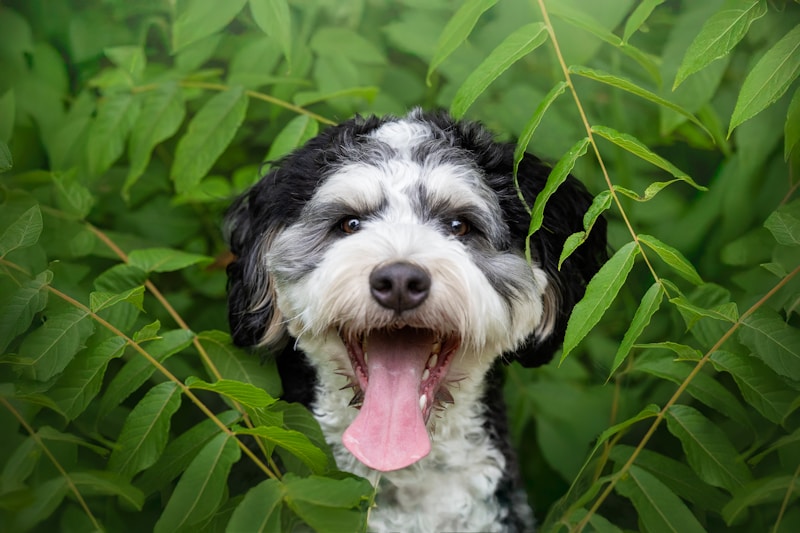
    Sheepadoodle puppy after bath being dried to prevent matting

    Thorough drying after every bath is one of the most overlooked steps in mat prevention.
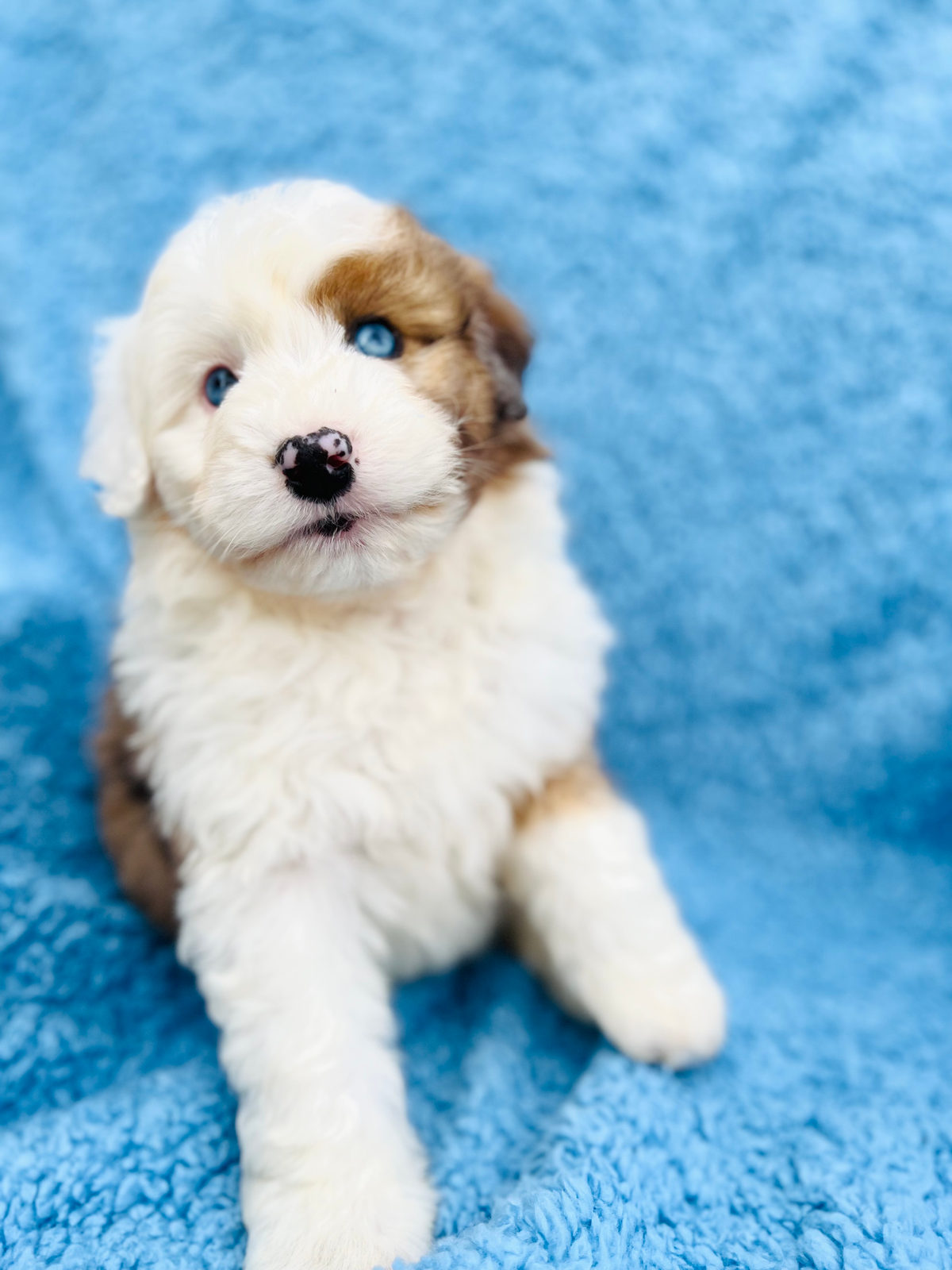
    Grooming by Life Stage

    Puppy coats are typically softer and less prone to matting than adult coats, which is exactly why early handling matters. Getting a puppy comfortable with brushing, ear handling, and paw touching in the first few months makes every future grooming session — at home or with a professional — considerably easier.

    Most Sheepadoodles start transitioning from their soft puppy coat into their denser adult coat somewhere between six months and a year old. This “coat blow” period is often when new owners are caught off guard by a sudden jump in shedding and matting risk, even in a dog that seemed low-maintenance as a young puppy. Increasing brushing frequency during this transition, rather than waiting for mats to appear, makes the adjustment much smoother for both of you.

    Adolescent sheepadoodle transitioning from puppy coat to adult coat

    The transition from puppy to adult coat, usually between six months and a year, often brings a noticeable jump in grooming needs.

    Have Grooming Questions About a Specific Litter?

    Coat type varies by puppy. Reach out and we’re happy to talk through what to expect for a specific pairing.

    Contact Sunshine Sheepadoodles

    Frequently Asked Questions

    How much does it cost to groom a Sheepadoodle?

    Professional grooming costs vary widely by region, coat condition, and groomer, so it’s best to call local groomers directly for current pricing in your area. Consistent at-home brushing between visits tends to lower the overall cost.

    Can I shave my Sheepadoodle’s coat short to reduce grooming?

    You can, though a very short “puppy cut” still requires regular brushing to prevent new mats from forming close to the skin. Shaving doesn’t eliminate the need for maintenance, just changes what it looks like.

    Do all Sheepadoodles need the same grooming routine?

    No. Coat type varies significantly even within the same litter, so a curlier-coated sibling may need daily brushing while a wavier one needs it two or three times a week.

    At what age should I start grooming a Sheepadoodle puppy?

    Start gentle brushing and handling as early as possible, even before the adult coat comes in. Early positive exposure makes grooming far easier once the dense adult coat develops.

    Curious how coat type connects to shedding and allergies? See our guide on Sheepadoodle hypoallergenic coats, or explore Sheepadoodle coat colors and patterns for more on what to expect from your puppy’s coat.