
If you’re researching Sheepadoodles, you’ve probably come across the Standard Poodle itself as an option too — after all, half of a Sheepadoodle’s genetics come directly from that breed. So why choose the mix over the purebred parent? Here’s an honest comparison.
This isn’t a question with an objectively “correct” answer. Both breeds are intelligent, trainable, and well-suited to family life. The differences below are mostly about which trade-offs matter most to your specific household.
Sheepadoodle vs. Standard Poodle: At a Glance
| Category | Sheepadoodle (Standard) | Standard Poodle |
|---|---|---|
| Parentage | Old English Sheepdog x Poodle | Purebred |
| Weight | 55–85+ lbs | 45–70 lbs |
| Shedding | Low, varies by generation | Virtually none (true non-shedding coat) |
| Coat Predictability | Variable, even within a litter | Highly consistent |
| Temperament | Calm, gentle, protective | Eager to please, highly trainable |
| Typical Lifespan | 10–13 years (standard size) | 11–15 years |
Shedding & Hypoallergenic Comparison
This is the single biggest practical difference. A Standard Poodle is a true non-shedding, single-coated breed — there’s no genetic variation to account for, since it’s not a cross. A Sheepadoodle inherits a mix of Poodle and Old English Sheepdog coat genetics, and even within one litter, coat type and shedding level can vary noticeably between puppies.
If minimizing shedding and allergen exposure is your absolute top priority, a Standard Poodle offers more certainty. If you’re drawn to the shaggier, more “sheepdog” look and can accept some variability in exchange, a Sheepadoodle is the trade-off many families choose anyway. Our Sheepadoodle hypoallergenic guide covers how generation (F1 vs. F1B) affects that variability in more detail.
Later-generation and F1B Sheepadoodles narrow this gap considerably, since they carry a higher percentage of Poodle genetics. If shedding is a concern but you still want the Sheepadoodle look, asking a breeder specifically about F1B or multigenerational litters is worth the conversation.
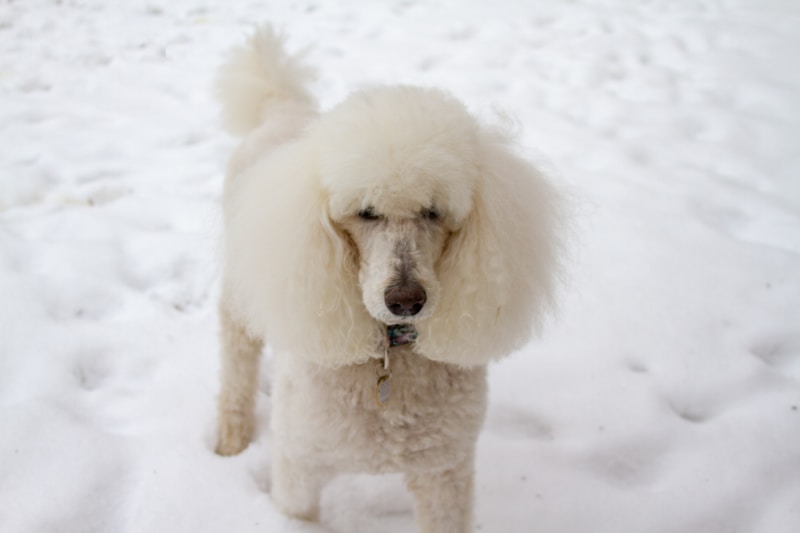
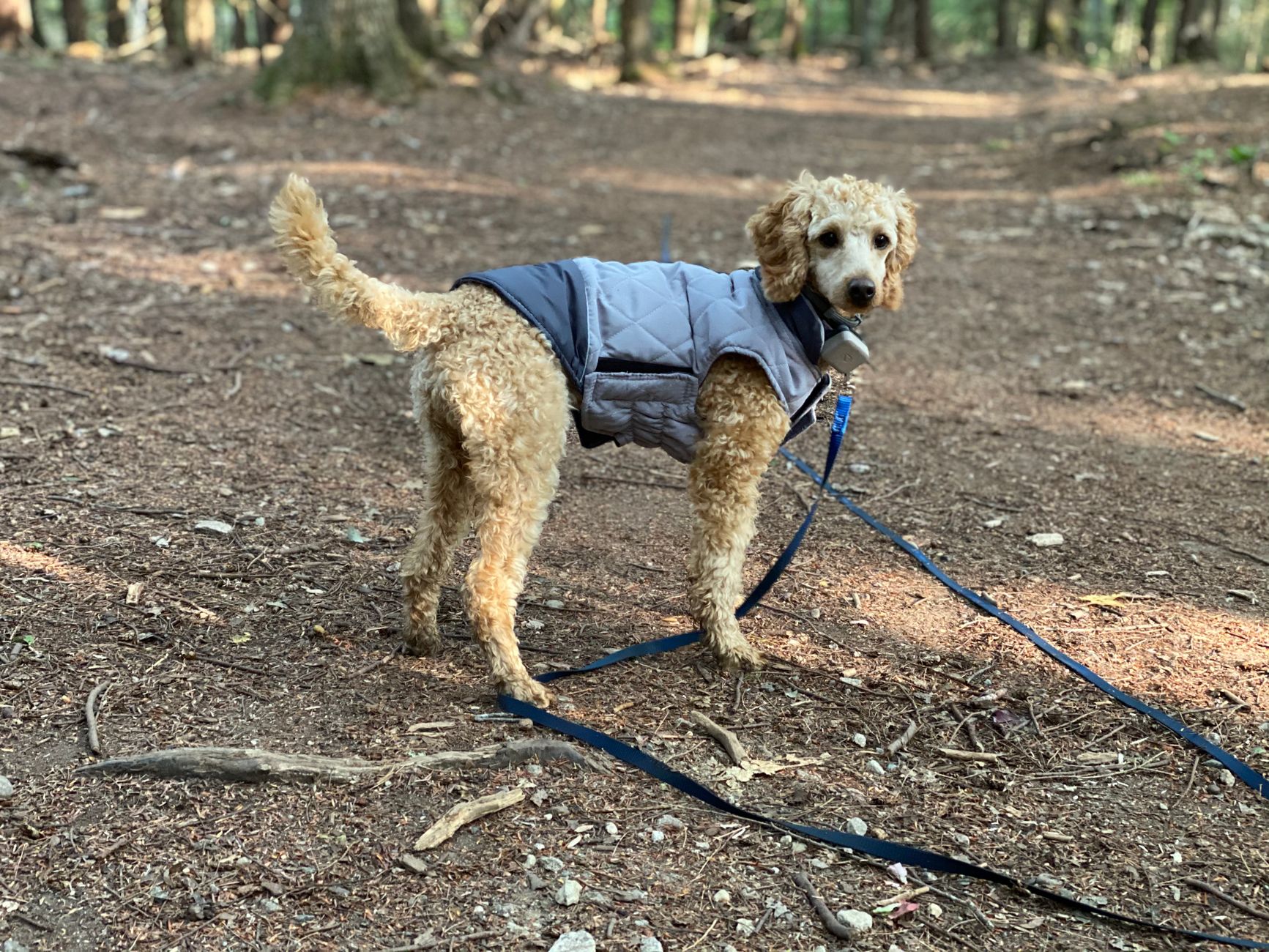
A purebred Standard Poodle’s non-shedding coat is genetically consistent in a way a crossbreed’s coat can’t fully guarantee.
Temperament Differences
Both breeds are intelligent and people-oriented, but they express it a bit differently. Standard Poodles are famously eager to please and highly trainable, often excelling in obedience and service work. Sheepadoodles carry that same Poodle trainability, blended with the Old English Sheepdog’s more protective, watchful instinct — which can also mean a touch more independence during training.
Neither is the “easier” choice universally. Some owners find the Poodle’s singular focus on pleasing its handler more straightforward to train, while others prefer the Sheepadoodle’s blended personality and slightly calmer adult demeanor.
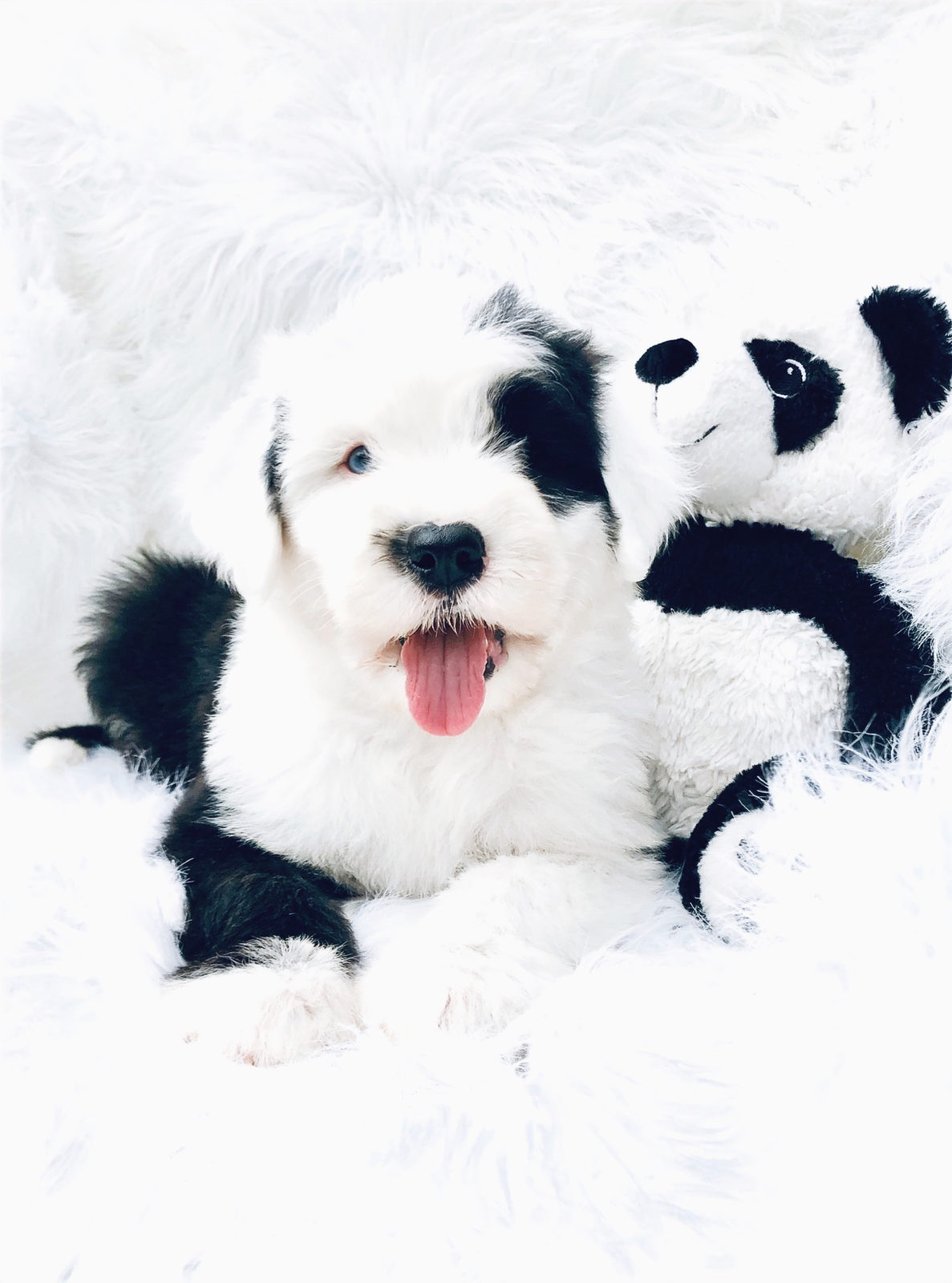
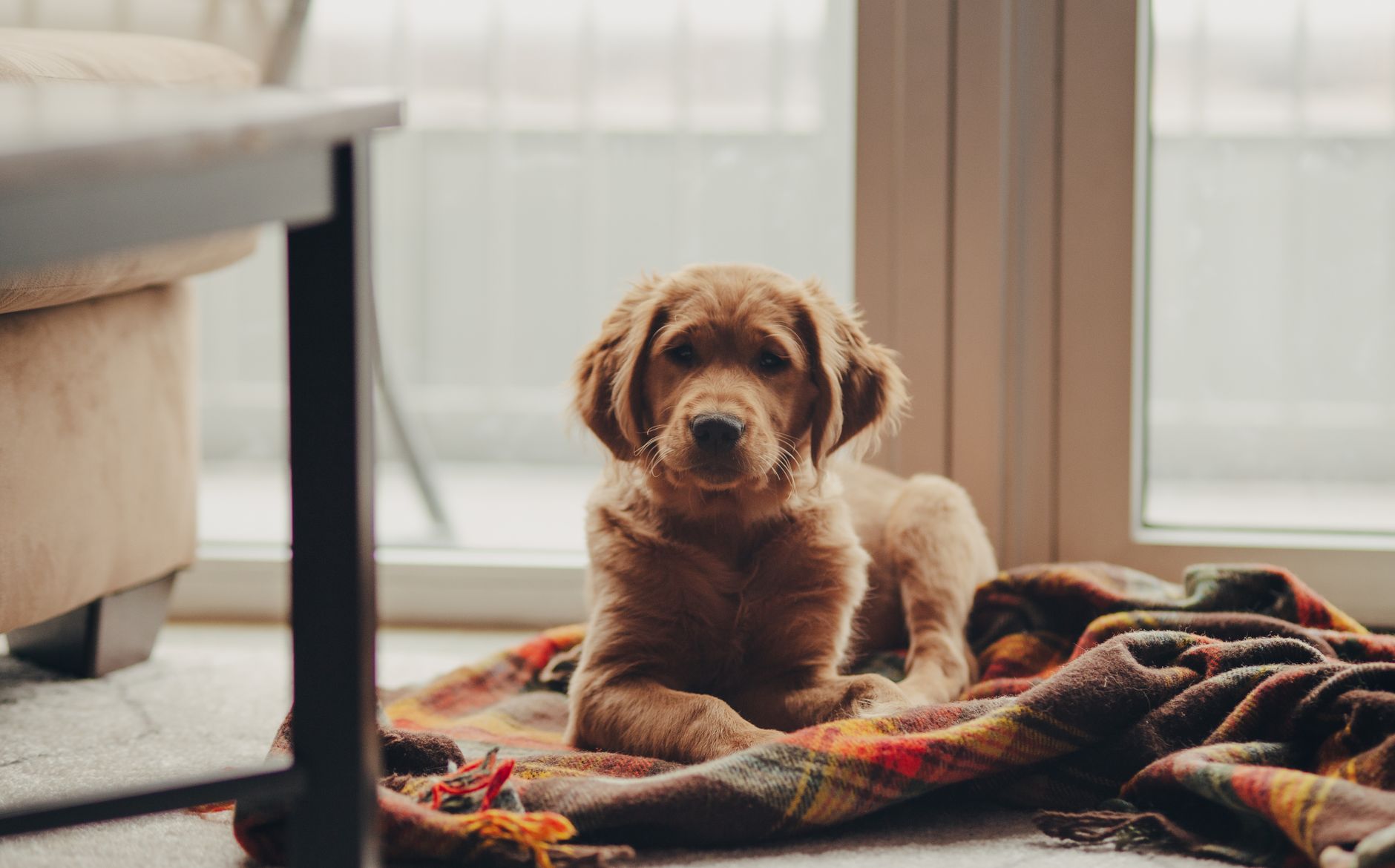
Sheepadoodles blend Poodle trainability with the Old English Sheepdog’s more protective, watchful nature.
Size Comparison
Standard Sheepadoodles typically run larger than Standard Poodles, since the Old English Sheepdog side adds both height and substantial bone structure. A Standard Poodle tops out around 70 pounds, while a Standard Sheepadoodle can reach 85 pounds or more depending on the specific parents.
Grooming Needs
Both breeds need real grooming commitment — there’s no low-maintenance option here. According to the Poodle Club of America, Standard Poodles need brushing several times weekly and professional grooming every 4 to 6 weeks to prevent matting in their dense, continuously growing coat. Sheepadoodles need a broadly similar routine, detailed in our Sheepadoodle grooming guide.
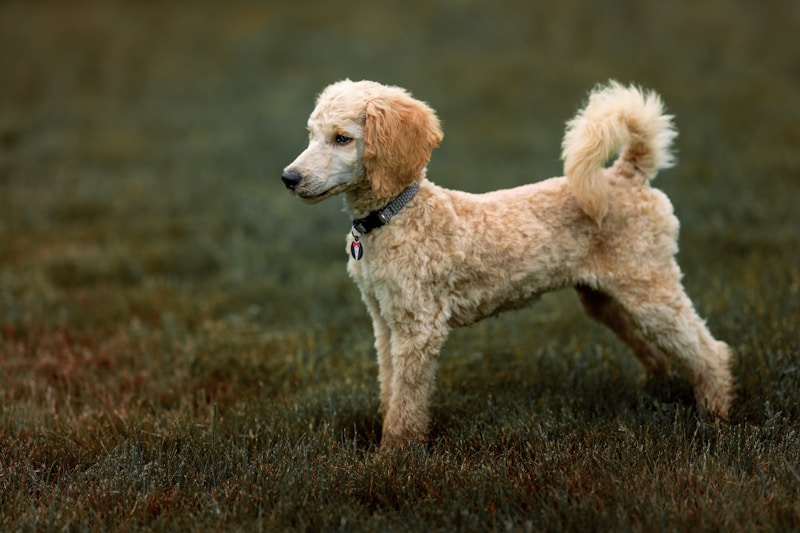
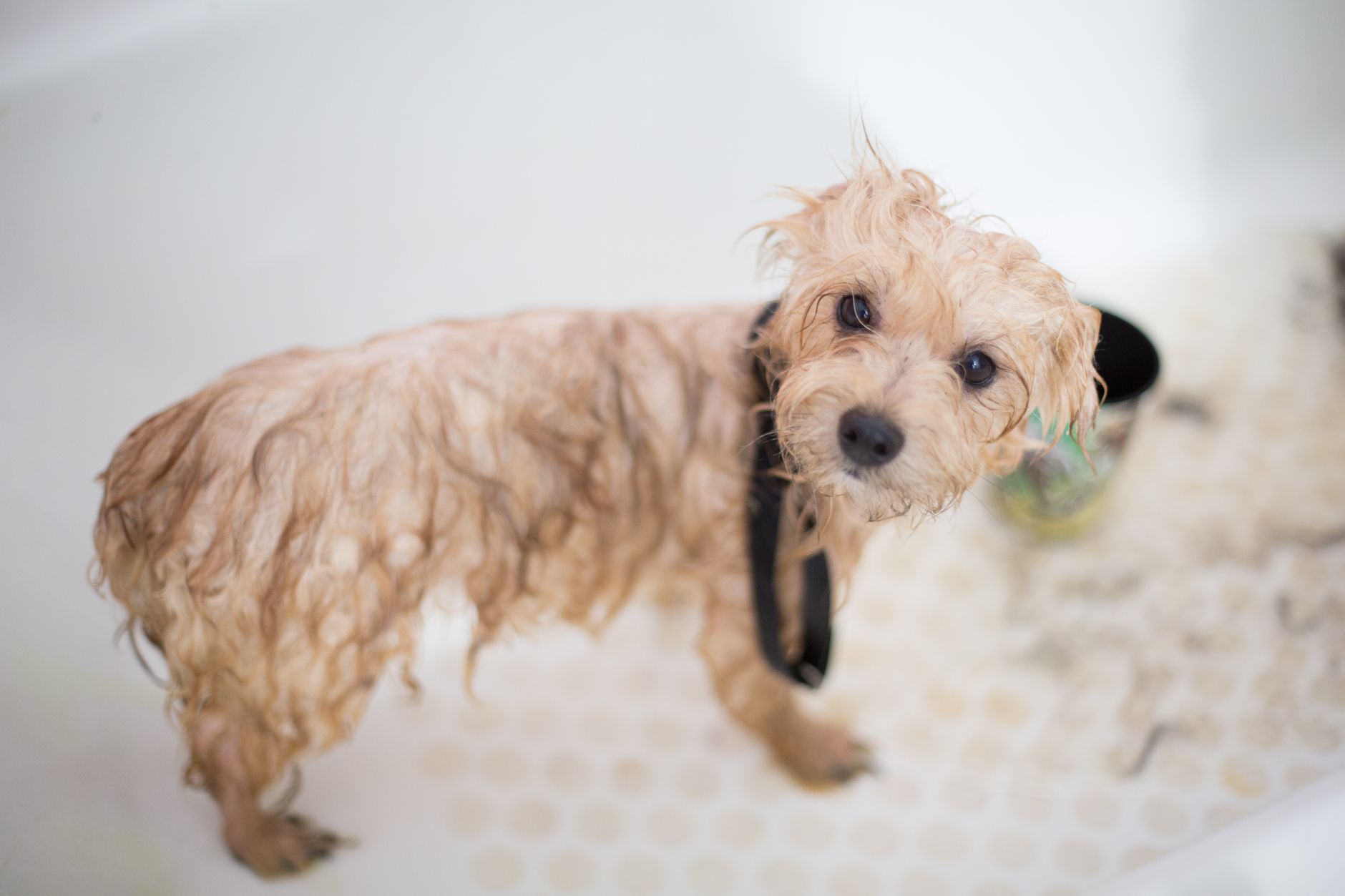
Both breeds require comparable grooming commitments — neither is a low-maintenance coat choice.
Health & Lifespan
Standard Poodles average 11 to 15 years and are generally healthy, though they can be prone to hip dysplasia, certain eye conditions, and Addison’s disease. Standard Sheepadoodles average slightly shorter at 10 to 13 years, partly reflecting their larger typical size, and share some of the same joint-related risk from the Old English Sheepdog side.
As a crossbreed, Sheepadoodles may benefit from hybrid vigor that can reduce the concentration of certain inherited conditions common in purebred lines — though responsible breeding and health testing matter more than breed status alone for either option.
It’s worth noting that “purebred” doesn’t automatically mean higher health risk, nor does “crossbreed” automatically mean healthier. What actually predicts a puppy’s long-term health outlook is the specific health testing done on its individual parents, regardless of which category the breed falls into. Ask for documentation either way.
Appearance: The Most Obvious Difference
Even setting aside shedding and temperament, the two breeds simply look different. Standard Poodles carry a single, uniform curl pattern and are often shown or groomed in distinctive clips that emphasize their elegant, athletic build. Sheepadoodles almost never look “poodle-clipped” — the Old English Sheepdog influence gives them a shaggier, rounder-faced, more tousled appearance regardless of grooming style.
This is often the deciding factor for buyers who’ve researched every practical difference and still can’t decide: which look do you actually want living in your home for the next decade-plus?
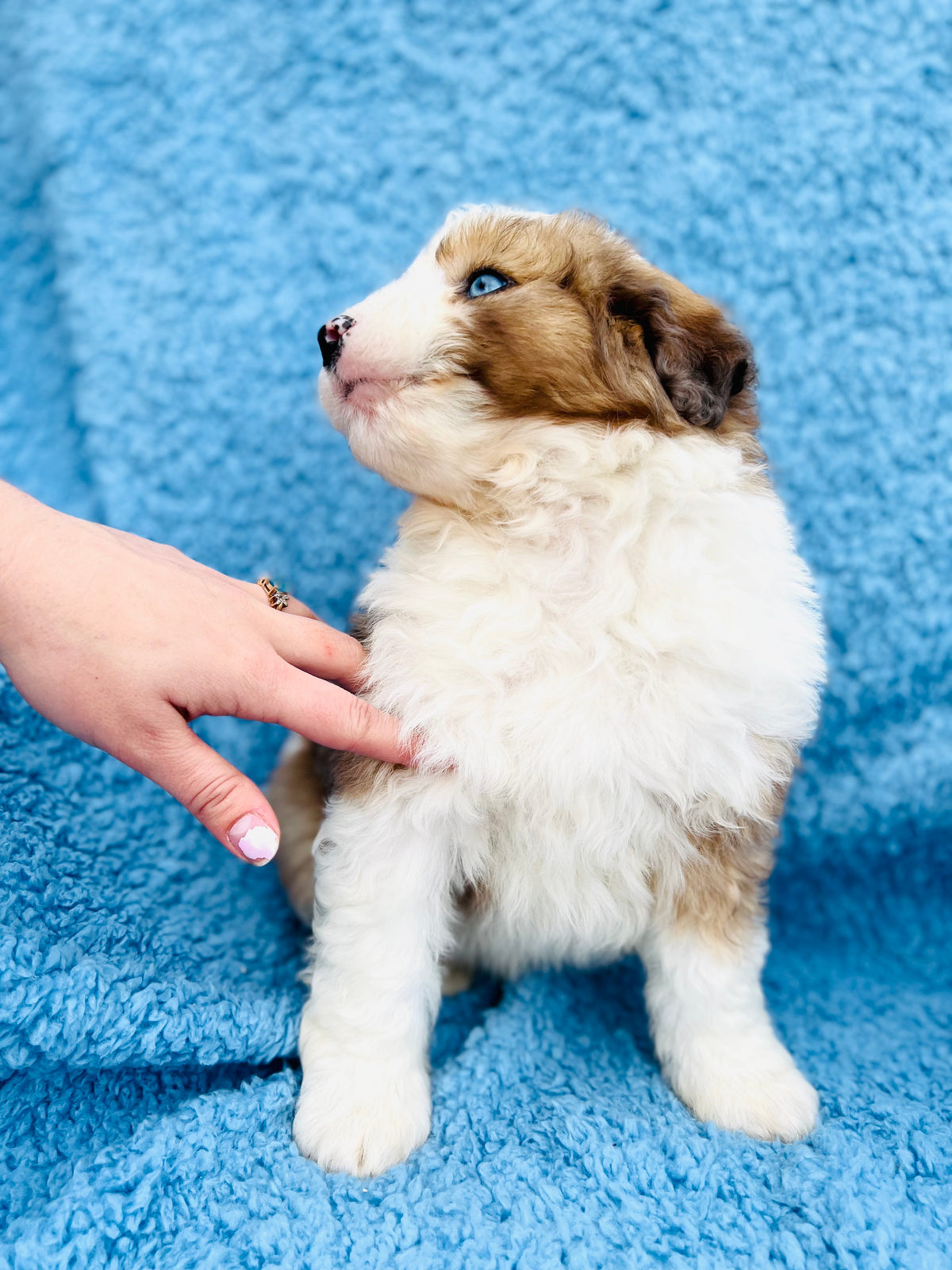
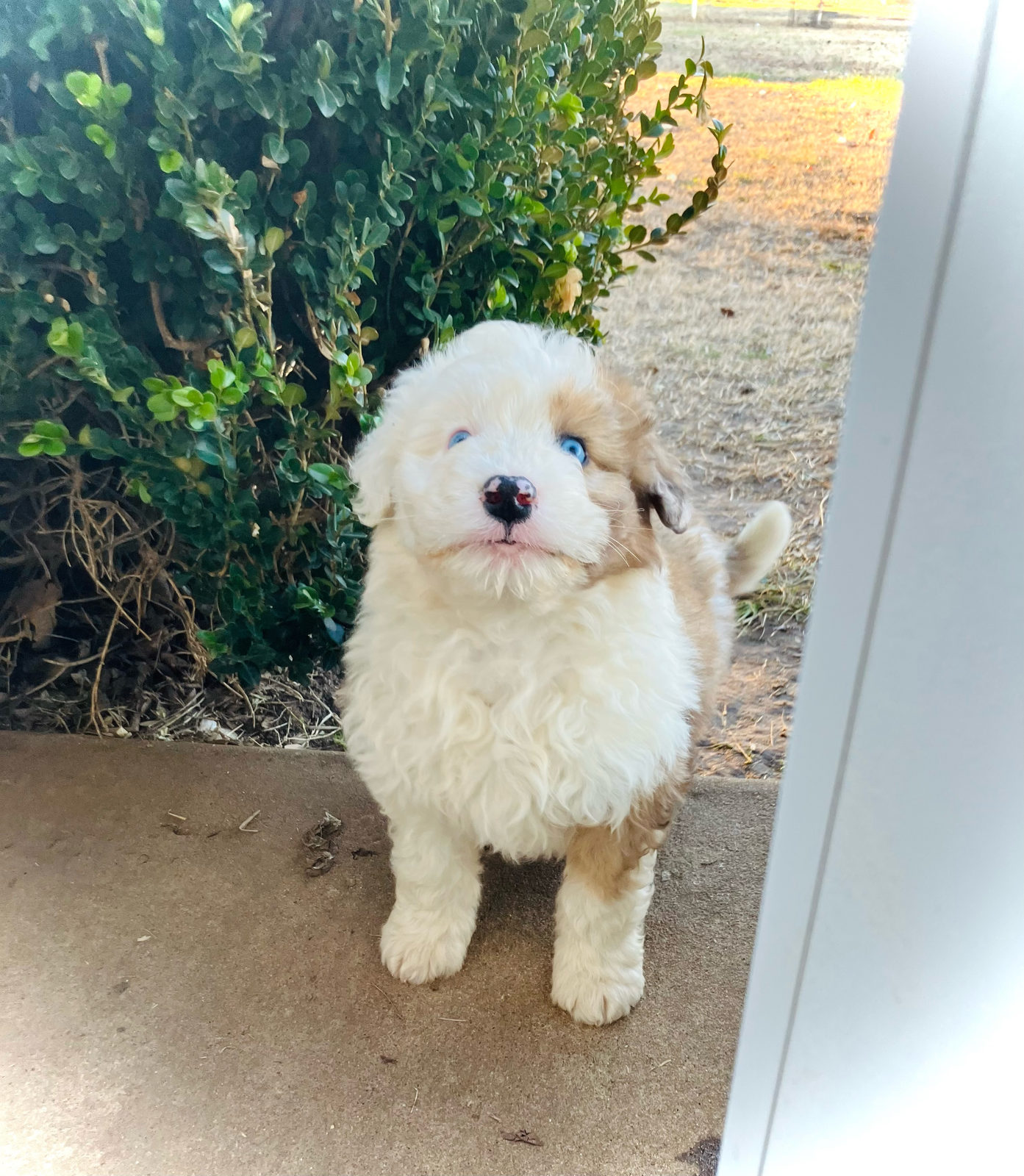
The Sheepadoodle’s shaggier, more tousled look is one of the clearest visual differences from a groomed Standard Poodle.
Which One Fits You?
Consider a Standard Poodle If
- Truly minimal shedding is a non-negotiable priority
- You want maximum coat and temperament predictability
- You’re drawn to the classic Poodle silhouette
Consider a Sheepadoodle If
- You love the shaggy sheepdog look
- You’re comfortable with some coat/shedding variability
- You want the Old English Sheepdog’s protective, family-oriented streak
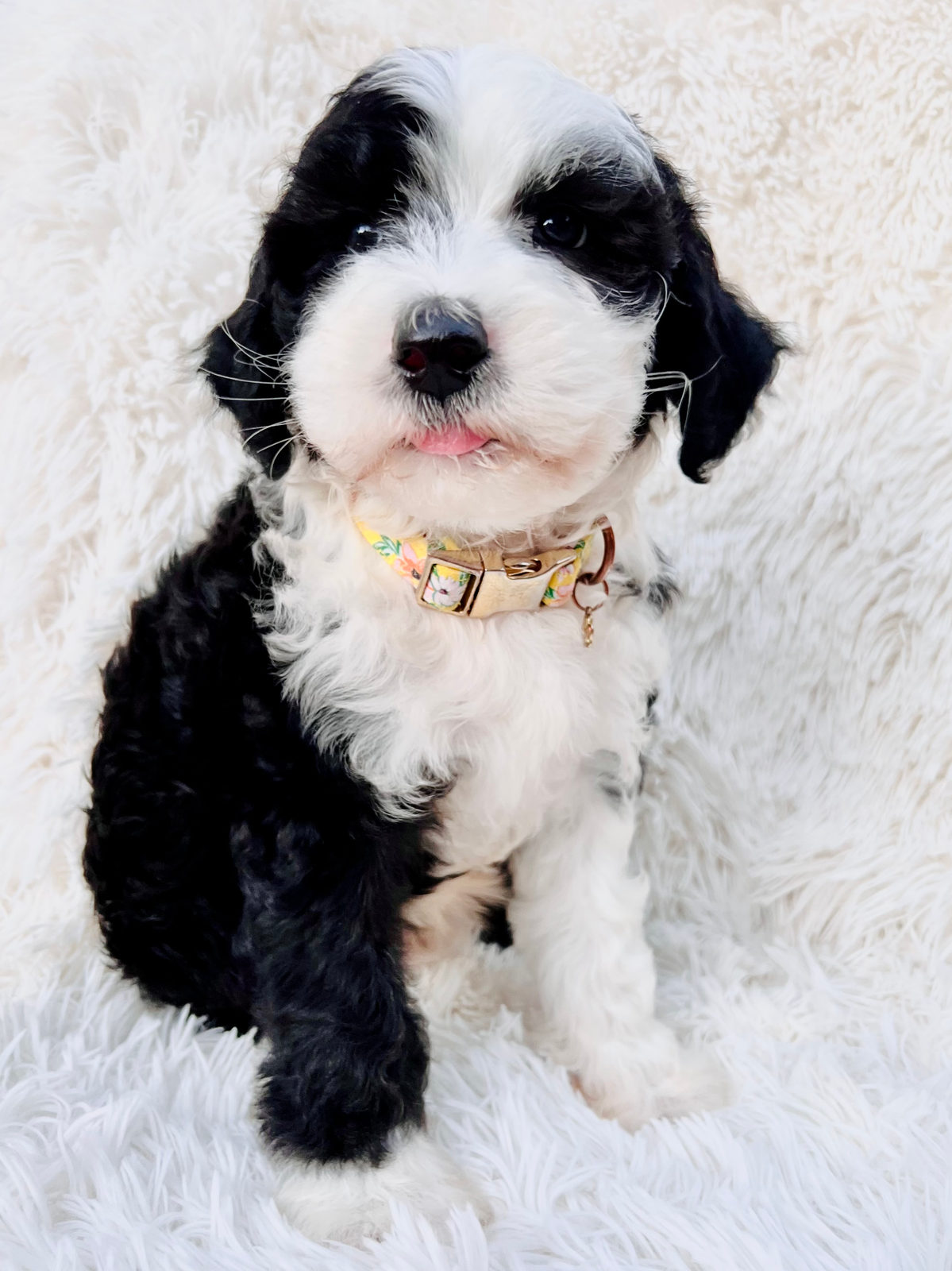
Both breeds make wonderful companions — the right choice comes down to your priorities on shedding, size, and look.
Meet a Sheepadoodle in Person
The best way to know if this breed’s blend of traits fits your family is to spend time with one. See our current litters and reach out with questions.
View Available PuppiesFrequently Asked Questions
Is a Standard Poodle more hypoallergenic than a Sheepadoodle?
Generally, yes, since a purebred Poodle’s non-shedding coat is genetically consistent, while a Sheepadoodle’s coat and shedding level can vary depending on generation and the specific puppy.
Are Sheepadoodles bigger than Standard Poodles?
Typically, yes. Standard Sheepadoodles often weigh more than Standard Poodles, since the Old English Sheepdog parent adds substantial size and bone structure to the cross.
Why choose a Sheepadoodle over a purebred Poodle?
Many buyers are drawn to the Sheepadoodle’s shaggier, sheepdog-like appearance and the calmer, protective temperament the Old English Sheepdog side contributes, even accepting some coat unpredictability in exchange.
Do Standard Poodles live longer than Sheepadoodles?
On average, slightly, with Standard Poodles typically living 11 to 15 years compared to 10 to 13 years for standard-sized Sheepadoodles, partly reflecting the Sheepadoodle’s larger average size.
Curious how Sheepadoodle temperament compares to other breeds? See our Sheepadoodle vs. Goldendoodle and Sheepadoodle vs. Bernedoodle comparisons for more options.