Labradoodles are arguably the doodle that started it all, and Sheepadoodles are one of the breeds that followed. Both are beloved family dogs, but they come from very different working backgrounds — a retriever versus a herding dog — and that history shows up in real, practical differences.
The Labradoodle’s origins trace back to Australia in the 1980s, originally developed to create a guide dog suitable for people with allergies. That working, service-oriented lineage still shows up in the breed’s temperament today. Sheepadoodles, by contrast, don’t have a single documented “founding” moment in the same way, but consistently draw on the Old English Sheepdog’s herding background for their more watchful, protective streak.
Sheepadoodle vs. Labradoodle: At a Glance
| Category | Sheepadoodle | Labradoodle |
|---|---|---|
| Non-Poodle Parent | Old English Sheepdog | Labrador Retriever |
| Original Purpose | Herding | Guide/service dog |
| Standard Size (adult) | 55–85+ lbs | 50–65 lbs |
| Mini Size (adult) | 25–45 lbs | 15–30 lbs |
| Typical Lifespan | 10–16 years (by size) | 12–15 years |
| Temperament | Calm, gentle, protective | Excitable, enthusiastic, active |
| Living Situation | Adapts well to most homes | Needs more space and exercise room |
Temperament Differences
This comparison flips a common assumption. Sheepadoodles are often described as the “gentle giant” of the doodle world — calm, patient, and easygoing, which makes them a popular first-dog choice. Labradoodles, bred originally from working guide-dog lines, tend to bring more natural enthusiasm and excitability, with high intelligence and an eagerness that some owners describe as a bit more intense day to day.
Neither temperament is better across the board. Families with young children sometimes lean toward the calmer Sheepadoodle temperament, while active households with older kids or frequent outdoor time often enjoy the Labradoodle’s playful energy.
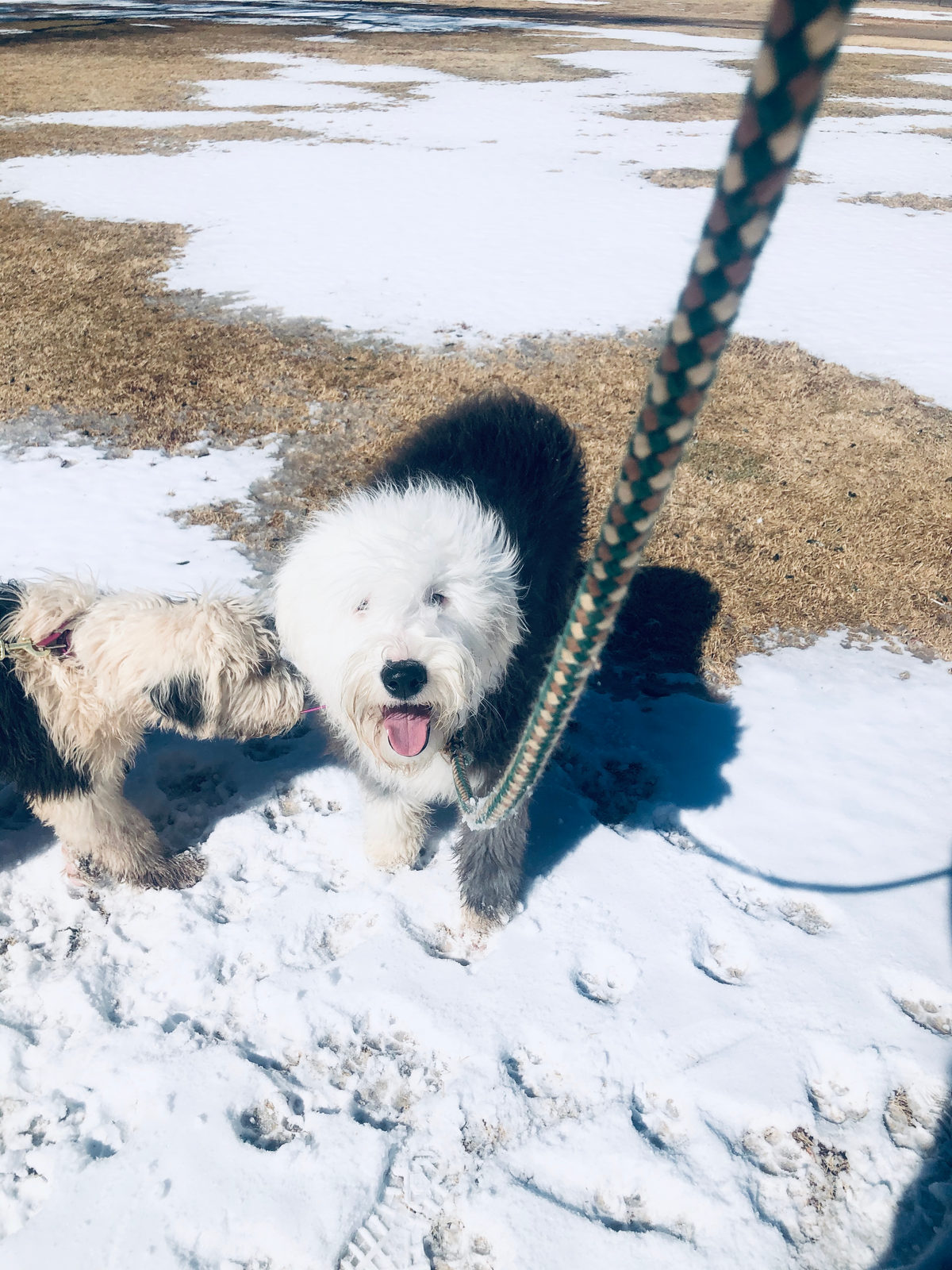
Sheepadoodles are often described as the calmer, more gentle-giant temperament of the two breeds.
Coat Types: A Labradoodle-Specific Consideration
One area where Labradoodles have more built-in variety is coat type. Labradoodle coats generally fall into three categories:
| Coat Type | Texture | Shedding |
|---|---|---|
| Hair coat | Similar to a Labrador’s coat, thicker and straighter | Higher |
| Fleece coat | Silky, straight to wavy | Low to none |
| Wool coat | Dense, tight curls similar to a Poodle’s | Low to none |
Sheepadoodles have less formal coat-type categorization, but generally range from flat/wavy to tightly curled depending on generation, similar in spirit to the fleece-vs-wool distinction in Labradoodles. In both breeds, curlier coats shed less but need more frequent brushing.
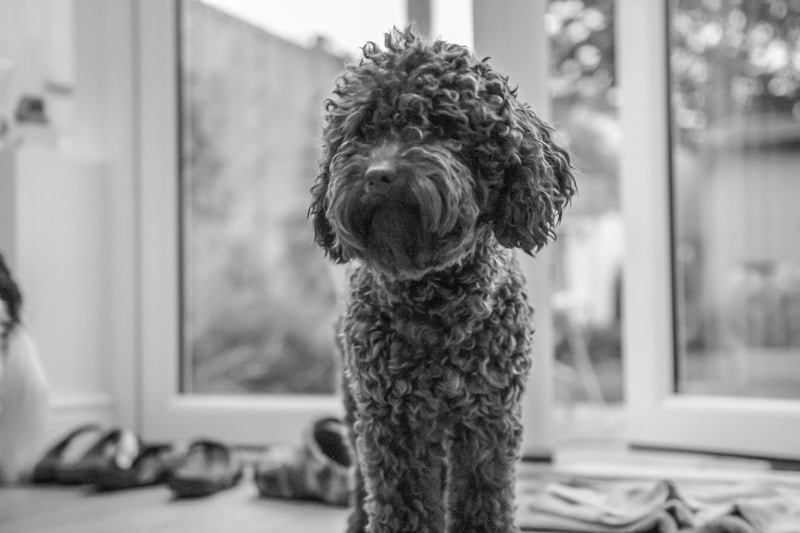
Labradoodle wool coats, with tight Poodle-like curls, shed the least but require the most grooming.
Living Situation & Exercise Needs
Sheepadoodles tend to adapt fairly well to a range of living situations, from apartments (with mini sizes) to homes with yards. Labradoodles, with their retriever-driven energy, generally need more consistent daily exercise and don’t adapt as easily to smaller spaces without a real exercise routine to match.
If your lifestyle includes long daily runs, swimming, or fetch sessions, a Labradoodle’s retriever instincts may make those activities feel more natural to the dog. If you want a companion that’s equally happy on a walk or curled up at home, a Sheepadoodle often fits that more flexible role.
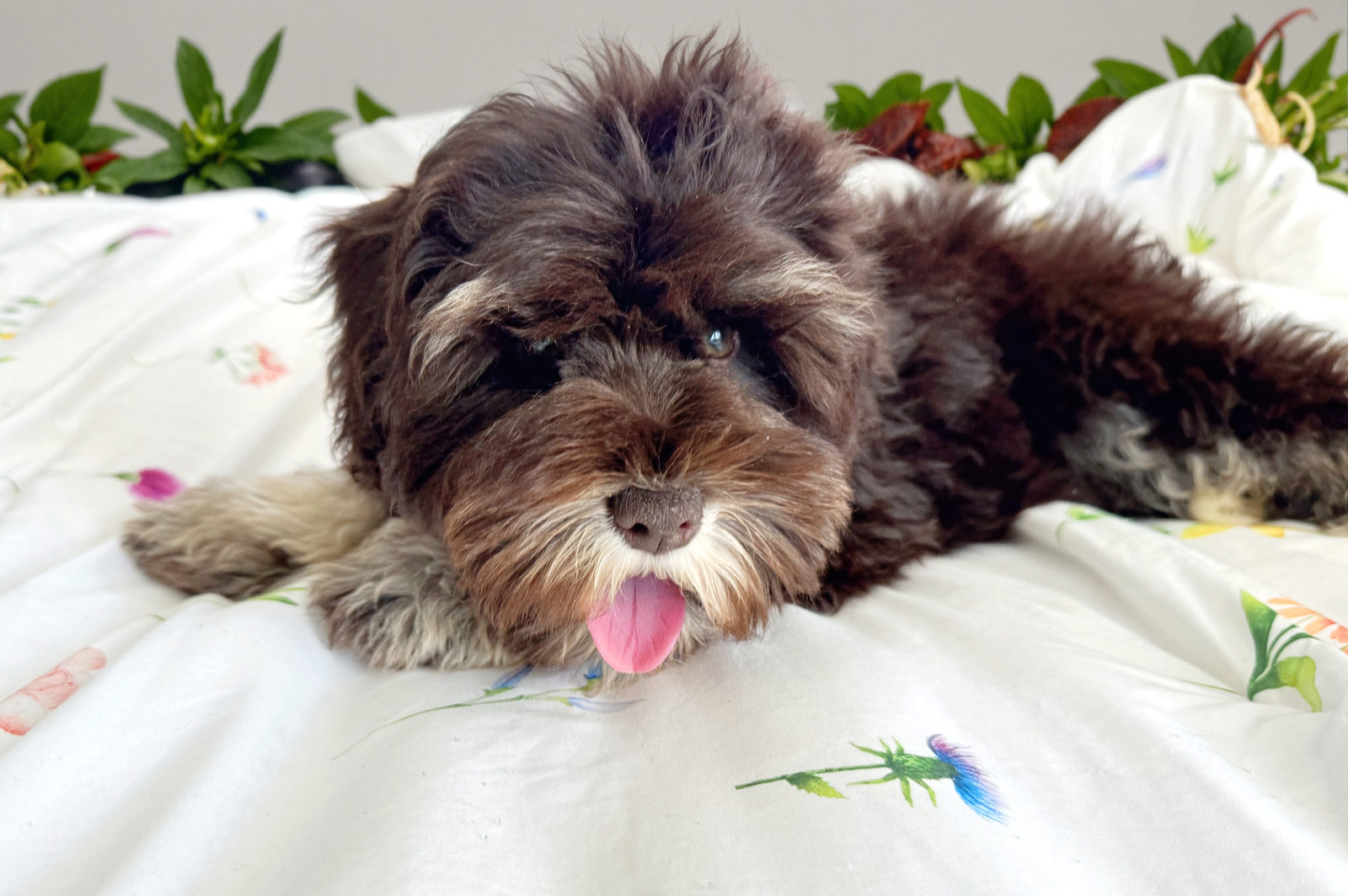
Sheepadoodles tend to adapt more flexibly across different home sizes and activity levels.
Health & Lifespan
Both breeds are generally healthy crossbreeds, though each inherits some risk from its non-Poodle parent. Labradoodles can be prone to hip dysplasia, progressive retinal atrophy, and ear infections tied to their Labrador heritage. Sheepadoodles carry similar joint-related risk (hip dysplasia) from the Old English Sheepdog side, along with some eye conditions.
The Australian Labradoodle Association of America requires member breeders to complete hip, elbow, eye, and genetic DNA testing, and participates in the OFA’s CHIC health database — the same kind of testing standard worth looking for in any Sheepadoodle breeder as well.
Whichever breed you’re comparing, the presence of a formal testing standard from an association like this is a stronger signal than the breed name itself. Ask any breeder, regardless of which doodle you’re considering, whether they participate in an equivalent program.
Training & Family Fit
Both breeds are highly trainable, drawing on Poodle intelligence from both sides. Labradoodles, with their guide-dog ancestry, are frequently used in service and therapy work, which speaks to how reliably trainable the breed can be when given consistent structure. Sheepadoodles are equally intelligent but can show more of an independent streak inherited from the Old English Sheepdog, occasionally requiring a bit more patience during training.
For families with very young children, the calmer baseline temperament of a Sheepadoodle can mean less redirection needed around toddlers, though early socialization matters more than breed generalizations for any individual dog.
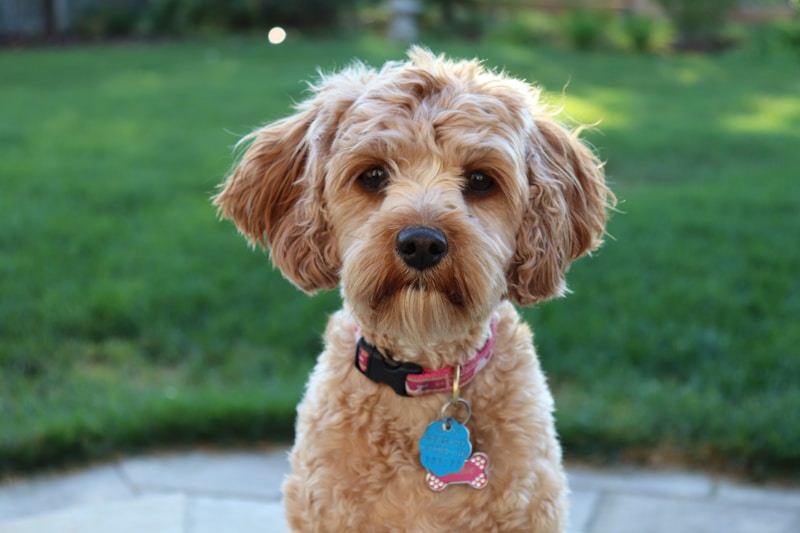
Labradoodles’ guide-dog heritage contributes to their reputation as highly reliable, trainable companions.
Which One Fits Your Lifestyle?
Consider a Sheepadoodle If
- You want a calmer, gentle-giant temperament
- Your household has young children or a more relaxed pace
- You like the classic shaggy sheepdog look
Consider a Labradoodle If
- You want a highly active, enthusiastic companion
- You have space and time for consistent daily exercise
- You want more built-in coat-type predictability
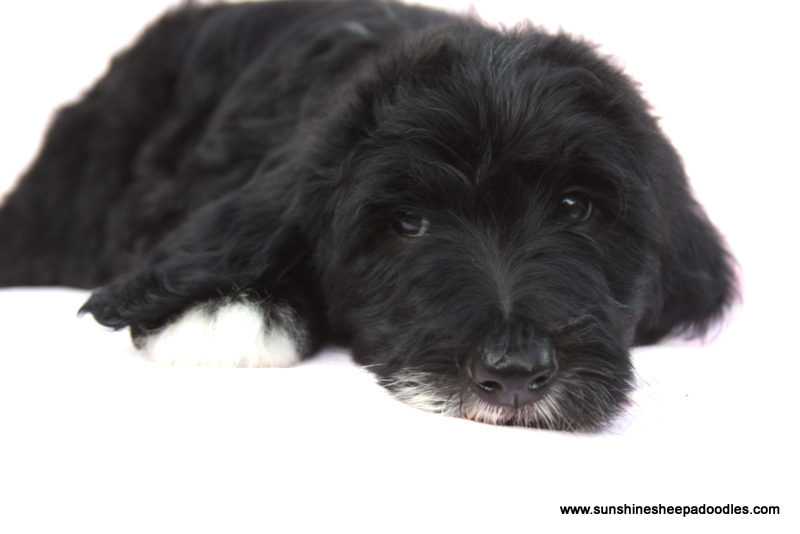
Both breeds make excellent family companions — the right fit comes down to energy level and lifestyle match.
Meet a Sheepadoodle in Person
The best way to know if this breed’s temperament fits your family is to spend time with one. See our current litters and reach out with questions.
View Available PuppiesFrequently Asked Questions
Are Sheepadoodles calmer than Labradoodles?
Generally, yes. Sheepadoodles are often described as the calmer, more gentle-giant temperament, while Labradoodles tend to bring more natural enthusiasm and energy from their retriever heritage.
Which breed is better for apartment living?
Sheepadoodles, especially mini sizes, tend to adapt more easily to apartment living. Labradoodles generally need more consistent daily exercise and space to match their higher energy level.
Do Labradoodles or Sheepadoodles shed more?
Both are low-shedding overall, but it depends heavily on coat type and generation in both breeds rather than the breed name alone. Wool-coated Labradoodles and curlier F1B Sheepadoodles both shed the least.
Which breed has a longer lifespan?
Both breeds average 12 to 15 years, though smaller Sheepadoodle sizes can sometimes reach 16 years, similar to the general trend of smaller dogs living longer across most breeds.
Curious how Sheepadoodle temperament compares in more depth? See our Sheepadoodle temperament guide, or explore our Sheepadoodle vs. Goldendoodle and Sheepadoodle vs. Bernedoodle comparisons if you’re weighing multiple options.
Leave a Reply