

If your low-shedding puppy suddenly seems to be shedding everywhere, you’re not imagining it, and you probably haven’t been sold the wrong dog. This is almost always the puppy-to-adult coat transition, and it catches new owners off guard more than any other stage of Sheepadoodle ownership.
This guide focuses specifically on shedding patterns and coat transition timing — for day-to-day brushing tools and technique, our grooming guide covers that ground separately.
Puppy Coat vs. Adult Coat: The Transition
| Age | What’s Happening |
|---|---|
| 0–6 months | Soft, low-shed puppy coat, regardless of what the adult coat will eventually be |
| 6–10 months | Coat transition typically begins, often starting at friction points |
| 7–14 months | Full coat blow window; texture and even color can shift during this stage |
| 12–18 months | Adult coat fully in, shedding pattern stabilizes to its long-term baseline |
Almost every Sheepadoodle puppy has a low-shed coat at first, even ones that will grow into a more noticeably shedding adult coat. The transition is when the truth about that specific dog’s adult coat starts to show, which is one reason a puppy’s coat at eight weeks isn’t a reliable predictor of its adult shedding level.
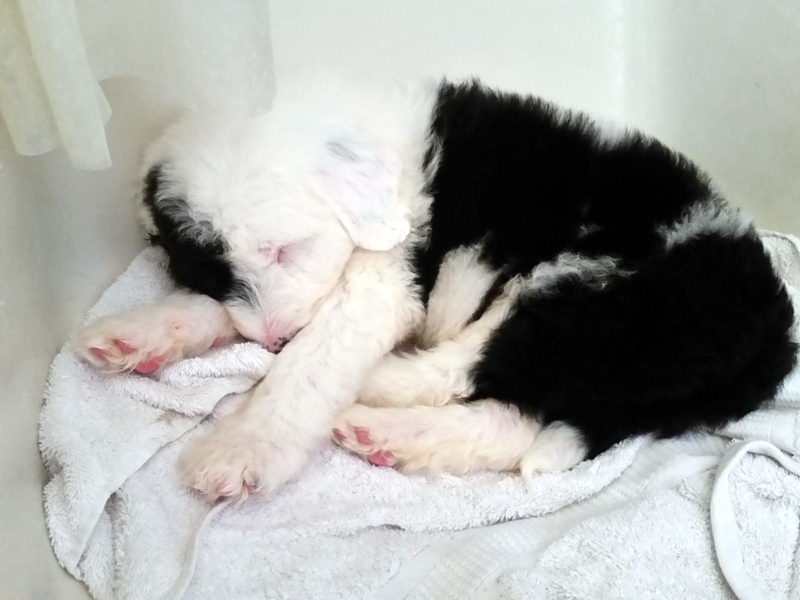
Nearly all Sheepadoodle puppies start with a low-shed coat, regardless of what their adult coat will become.
Why Coat Blow Causes Sudden Matting
Here’s the part that surprises most owners: during coat blow, dead puppy hair often doesn’t fall out on its own. It stays woven into the incoming adult coat, and within a few weeks, a dog that’s never had a single mat can go from neck to tail in tangles.
The transition typically starts at high-friction points — behind the ears, in the armpits, at the collar line, and anywhere a harness sits. If daily brushing wasn’t necessary before, this is the point where it usually becomes non-negotiable, at least temporarily.
Do Sheepadoodles Have a “Shedding Season”?
Beyond the one-time puppy transition, many double-coated and mixed-coat dogs also blow their undercoat seasonally, typically in spring and fall, as their body adjusts to changing temperatures. How noticeable this is in a Sheepadoodle depends heavily on coat type — curlier, more Poodle-influenced coats show far less seasonal shedding than looser, wavier ones.
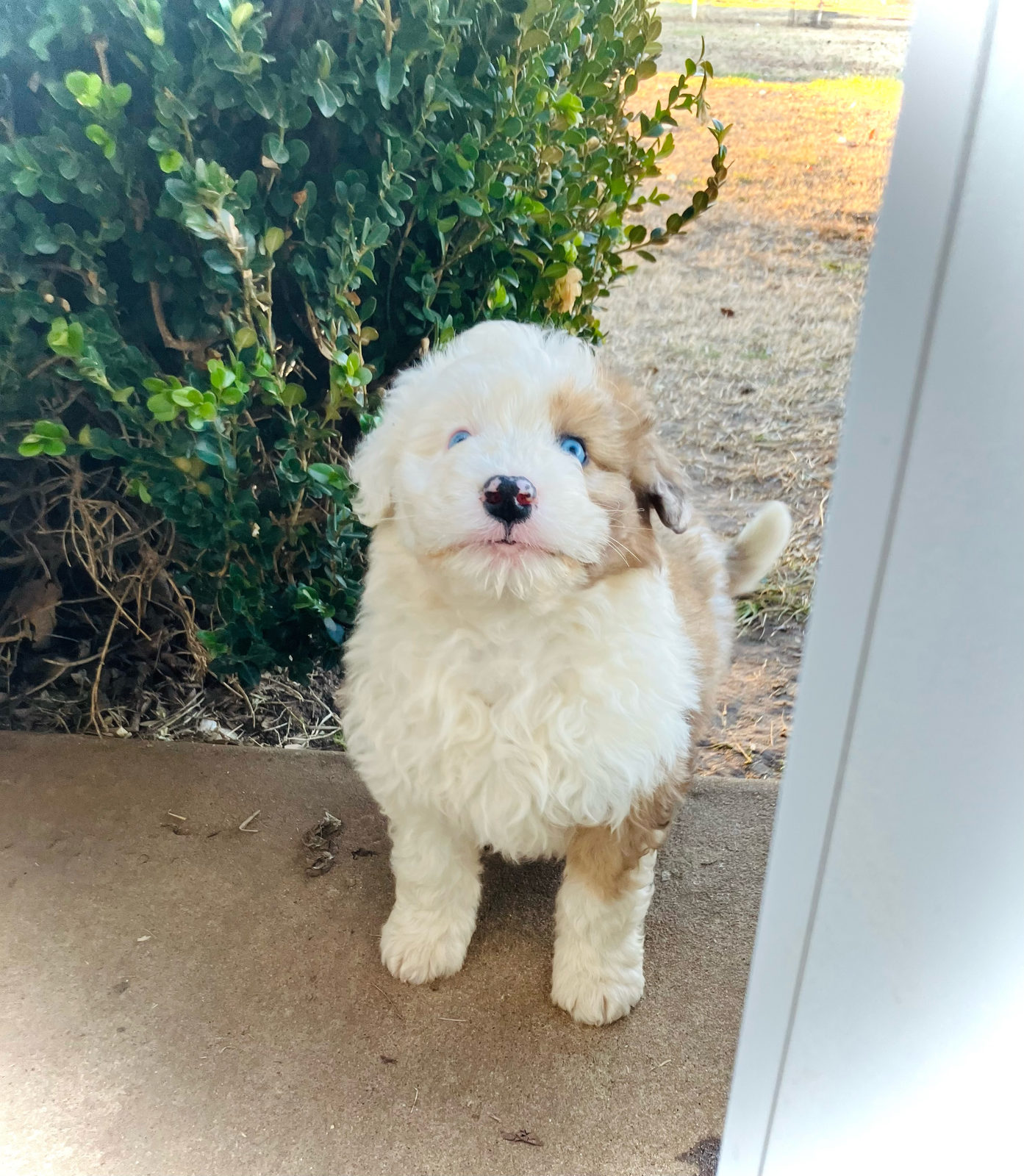
Seasonal shedding is generally lighter in curlier-coated Sheepadoodles than in looser, wavier ones.
Normal vs. Excessive Shedding
According to PetMD, normal shedding is a gradual, even process, while excessive shedding often comes with other signs worth paying attention to.
Normal Shedding
- Gradual, even hair loss across the body
- Coincides with coat blow (once, as a puppy) or seasonal change
- No skin redness, bald patches, or excessive scratching
Worth a Vet Visit
- Sudden bald patches or thinning in one area
- Redness, scabbing, or visible skin irritation
- Increased scratching, licking, or chewing at the coat
- Shedding well outside the expected transition or seasonal windows
Common causes of excessive shedding include food sensitivities, parasites, allergies, and stress from a major life change like surgery or a new environment. If shedding seems disproportionate to what you’d expect from coat blow or seasonal change, it’s worth ruling these out with your veterinarian.
Timing is a useful clue on its own. Shedding that lines up with the expected puppy transition window or the early spring and fall seasons is far more likely to be normal than shedding that starts suddenly, at an unusual time of year, with no obvious trigger.

A healthy coat sheds gradually and evenly — sudden bald patches or irritation are signs to check with a vet.
Surviving the Coat Blow Period
A few practical adjustments make the transition period considerably more manageable:
- Increase brushing to daily the moment you notice the transition starting, rather than waiting for visible mats to appear.
- Line-brush, don’t skim. Part the coat in sections and brush from skin outward, since surface brushing alone misses the loosened undercoat causing most of the problem.
- Check friction points first. Behind the ears, armpits, and the collar line mat fastest and are easy to miss during a quick brush.
- Consider a shorter trim during this period if daily brushing isn’t realistic — a shorter coat is easier to keep mat-free while the transition runs its course.
- Book a professional groomer more frequently, even if only temporarily, since dense transitional coats often need more than home tools can fully manage.
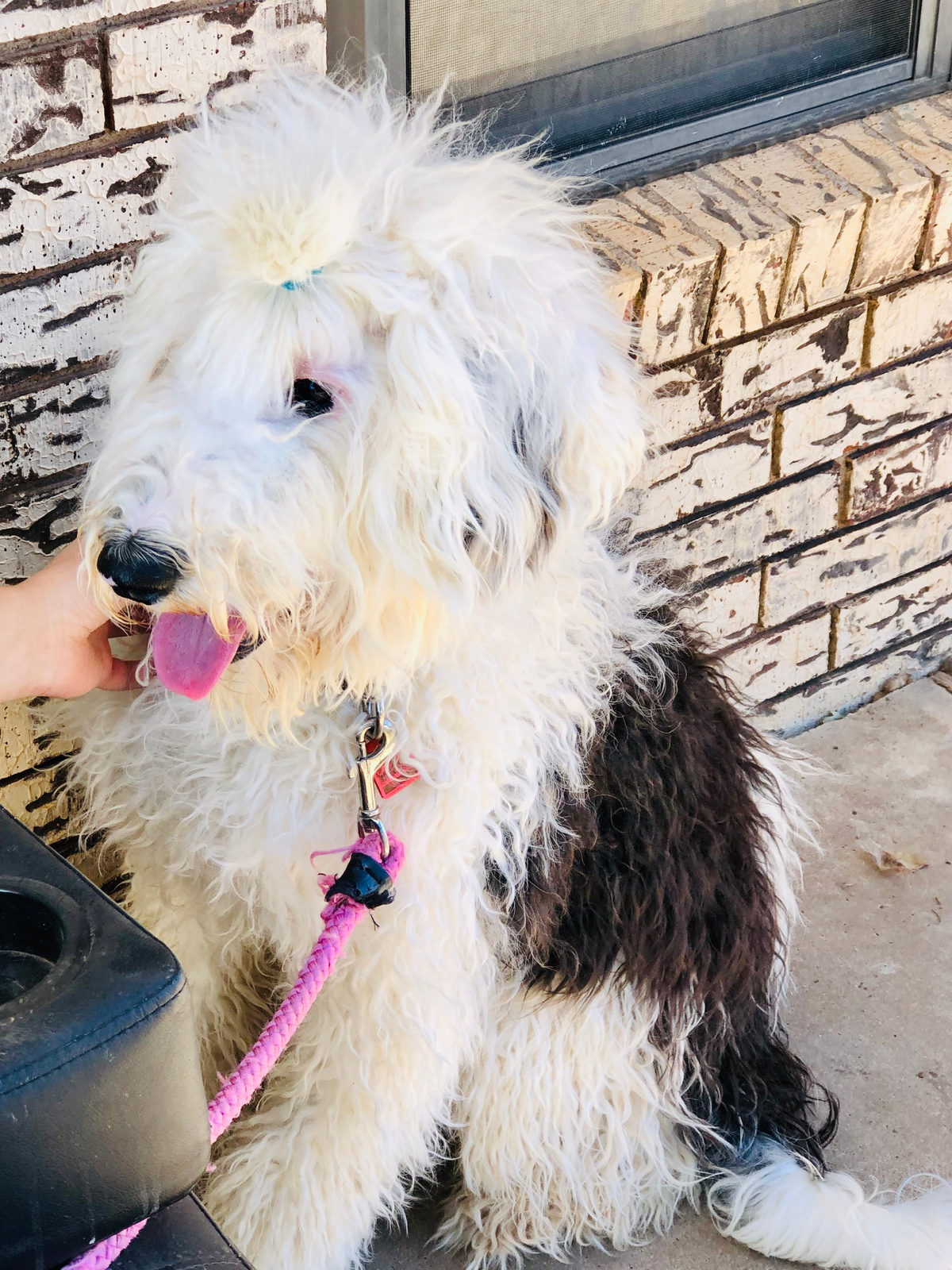
Daily brushing at the first sign of coat transition prevents the sudden matting that catches most new owners by surprise.
Tools for Managing Seasonal Shedding
An undercoat rake is the most useful tool specifically for shedding season, distinct from the everyday slicker brush and comb covered in our grooming guide. Undercoat rakes have long, spaced teeth designed to pull loose undercoat hair without cutting the topcoat.
- Use weekly during active shedding periods, monthly otherwise — overuse can thin the coat unnecessarily.
- Keep pressure light. Pressing hard compresses the coat rather than lifting loose hair.
- Work in the direction of hair growth, in short, controlled strokes.

An undercoat rake, used gently and regularly, removes loose seasonal shedding without damaging the topcoat.
Wondering What Coat Type to Expect?
Coat and shedding patterns vary by litter. Reach out and we’re happy to talk through what a specific pairing has historically produced.
Contact Sunshine SheepadoodlesFrequently Asked Questions
At what age do Sheepadoodle puppies start shedding their puppy coat?
Most begin the transition between 6 and 10 months old, with the full coat blow window typically lasting until around 14 months, though timing varies by individual dog.
Why is my Sheepadoodle suddenly matting when it never did before?
This is almost always the puppy-to-adult coat transition. Dead puppy hair stays woven into the incoming adult coat rather than falling out, quickly creating mats without daily brushing.
Do all Sheepadoodles shed seasonally?
To some degree, though it varies significantly by coat type. Curlier, more Poodle-influenced coats show much lighter seasonal shedding than looser, wavier coats.
When should I be concerned about my Sheepadoodle’s shedding?
If shedding comes with bald patches, skin redness, or excessive scratching, or seems disproportionate to normal coat blow or seasonal timing, it’s worth a veterinary visit to rule out allergies or skin conditions.
For everyday grooming tools and technique, see our Sheepadoodle grooming guide, and check our coat colors and patterns guide if you’ve noticed your puppy’s color shifting during this transition too.
Leave a Reply