A Sheepadoodle’s double coat holds onto water, dirt, and shampoo longer than a single-layer coat does, so bath day rewards a bit of technique. Skip a step, especially the pre-bath brushing, and you can create the exact mats and odor problems you were trying to wash away. Here’s the actual mechanics of a home bath, from brushing to getting a thick undercoat fully dry.
How Often Should You Bathe a Sheepadoodle?
Most Sheepadoodles do well with a bath every four to six weeks. Bathing much more often than that can strip natural oils and leave the skin dry and itchy, while waiting too long lets dirt and oils build up in the undercoat.
Shedding season and coat-blowout periods are the exception, since loose undercoat comes out faster with a bath and blow-dry than with brushing alone. Our Sheepadoodle shedding guide covers when those blowout periods typically hit and how to manage the extra hair.
Brush Before You Bathe, Not After
This is the single biggest technique mistake home groomers make. Water tightens any existing tangle around itself, and once shampoo and a towel-rub are added on top, a mat that was manageable dry can turn into a felted knot that has to be cut out.
Every mat and tangle needs to come out before the coat gets wet, not after. For the full brushing routine, tools, and how often to brush between baths, see our Sheepadoodle grooming guide.
Pre-Bath Checklist
- Slicker brush or comb reaches all the way to the skin, not just the topcoat
- Ears, armpits, collar area, and behind the legs get extra attention (highest-mat zones)
- No resistance or snagging left anywhere in the coat
- Nails trimmed first if you’re doing a full grooming session
Skip This and Expect Trouble
- Wetting a coat with tangles already in it, “hoping the water works them loose”
- Only brushing the visible topcoat while mats hide in the undercoat below
- Rushing the pre-bath brush-out because the dog is impatient
- Discovering a mat mid-bath, when it’s already tightened and harder to remove
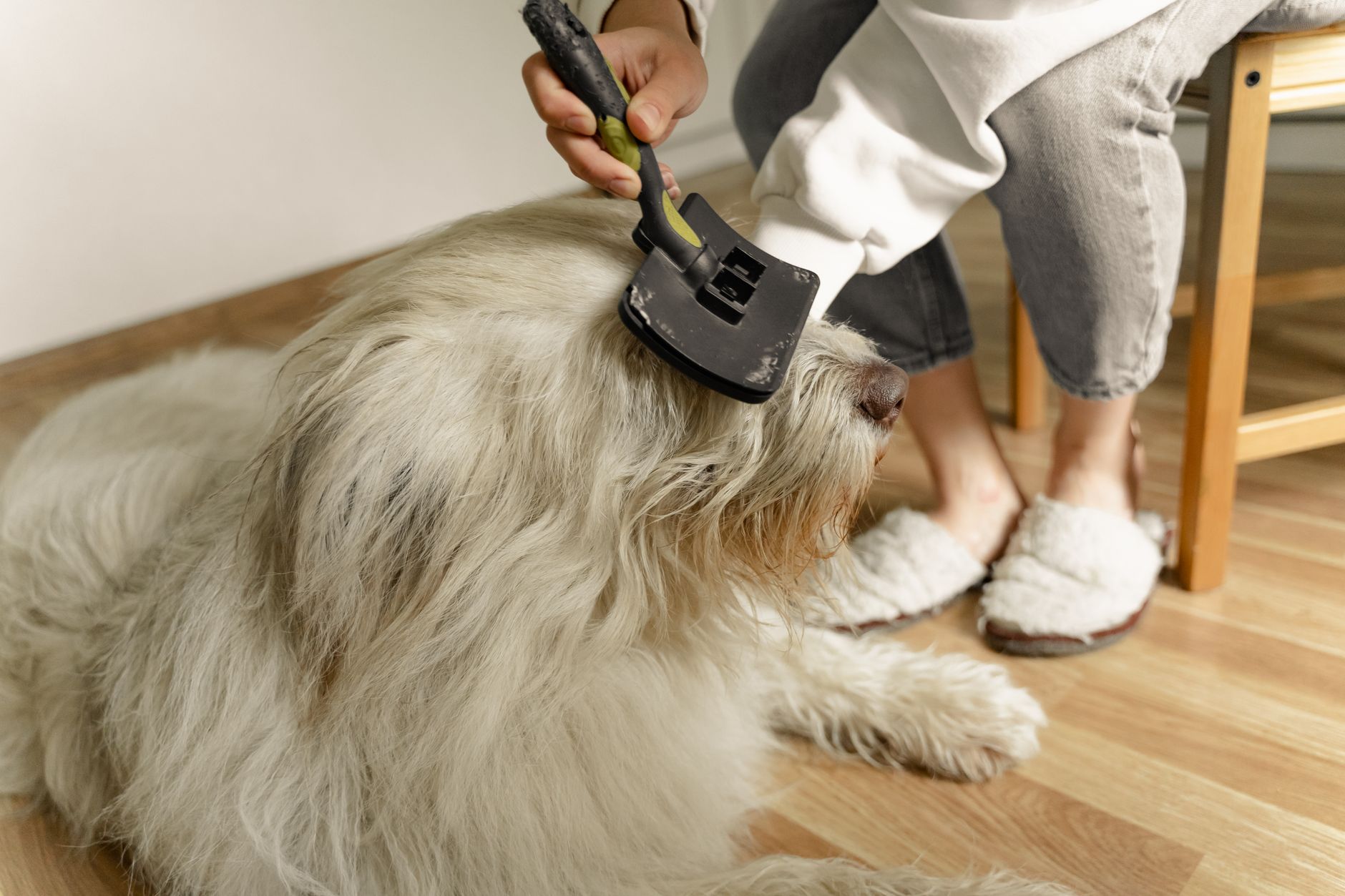
A full brush-out, down to the skin, has to happen before the coat gets wet.
Step-by-Step Bath Process
Once the coat is fully brushed out, the bath itself follows a straightforward sequence. Lukewarm water, not hot or cold, is most comfortable for a dog’s skin.
| Step | What to Do |
|---|---|
| 1. Pre-bath brush-out | Remove every mat and tangle while the coat is completely dry |
| 2. Protect the ears | Place a cotton ball loosely in the outer ear opening or tilt the head away from the spray |
| 3. Wet thoroughly | Soak the coat all the way to the skin with lukewarm water, not just the surface |
| 4. Apply shampoo | Work a dog-specific shampoo in from the back toward the head, massaging down to the skin |
| 5. Rinse completely | Rinse until the water runs clear, then rinse again, since leftover residue causes itching |
| 6. Condition (optional) | Apply a dog conditioner to ease brushing later, then rinse it out fully as well |
| 7. Towel dry | Squeeze and blot excess water out before moving to a blow dryer |
| 8. Blow-dry to the skin | Dry the undercoat fully, not just the visible topcoat, then brush as it dries |
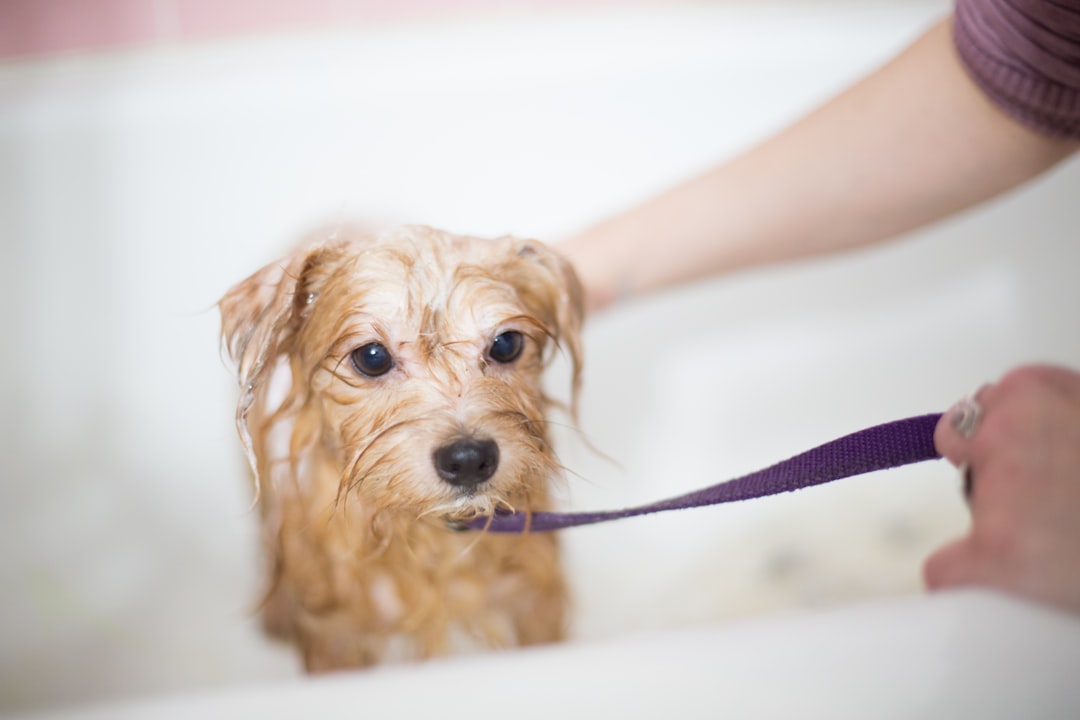
Rinsing takes longer on a double coat than it looks like it should.
Choosing a Shampoo and Conditioner
Always use a shampoo formulated for dogs, never a human product. Human shampoo is formulated for a different skin pH than a dog’s, and using it regularly can leave skin dry, flaky, or irritated. A gentle, soap-free formula is the safest default for everyday bathing.
Residue left behind from a poorly rinsed shampoo is a common, avoidable cause of post-bath itching. If your Sheepadoodle already deals with sensitive or reactive skin, our Sheepadoodle skin allergies guide covers ingredients and triggers worth avoiding beyond just bath products. The American Kennel Club’s guide to choosing a dog shampoo has more detail on ingredients worth seeking out or avoiding.
Look For
- Labeled specifically for dogs, soap-free or pH-balanced
- Oatmeal, aloe vera, or coconut oil for sensitive or dry skin
- Light or unscented formulas for dogs prone to irritation
Avoid
- Human shampoo or bar soap of any kind
- Heavy artificial fragrances or dyes
- Harsh sulfates that strip natural coat oils
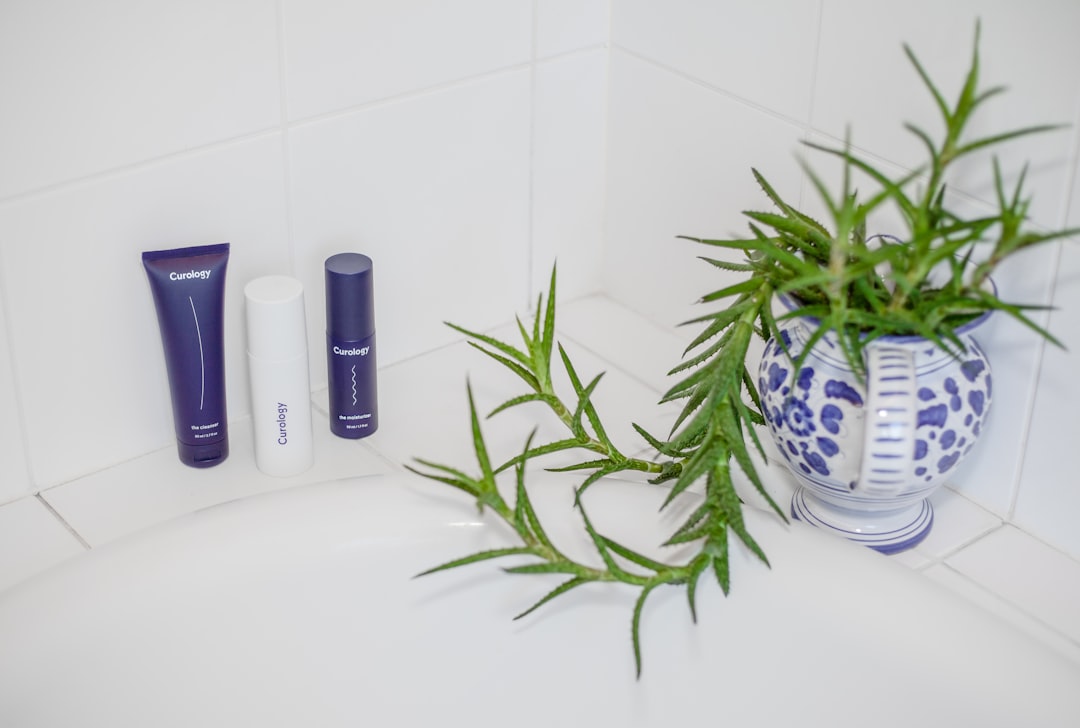
A dog-specific, soap-free formula is the safest default.
Washing Technique for a Thick Double Coat
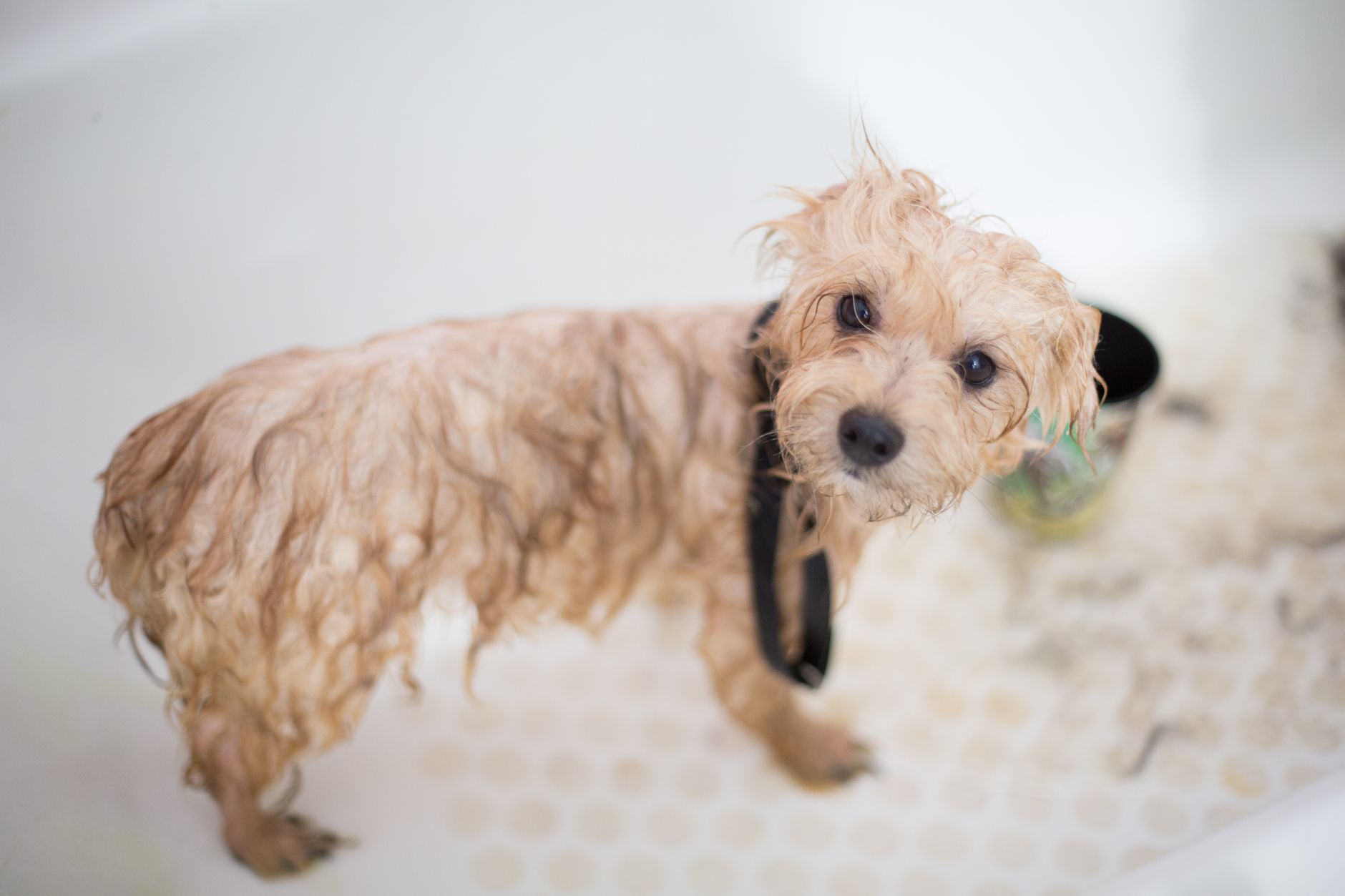
A dense undercoat can shed water on contact at first, so let it soak through before applying shampoo. Work the lather in with your fingertips in small circles, reaching down to the skin rather than just sudsing the topcoat.
Rinsing is the step most people rush, and it’s the one that matters most. Keep rinsing well past the point where the water looks clear, since a dense coat holds shampoo longer than it appears to.
Keeping Water Out of the Ears
Water trapped in the ear canal during a bath is a common, preventable contributor to ear infections, especially in a breed with heavy, hair-covered ears. A cotton ball placed loosely in the outer ear opening, or simply tilting the head away from direct spray, keeps most water out while washing and rinsing.
Bath-time water exposure is just one piece of ear health. Our Sheepadoodle ear care guide covers the full cleaning routine and infection signs to watch for.
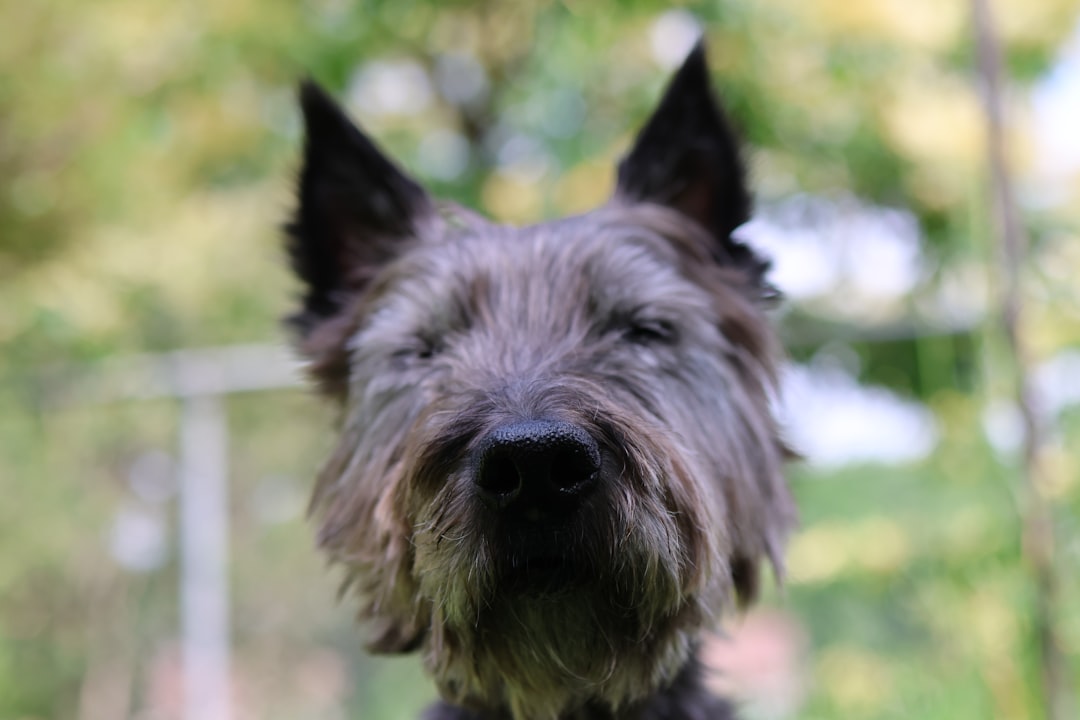
A loosely placed cotton ball in the outer ear opening helps keep bathwater out of the ear canal.
Drying Technique: Why You Can’t Just Air-Dry
Air-drying a thick double coat can take hours, and during that time damp undercoat trapped against the skin creates exactly the warm, moist environment where hot spots and bacterial or yeast growth take hold. It’s one of the more common ways a bath meant to clean the coat ends up causing a skin problem instead.
Towel off as much water as possible first, then finish with a blow dryer on a cool or low-heat setting, brushing as you go to lift the coat and let air reach the skin. The coat isn’t done until the undercoat is dry, not just the topcoat, which for a full-grown Sheepadoodle can take a while even with a dryer. The AKC’s guide to grooming double-coated dogs echoes the same point: thorough drying matters as much as the wash itself.
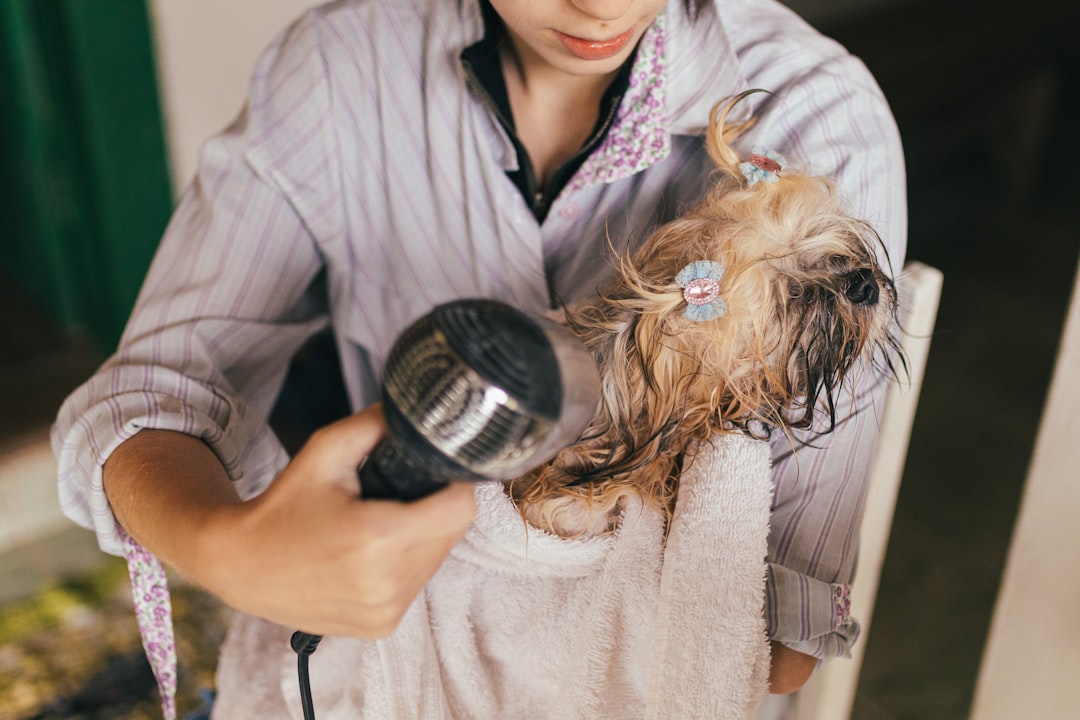
Drying isn’t finished until the undercoat is dry, not just the surface.
If you’re introducing bath time to a new puppy, short, calm sessions early on make a real difference in how cooperative your adult dog will be later. Our Sheepadoodle puppy training guide has more on building positive associations with handling from the start.
Questions About Coat Care Before Puppy Day?
We’re happy to talk through grooming routines and coat care as part of getting ready for your Sheepadoodle puppy.
Contact Sunshine SheepadoodlesFrequently Asked Questions
How often should I bathe my Sheepadoodle at home?
Every four to six weeks works for most Sheepadoodles, with more frequent baths during heavy shedding periods and less if skin gets dry or irritated.
Why is it so important to brush before a bath, not after?
Water tightens tangles around themselves, so any mat left in before bathing usually gets worse, not better, once it’s wet and towel-dried.
Can I use human shampoo on my Sheepadoodle in a pinch?
No. Human shampoo is formulated for a different skin pH than a dog’s and can leave the skin dry or irritated, even from occasional use.
How do I know when my Sheepadoodle’s coat is fully dry?
Check the undercoat close to the skin, not just the surface; it should feel dry and cool to the touch, not damp, especially around the legs, chest, and rear.
What’s the safest way to keep water out of my dog’s ears during a bath?
Place a cotton ball loosely in the outer ear opening or tilt the head away from direct spray while washing and rinsing around the face.
Is a high-velocity dryer really necessary, or will a regular blow dryer work?
A regular blow dryer on a cool or low-heat setting works fine for most home baths; a high-velocity dryer just speeds up drying a thick coat considerably if you bathe often.
For the broader coat-care picture beyond bath day, including brushing frequency and professional grooming schedules, see our Sheepadoodle grooming guide, and for cut styles that make coat maintenance easier between baths, check out our Sheepadoodle haircuts and grooming styles guide.