

Sheepadoodles and Bernedoodles are both shaggy, low-shedding Poodle mixes that show up on nearly every “best family dog” list. They can look surprisingly similar in photos, but the non-Poodle parent behind each one shapes real differences in temperament, size, and — importantly — health outlook.
If you’re comparing these two specifically, you’ve likely already ruled out the more common Goldendoodle comparison and want a closer look at two breeds that overlap even more in size and coat maintenance. The differences below are more subtle, but they’re worth understanding before you decide.
Sheepadoodle vs. Bernedoodle: At a Glance
| Category | Sheepadoodle | Bernedoodle |
|---|---|---|
| Non-Poodle Parent | Old English Sheepdog | Bernese Mountain Dog |
| Typical Coat | Black & white, shaggy | Black, white & tan tri-color, curly |
| Standard Size (adult) | 55–85+ lbs | 70–90 lbs |
| Mini Size (adult) | 25–45 lbs | 20–45 lbs |
| Typical Lifespan (standard) | 10–13 years | 7–12 years |
| Typical Lifespan (mini) | 13–16 years | 12–15 years |
| Temperament | Playful, protective, alert | Gentle, calm, easygoing |
| Energy Level | High, herding-instinct driven | Moderate |
Appearance & Coat Colors
This is often the fastest way to tell them apart. Sheepadoodles typically come in black and white, echoing the Old English Sheepdog’s classic look. Bernedoodles usually carry the Bernese Mountain Dog’s signature tri-color pattern — black, white, and rust/tan markings, often around the face, chest, and legs.
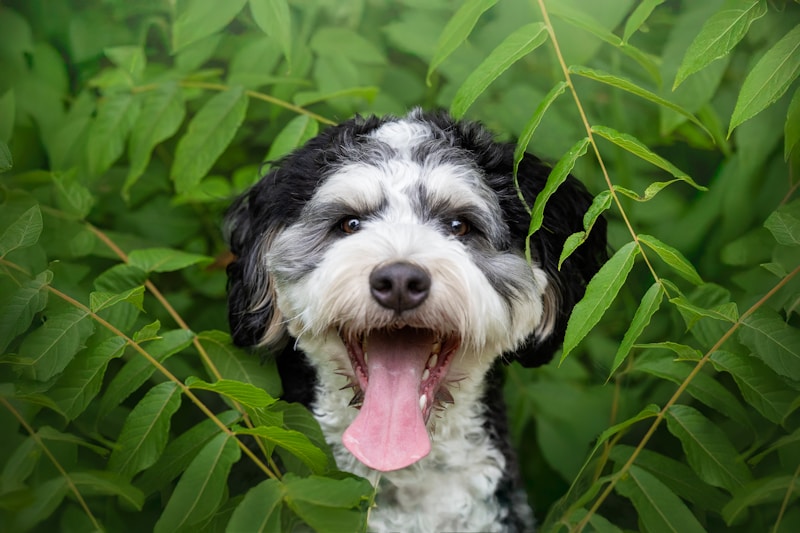
The tri-color coat is a Bernedoodle’s most recognizable trait, inherited directly from the Bernese Mountain Dog parent.
Temperament Differences
Sheepadoodle owners often describe their dogs as playful, protective, and a little silly, with real herding-driven energy that shows up as nudging, circling, or chasing movement. Bernedoodles tend to run gentler and calmer, reflecting the famously easygoing Bernese Mountain Dog temperament.
Neither is the “wrong” choice for an active household, but if you want a dog with more watchdog alertness and drive, Sheepadoodles usually lean that direction. If you want a calmer presence from an earlier age, Bernedoodles often get there sooner.
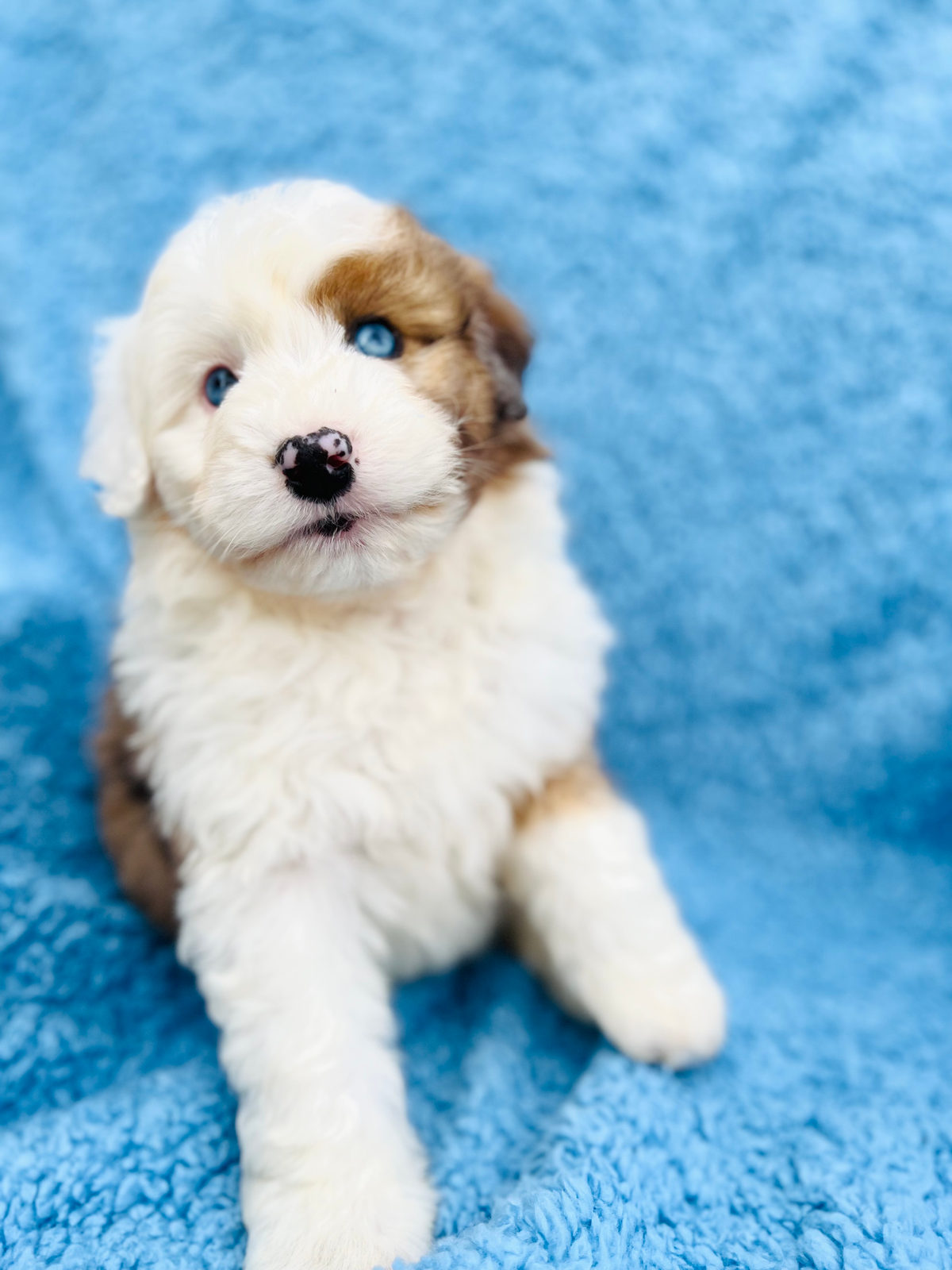
Sheepadoodles tend to bring more herding-driven energy and alertness than the typically calmer Bernedoodle.
Size Comparison
Both breeds come in mini and standard sizes, and the ranges overlap substantially. Standard Bernedoodles run slightly heavier on average, sometimes reaching 90+ pounds, while mini sizes in both breeds land in a broadly similar 20 to 45 pound range depending on the specific Poodle parent used.
Lifespan & Health: The Difference That Matters Most
This is where the two breeds diverge most meaningfully. According to the Bernese Mountain Dog Club of America, cancer is a major and well-documented health concern in the Bernese line, with certain cancers, including histiocytic sarcoma, showing a genetic basis in the breed. This is a significant reason standard Bernedoodles tend to have a shorter typical lifespan (7–12 years) than standard Sheepadoodles (10–13 years).
This doesn’t mean every Bernedoodle will face these issues — responsible breeders screen heavily for it — but it’s a real, documented consideration specific to this breed’s ancestry that’s worth knowing going in. Sheepadoodles carry their own considerations too, including hip dysplasia risk from the Old English Sheepdog side, which our Sheepadoodle lifespan and health guide covers in more detail.
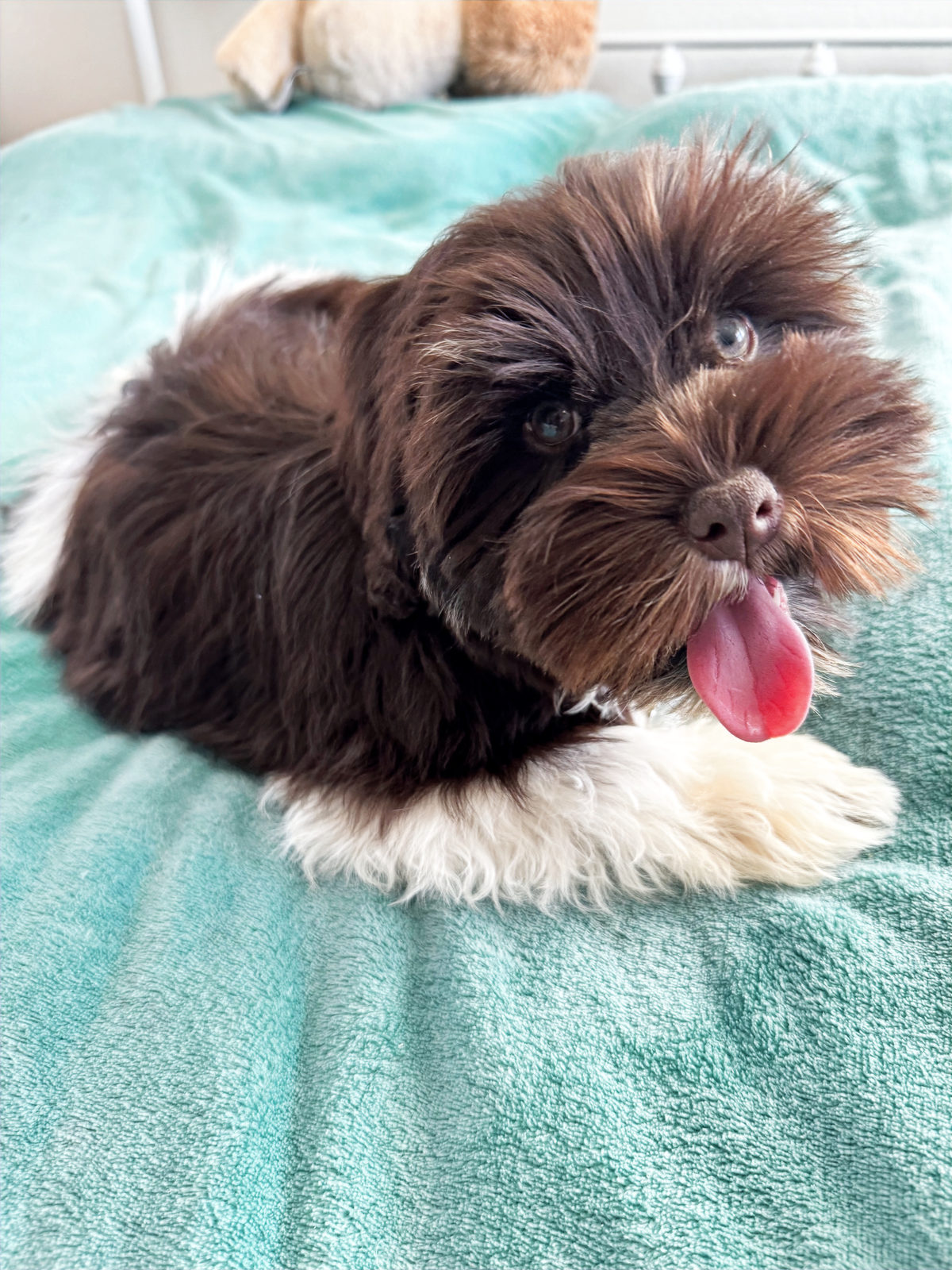
Whichever breed you’re considering, ask directly about the specific health screening done on both parents.
Grooming Needs
Both breeds need comparable grooming commitments: daily-to-frequent brushing, and professional grooming roughly every 6 to 12 weeks. Neither is shed-free, and both benefit from the same core toolkit — slicker brush, metal comb, and a high-velocity dryer to prevent post-bath matting. Our Sheepadoodle grooming guide covers tools and technique in detail.
Training & Trainability
Both breeds inherit strong trainability from their Poodle genetics, and both respond best to positive reinforcement. Sheepadoodles’ herding instinct means early redirection of nipping and chasing behaviors matters more in the first several months. Bernedoodles, with their calmer disposition, are sometimes described as slightly easier for first-time owners specifically because there’s less instinct-driven behavior to actively manage.
That said, “easier” doesn’t mean “lower maintenance” overall — both breeds are intelligent and need consistent mental stimulation regardless of temperament differences.
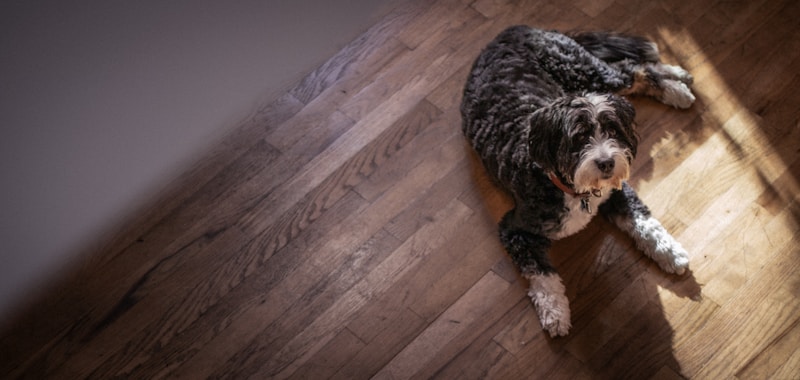
Bernedoodles are often described as easier for first-time owners due to their generally calmer disposition.
Cost & Availability Considerations
Pricing for both breeds varies widely by region, breeder reputation, coat color/pattern rarity, and health testing depth — there’s no single “standard” price across the doodle world for either breed. What matters more than comparing sticker prices between breeds is comparing what’s actually included: health testing documentation, early socialization, and ongoing breeder support. A lower price with none of that is rarely the better value.
Which One Fits Your Lifestyle?
Consider a Sheepadoodle If
- You want a more alert, watchful family companion
- You like the classic black-and-white sheepdog look
- You’re prepared for herding-driven energy in puppyhood
Consider a Bernedoodle If
- You want a calmer temperament from an earlier age
- You’re drawn to the tri-color coat pattern
- You’ve researched the breed’s cancer risk and are comfortable with it
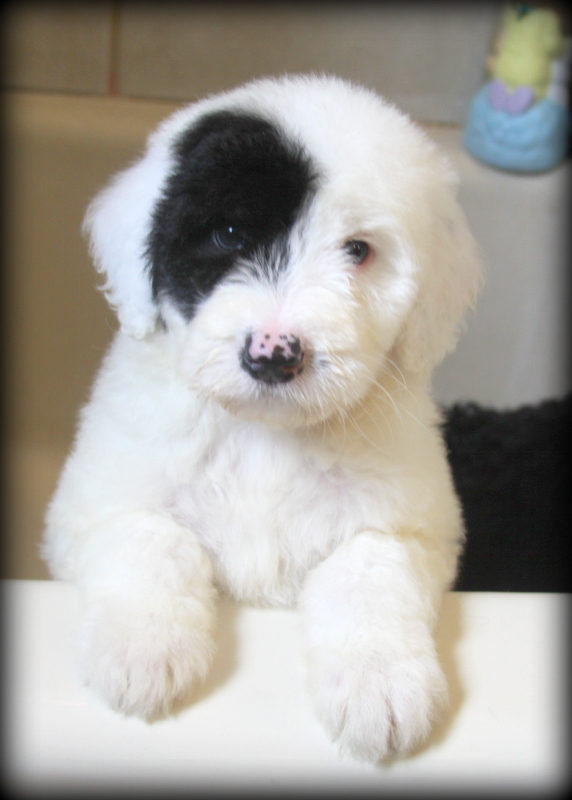
Whichever breed you choose, temperament fit and health testing matter more than coat pattern alone.
Meet a Sheepadoodle in Person
The best way to know if this breed fits your family is to spend time with one. See our current litters and reach out with questions.
View Available PuppiesFrequently Asked Questions
Do Bernedoodles really have a shorter lifespan than Sheepadoodles?
On average, yes, particularly at the standard size. This is largely tied to the Bernese Mountain Dog’s documented predisposition to certain cancers. Responsible breeders screen heavily for this, but it remains a meaningful consideration.
Which breed is calmer, a Sheepadoodle or a Bernedoodle?
Bernedoodles are generally described as calmer and gentler, reflecting the easygoing Bernese Mountain Dog temperament. Sheepadoodles tend to bring more energy and herding-driven alertness, especially as puppies and adolescents.
Are Sheepadoodles or Bernedoodles bigger?
Standard Bernedoodles run slightly heavier on average, sometimes exceeding 90 pounds, while standard Sheepadoodles typically top out around 85 pounds. Mini sizes in both breeds overlap significantly.
Do both breeds shed the same amount?
Both are considered low-shedding thanks to their Poodle genetics, and shedding in either breed depends more on generation (F1 vs. F1B) and individual coat type than on which breed you choose.
Curious how Sheepadoodle temperament compares in more depth? See our Sheepadoodle temperament guide, or explore the Sheepadoodle vs. Goldendoodle comparison if you’re weighing a third option.
Leave a Reply