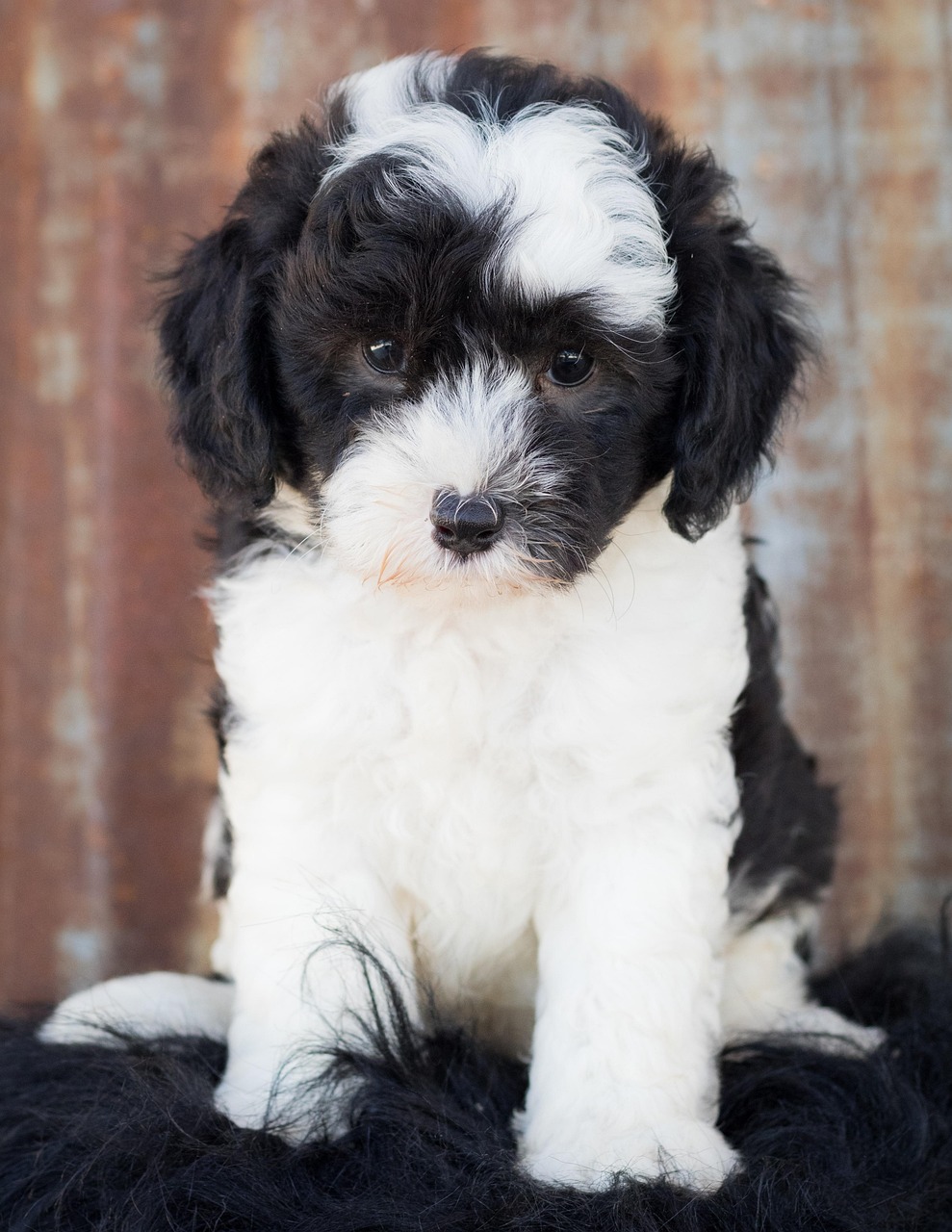
Ask five Sheepadoodle owners to describe their dog’s coat and you’ll likely get five different answers — black and white, phantom, tuxedo, merle, gray. Here’s what these terms actually mean, how a puppy’s adult coat color is determined, and why that adorable black-and-white puppy coat often isn’t permanent.
The Most Common Sheepadoodle Colors
Black and white is by far the most common Sheepadoodle coloring, inherited directly from the Old English Sheepdog side of the pedigree. Most puppies are born with a bold, high-contrast black-and-white coat, though the specific pattern of that black and white varies quite a bit from dog to dog.
Gray, silver, and blue-toned coats are also common, but here’s the detail that surprises a lot of new owners: many of these dogs weren’t born that color. A genuine “fading gene,” inherited from the Poodle side, gradually lightens black pigment over the first one to three years of life, so a puppy that looked jet black and white at eight weeks can mature into a soft silver-gray and white adult.
| Color | Description | Common in This Breed? |
|---|---|---|
| Black & white | Bold black patches on a white base, or the reverse | Very common |
| Gray/silver & white | Often a faded result of black pigment lightening with age | Very common |
| Solid black | Little to no white patching | Less common |
| Red/apricot & white | Warmer tones from certain Poodle lines | Uncommon |
| Merle | Mottled, patchy patches of diluted and solid color | Rare, and controversial — see below |
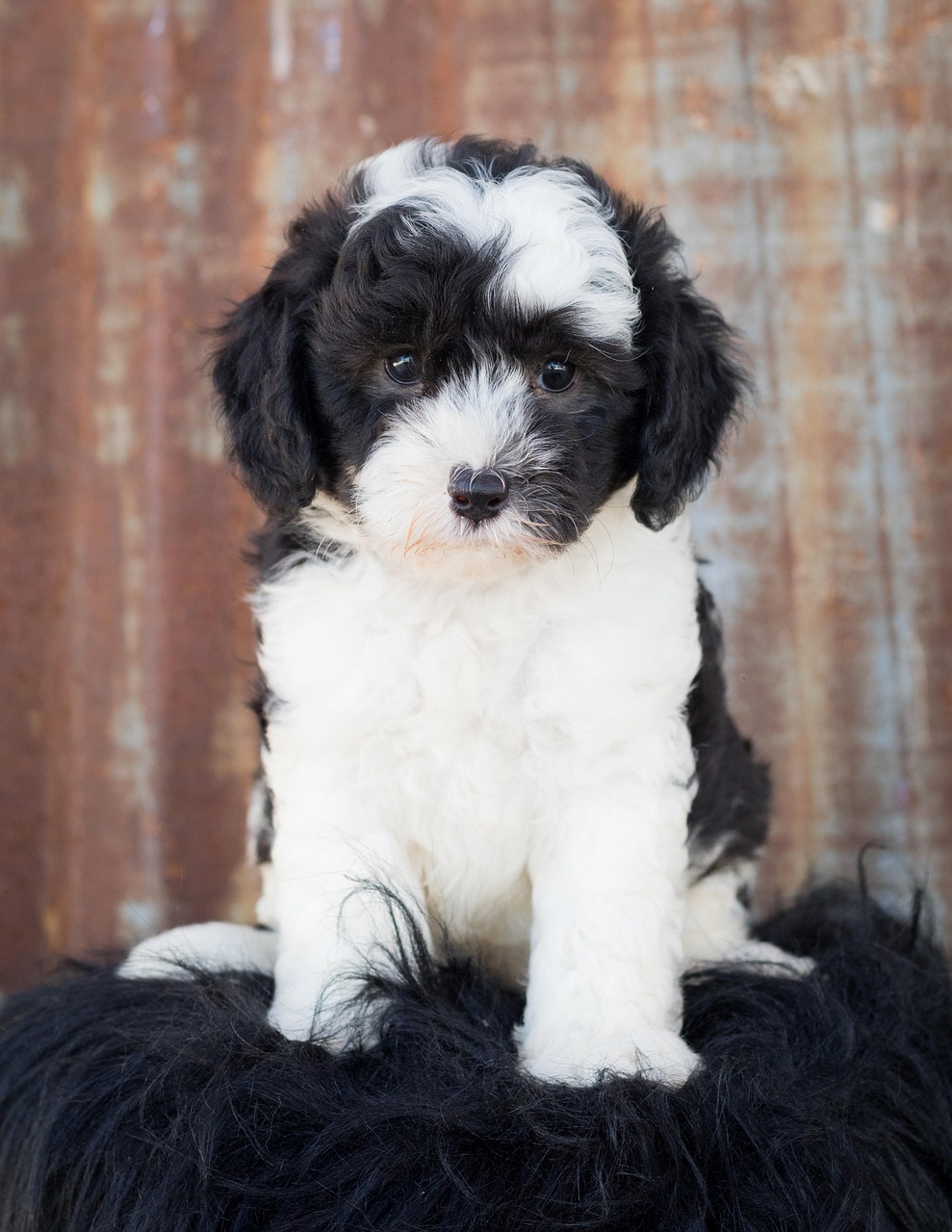
A bold black-and-white puppy coat is the classic Sheepadoodle look, though it doesn’t always stay this dark.
Understanding Coat Patterns
Beyond color itself, breeders and owners use specific terms to describe how that color is distributed across the body. These pattern names apply across most doodle breeds, not just Sheepadoodles, so you’ll see the same vocabulary if you research Bernedoodles or Goldendoodles too.
| Pattern | What It Looks Like |
|---|---|
| Tuxedo | A solid base color with white confined to the chest, chin, muzzle, and paws, resembling formal wear |
| Phantom | A solid background color with defined patches of a second color above the eyes, on the muzzle sides, chest, and legs |
| Parti | Roughly 50/50 split between two colors, distributed in larger patches |
| Merle | Mottled, marbled patches of diluted color against a solid background |
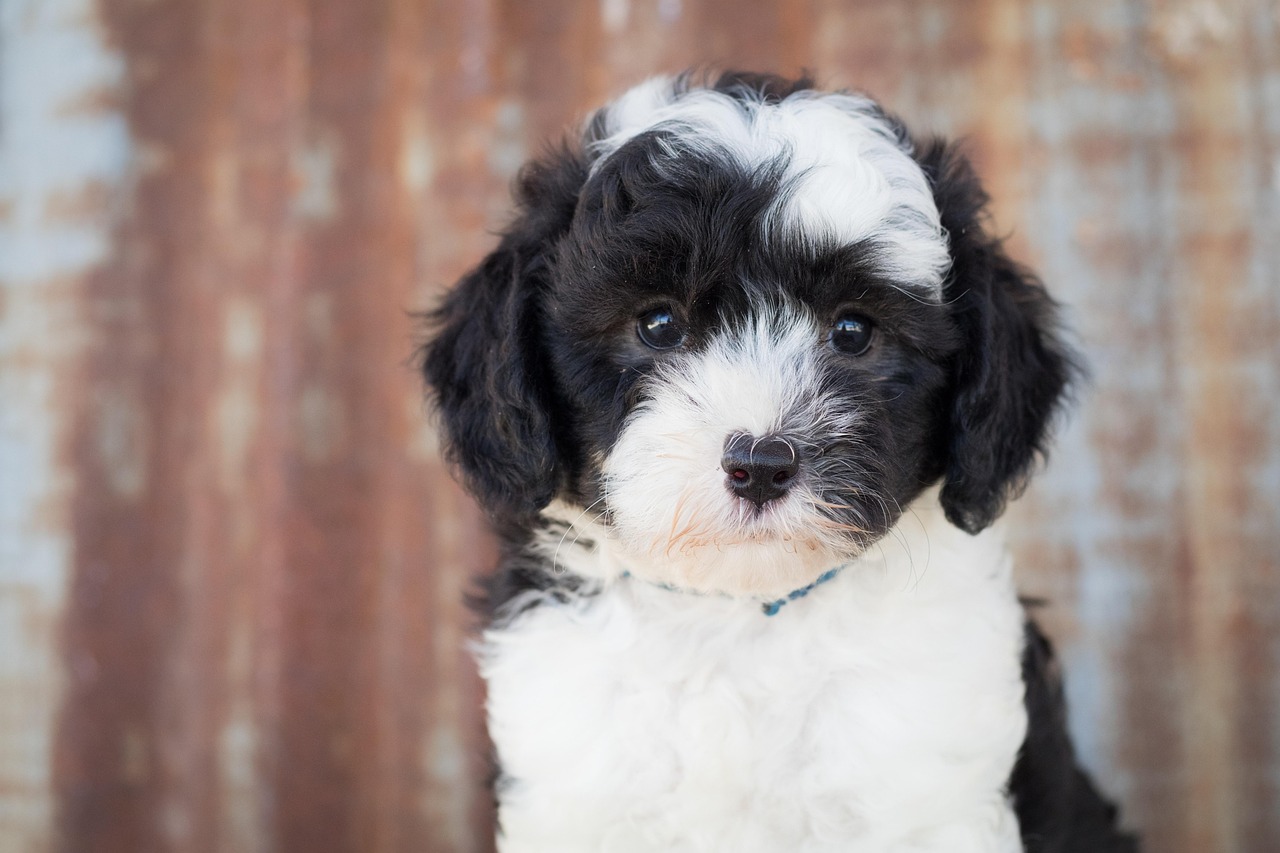
A tuxedo pattern keeps white confined to the chest, chin, and paws against a solid base color.
What Actually Determines Coat Color
Coat color isn’t random. It’s governed by specific genes inherited from both the Old English Sheepdog and Poodle sides of the pedigree, controlling pigment type, distribution, and intensity. A puppy’s specific coloring depends on which combination of alleles it inherits from each parent, which is why littermates from the same pairing can still look noticeably different from one another.
This is also why a responsible breeder can describe likely outcomes for a litter, but can’t guarantee an exact color or pattern for any individual puppy ahead of time. Genetics work probabilistically, not on demand.
It’s worth understanding the basic concept, even without getting into the full genetic vocabulary. Every puppy inherits one set of color-related genes from its Old English Sheepdog-line parent and one from its Poodle-line parent. Depending on which specific versions of those genes each parent carries and passes on, the resulting combination determines base color, whether white patching appears, and where that patching shows up on the body. Two puppies from the exact same litter can end up looking quite different from each other simply because they inherited a different combination from the available options.
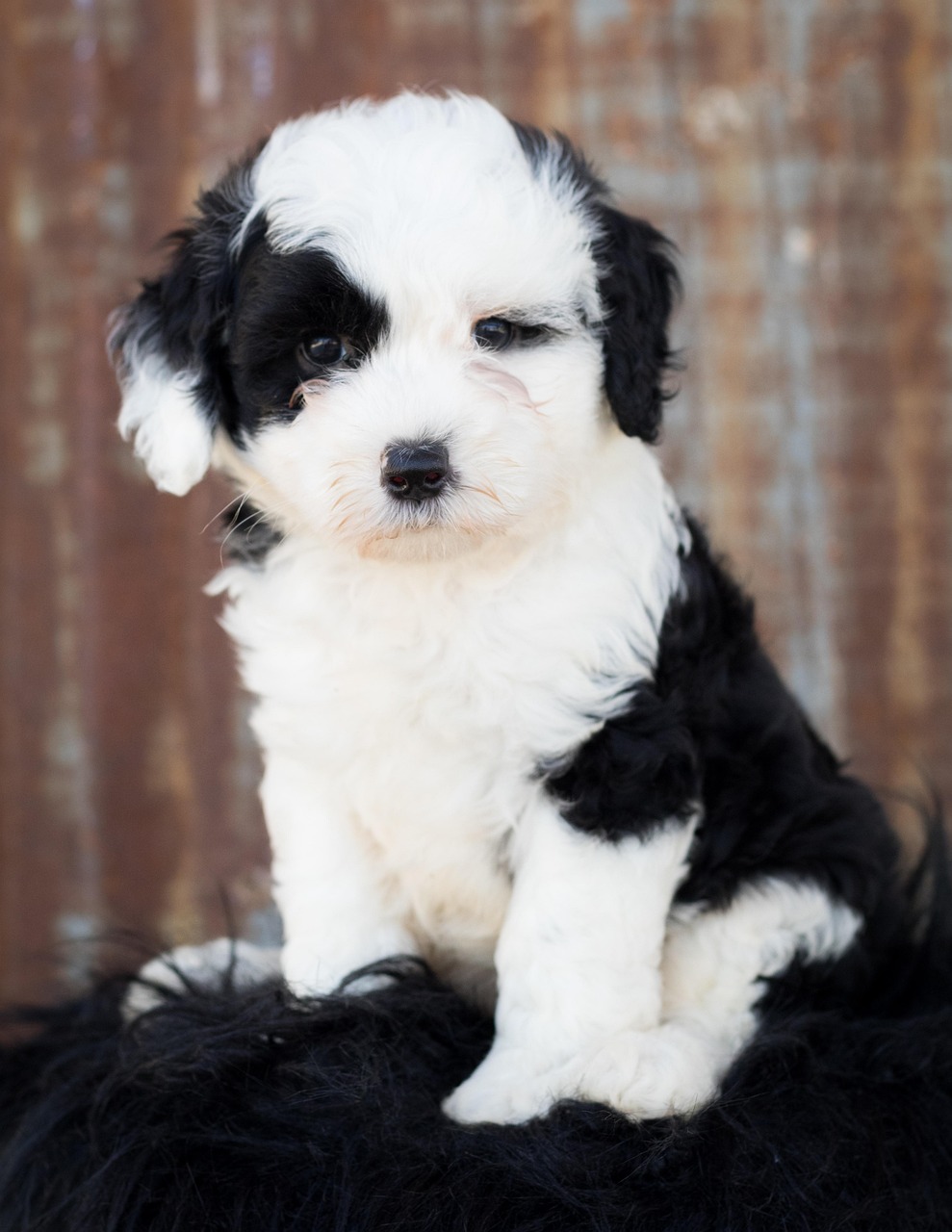
Phantom markings show up as defined patches of a second color in predictable spots — above the eyes, muzzle, chest, and legs.
The Merle Question
Merle deserves its own honest section, because it’s both visually striking and genuinely more complicated than other coat patterns. Merle isn’t a naturally occurring color in either purebred Old English Sheepdogs or most Poodle lines, so a “merle Sheepadoodle” typically traces back to a Poodle ancestor carrying the merle gene from outside the breed’s usual color range.
According to the UC Davis Veterinary Genetics Laboratory, the merle gene is associated with a documented risk of hearing and vision abnormalities, particularly in dogs that inherit two copies of the gene from two merle parents. Reputable breeders who work with merle genetics test for the gene specifically and avoid merle-to-merle pairings for exactly this reason.
Researchers at the Texas A&M College of Veterinary Medicine, where the merle gene mutation was first identified in dogs, note that genetic testing is the only reliable way to confirm merle status in a breeding dog, since the visual coat pattern alone doesn’t always make it obvious. If a merle Sheepadoodle interests you, asking directly about the breeder’s testing practices is a reasonable and important question.
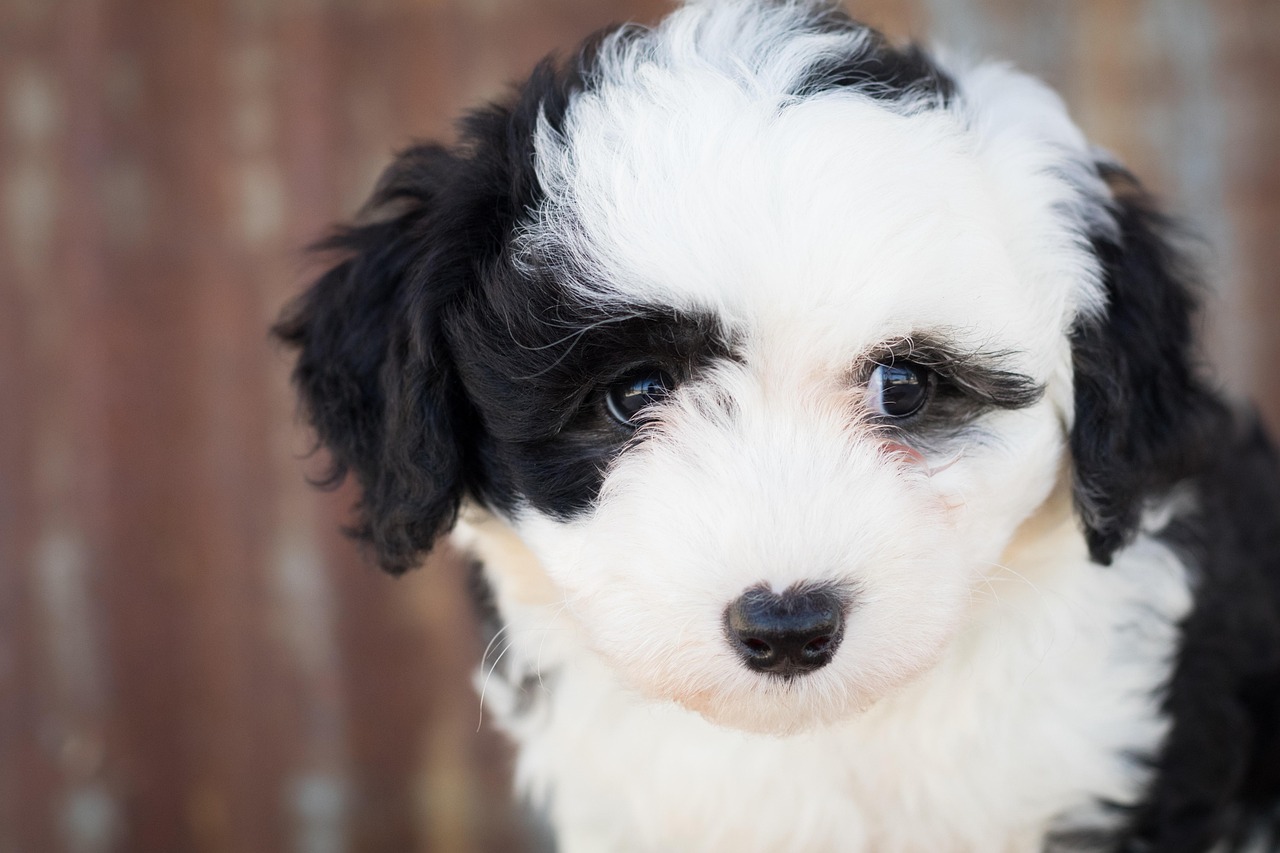
Facial markings are often where phantom and tuxedo patterns are easiest to spot in young puppies.
Why Puppy Coat Color Isn’t Final
What Tends to Fade
- Deep black patches lightening to gray or silver
- Rich apricot tones softening to cream
- Overall coat intensity mellowing with age
What Tends to Stay
- The basic pattern (tuxedo, phantom, parti) itself
- White markings on paws, chest, and chin
- Solid black in dogs without the fading gene
Most of this fading happens gradually between roughly six months and two years of age, which means the puppy coat color you fall in love with at pickup is genuinely a preview, not a guarantee, of the adult coat you’ll have for the following decade or more.
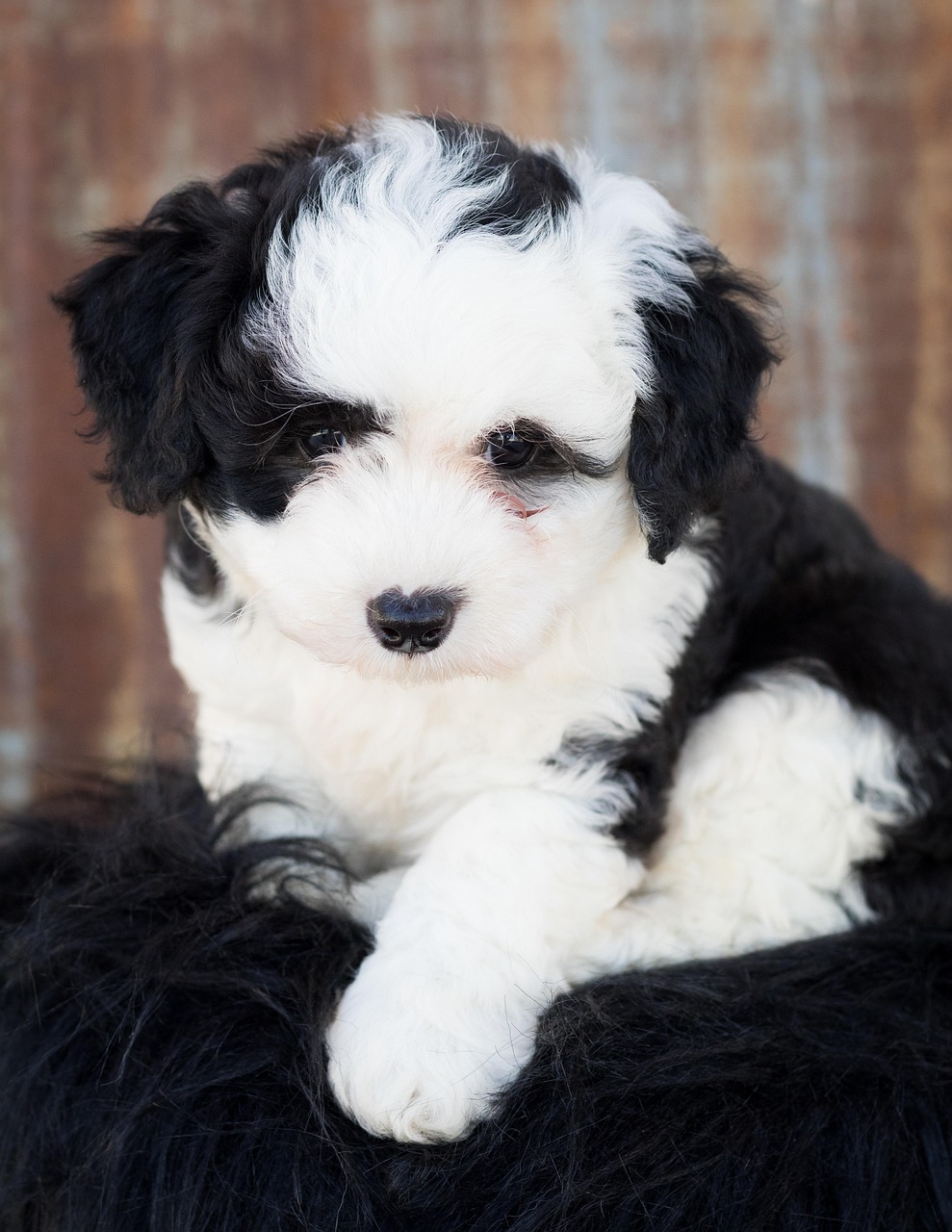
The pattern itself tends to stay consistent even as the underlying color mellows with age.
Coat Color and Grooming
Coat color doesn’t change grooming needs in any functional sense — texture and growth rate matter far more than color for maintenance. That said, lighter coats tend to show tear staining, dirt, and grass stains more visibly than darker ones, which is worth knowing if you’re choosing between two equally appealing puppies in a litter. Our grooming guide and eye care guide cover the maintenance side in more detail.
One practical note worth passing along: a fading coat can occasionally make old grooming photos or puppy pictures look like a completely different dog a year or two later. If you’re ever comparing a current photo of your adult Sheepadoodle to their puppy pictures and wondering whether something’s “off,” a shift from black to silver-gray is almost always the explanation, not a sign of a health issue.
Curious What Colors to Expect From a Litter?
We’re happy to talk through likely coat outcomes based on a specific pairing.
Contact Sunshine SheepadoodlesFrequently Asked Questions
Will my black Sheepadoodle puppy stay black?
Not necessarily. Many Sheepadoodles carry a fading gene that gradually lightens black pigment to gray or silver over the first one to three years of life.
What’s the difference between phantom and tuxedo patterns?
Tuxedo keeps white confined to the chest, chin, muzzle, and paws. Phantom includes defined secondary-color patches in specific spots, like above the eyes and on the sides of the muzzle.
Are merle Sheepadoodles safe to breed and own?
Individual merle dogs from properly tested, single-copy parents can be perfectly healthy pets. The health risk arises specifically from breeding two merle carriers together, which reputable breeders avoid through genetic testing.
Can I predict what color my puppy will be as an adult?
Not with certainty. Coat genetics are probabilistic, and features like the fading gene mean an adult coat can look noticeably different from the puppy coat you first see.
For more on this breed’s physical traits overall, see our shedding guide, and if you’re comparing coat types across similar breeds, our Sheepadoodle vs. Bernedoodle comparison covers that directly.
Leave a Reply