If you love the shaggy, bear-like look of the Old English Sheepdog but aren’t sure you can live with its coat, you’ve probably landed on the Sheepadoodle as an alternative. The Sheepadoodle is, after all, half Old English Sheepdog (OES) and half Poodle — so how different can the two really be?
Quite a bit. The Poodle half changes coat texture, shedding, size range, and even some behavior patterns in ways that matter for day-to-day life. Below we compare the two breeds honestly, point by point, using real breed-standard data rather than marketing claims.
Sheepadoodle vs. Old English Sheepdog: At a Glance
| Trait | Sheepadoodle | Old English Sheepdog |
|---|---|---|
| Breed type | Hybrid (OES × Poodle) | Purebred, AKC-recognized |
| Adult weight | Roughly 45–80 lbs (varies by generation/size line) | Roughly 60–100 lbs |
| Adult height | Around 15–23 inches, depending on size line | 21–22+ inches at the shoulder |
| Coat type | Single coat, wavy to curly | Dense double coat |
| Shedding | Low; loose hair is mostly trapped in the coat | Moderate; also mostly trapped in the coat |
| Grooming needs | Brushing several times a week; professional groom every 6–8 weeks | Daily brushing; professional groom every 6–8 weeks |
| Trainability | Generally quick to learn; food/toy motivated | Intelligent but can be independent-minded |
| Typical lifespan | 12–15 years | 10–12 years |
| Typical puppy cost | $2,000–$4,500+ from a reputable breeder | $1,500–$3,000+ from a reputable breeder |
Breed Origins: Purebred vs. Hybrid
The Old English Sheepdog is a purebred herding breed developed in England roughly two centuries ago to drive cattle and sheep to market. Every OES puppy from a health-tested litter carries generations of documented, predictable traits, as described in the American Kennel Club’s Old English Sheepdog breed profile.
The Sheepadoodle is a modern hybrid, first deliberately bred in the 1980s–1990s by crossing the OES with a Poodle. Because it’s a cross, individual puppies can lean more toward one parent breed or the other in coat, size, and temperament, which is why reputable breeders track litter history closely.
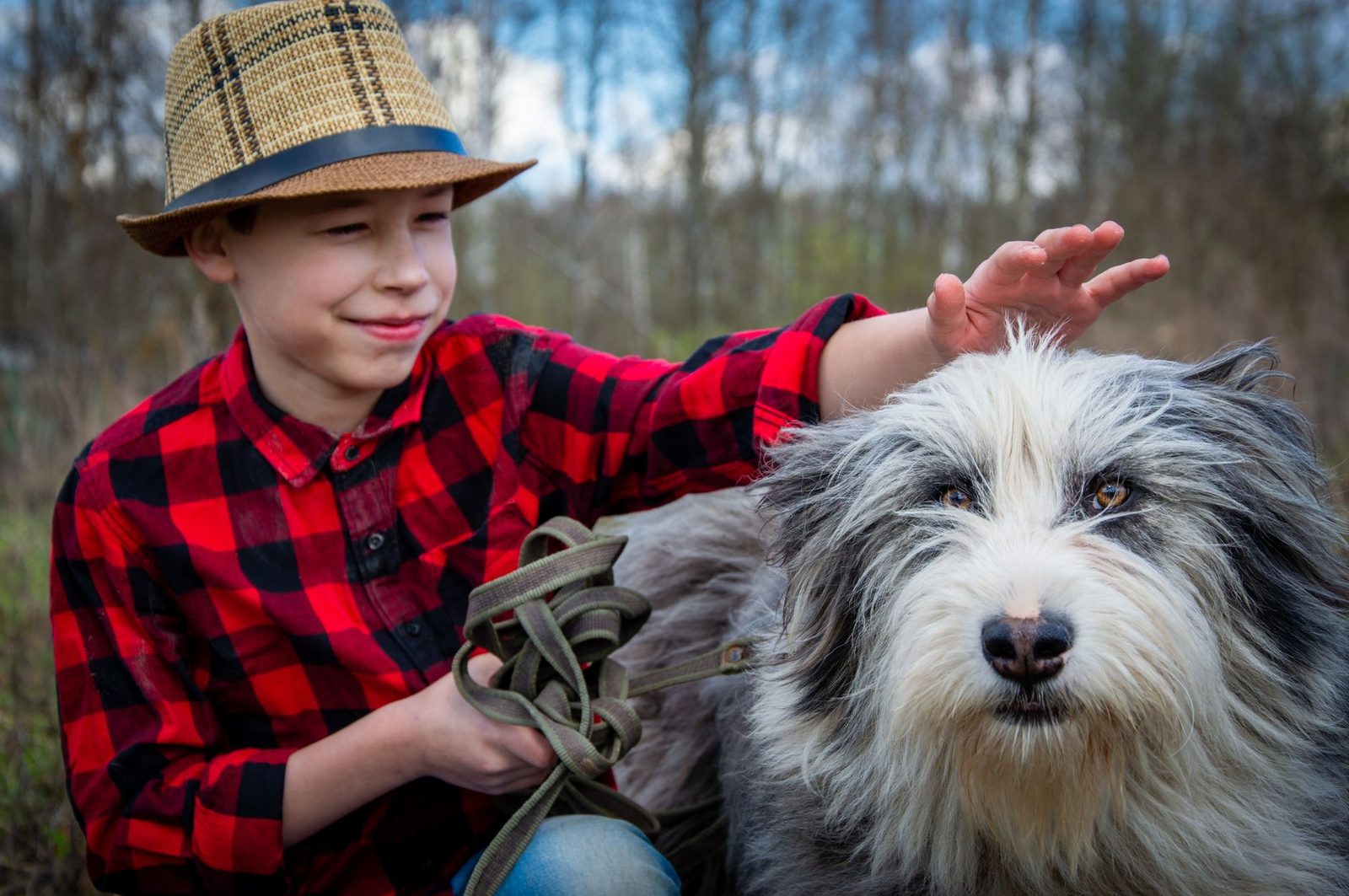
The Old English Sheepdog’s dense double coat is bred for outdoor work, not low-maintenance living.
Size & Growth
Old English Sheepdogs are a fairly uniform size: males typically stand at least 22 inches at the shoulder, with most adults landing in the 60–100 lb range. There’s not much variation to plan around.
Sheepadoodles have more range because Poodles come in Standard, Miniature, and Toy sizes. A Standard Sheepadoodle can approach OES size, while Mini and Micro lines stay considerably smaller. See our Sheepadoodle size guide and growth and weight chart for what to expect from each size line.
Coat, Shedding & Grooming: The Reality Check
This is where most comparison articles get sloppy. Old English Sheepdogs are often called “surprisingly light shedders,” but that’s misleading. OES dogs have a dense double coat that sheds a normal amount — the hair just gets caught in the long outer coat instead of falling to the floor, so daily brushing matters and skipped brushing turns into painful matting fast.
Sheepadoodles work the same way, just with less volume. A wavy or curly coat (especially in F1B and later-generation dogs) traps loose hair rather than shedding it visibly, which is why the breed has a low-shedding reputation. But “low-shedding” isn’t “low-maintenance” — trapped hair still has to be brushed out or it mats.
The practical difference: Sheepadoodle coats generally need brushing a few times a week rather than daily, and many owners find the texture easier to manage with a slicker brush and comb. Both breeds need a professional groom roughly every 6–8 weeks. See our grooming guide and guide to normal vs. concerning shedding. If allergies are the deciding factor, read are Sheepadoodles hypoallergenic first — neither breed is truly allergen-free.
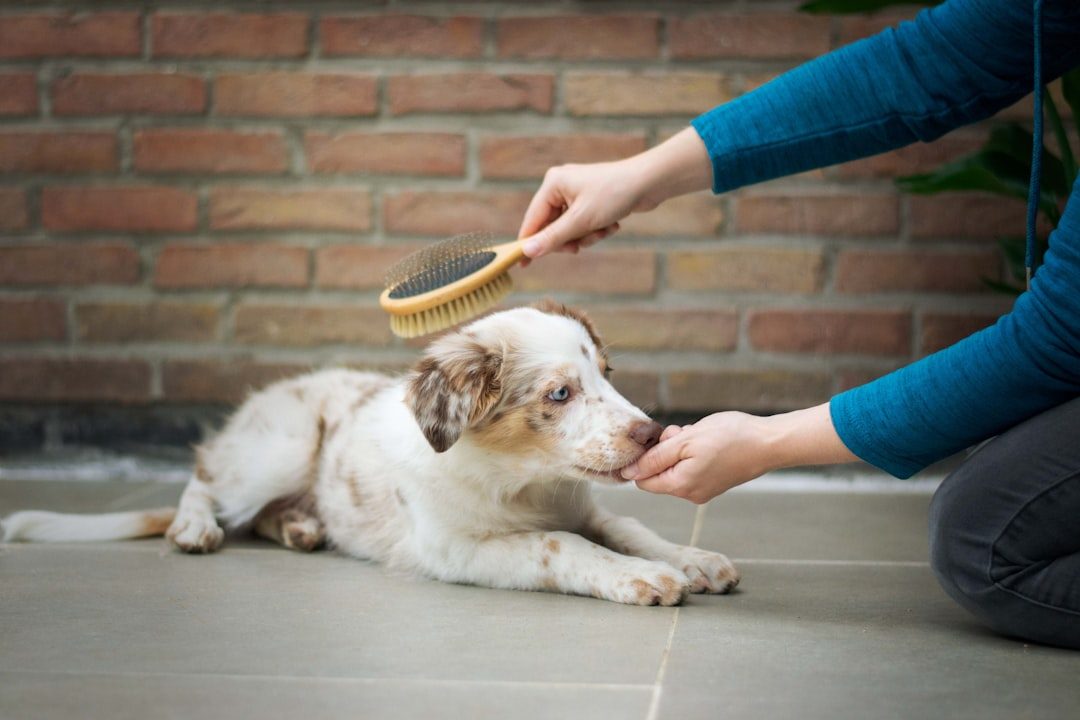
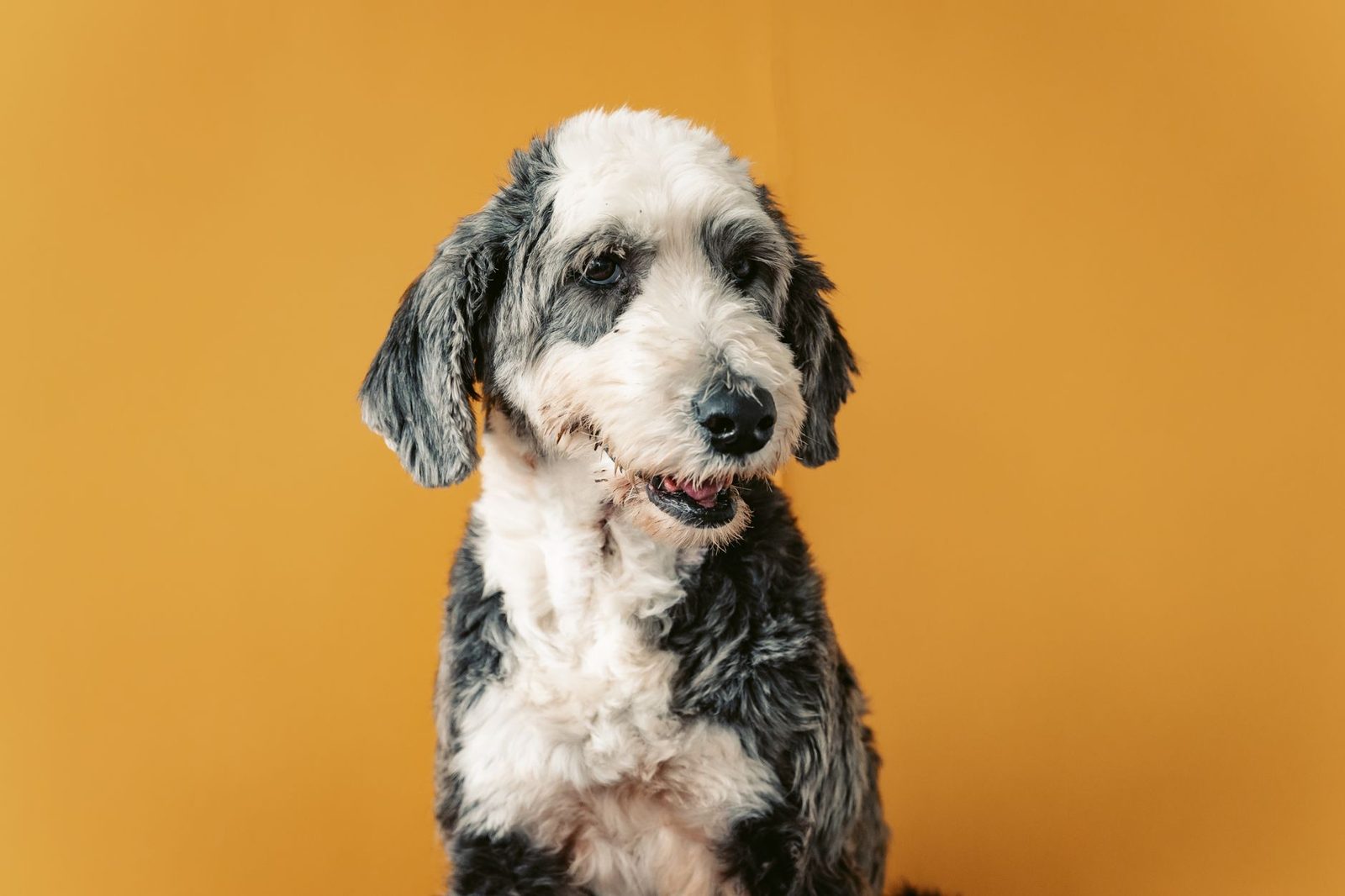
Sheepadoodle coats trap loose hair too — regular brushing prevents mats before they start.
Temperament & Family Life
Old English Sheepdogs are famously mellow and loyal, but they were bred to herd — some retain a strong instinct to herd kids or pets by bumping and nudging, and they can be vocal watchdogs. Without early socialization, some grow wary of strangers.
Sheepadoodles inherit that same herding instinct, but the Poodle influence tends to soften it and add a more eager-to-please streak. Most are affectionate, playful, and quick to bond with the whole family. Our Sheepadoodle temperament guide covers what to expect week to week, including the herding-nip behavior some puppies show early on.
Why some families choose a Sheepadoodle over an OES
- Lower-shedding coat that’s easier to keep off furniture and clothing
- Size options from Mini to Standard instead of one fixed size
- Often faster and more food/toy-motivated in training
- Slightly longer average lifespan
Why some families choose an OES over a Sheepadoodle
- Predictable purebred traits with no generational variation
- Well-documented, decades-old breed standard and health data
- Often available at a lower average purchase price
- A strong preference for the classic, all-natural shaggy look
Trainability & Energy
Both breeds are intelligent working dogs that need real mental engagement, not just a backyard to wander. OES dogs are capable learners but have an independent streak from their herding history, so training can take extra patience. Sheepadoodles tend to pick up commands faster thanks to the Poodle’s famous focus, which is part of why they suit first-time owners. Neither breed thrives left alone all day — see our exercise and enrichment guide for ways to keep a Sheepadoodle busy.
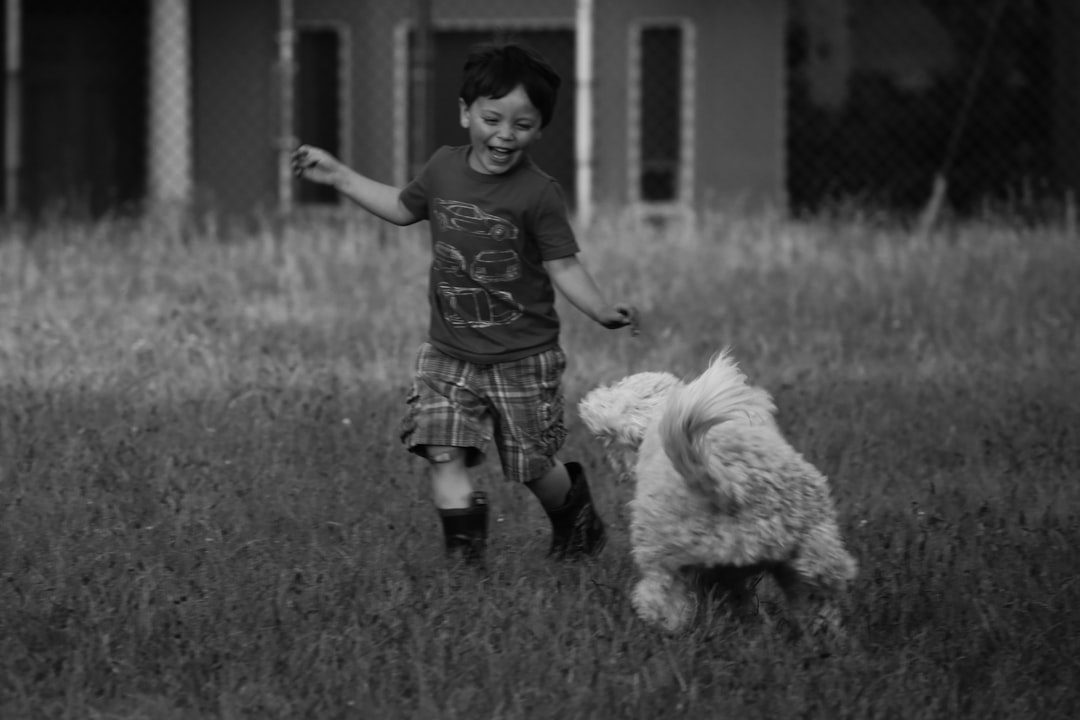
Both breeds bond closely with kids, though the Sheepadoodle’s temperament is generally gentler with less nudging and herding.
Health & Lifespan
Old English Sheepdogs are generally healthy with a typical lifespan of 10 to 12 years, but hip dysplasia is a well-documented concern — serious enough that the Old English Sheepdog Club of America requires OFA or PennHIP hip evaluations for CHIC certification, along with eye, thyroid, and DNA screening.
Sheepadoodles typically live a bit longer, around 12 to 15 years, and crossbreeding can lower the odds of inheriting any single recessive condition — sometimes called hybrid vigor. That said, a Sheepadoodle can still inherit hip dysplasia or other OES-linked conditions, which is why health-testing the parent dogs matters as much in a hybrid as a purebred. Our Sheepadoodle lifespan and health guide covers what to ask a breeder before you buy.
Cost: Puppy Price & Ongoing Care
Purchase price varies by region and breeder, but OES puppies from health-tested lines often run somewhat less than Sheepadoodles, since Sheepadoodle popularity and Poodle parentage add to demand. See our full Sheepadoodle puppy cost breakdown for current pricing factors.
Lifetime costs are closer than people expect, though. Both need a professional groom every 6–8 weeks, a large-breed diet, and benefit from pet insurance given the shared risk of hip issues — usually the biggest recurring expense either way.
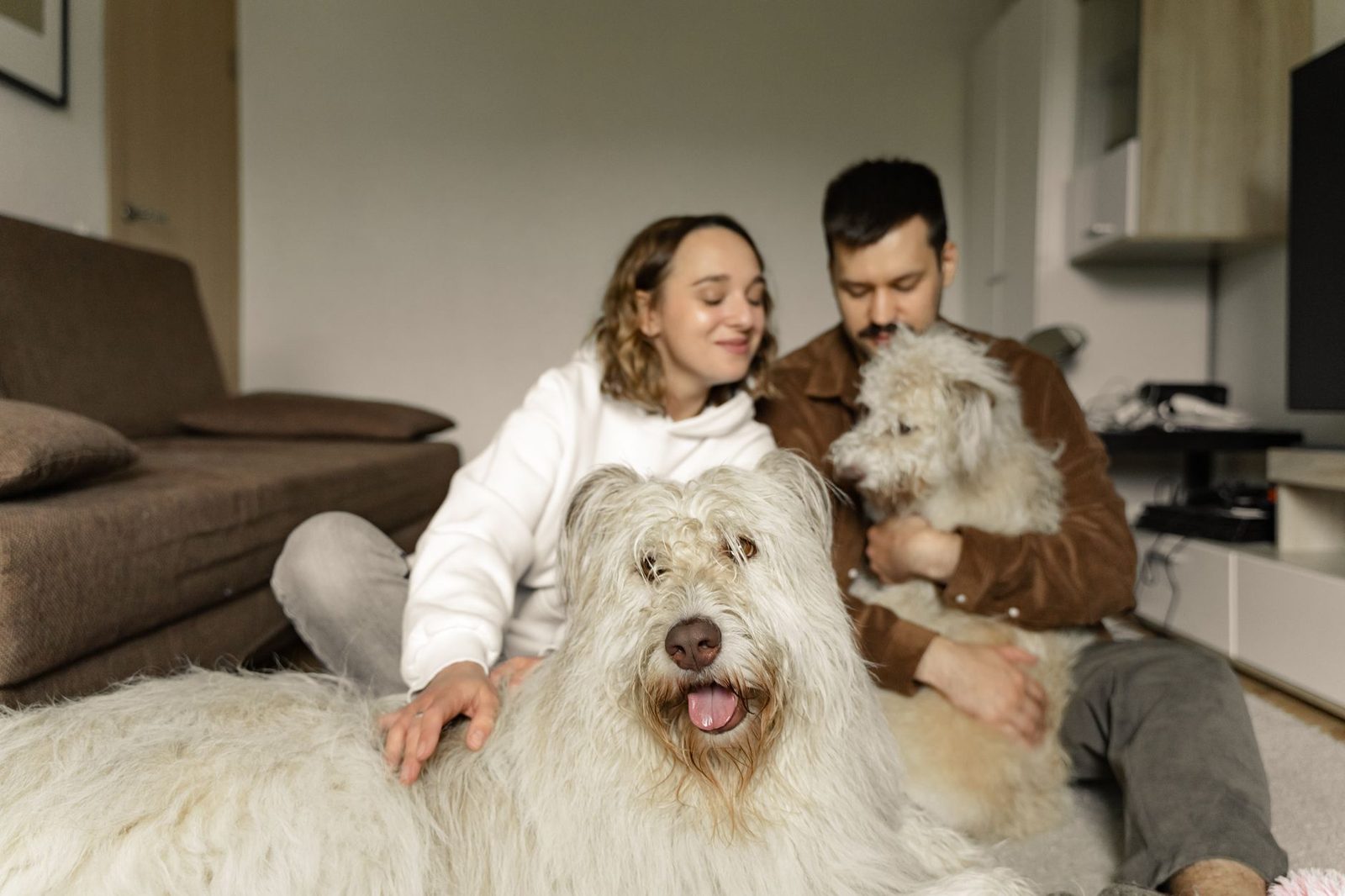
Both breeds are considered large dogs for veterinary and insurance purposes, with similar lifetime care costs.
Curious What a Sheepadoodle Puppy Is Really Like?
Come meet our current Sheepadoodle litters and see the coat, size, and temperament in person before you decide.
Contact Sunshine SheepadoodlesFrequently Asked Questions
Is a Sheepadoodle really less likely to shed than an Old English Sheepdog?
Generally yes, especially in wavy or curly-coated Sheepadoodles. But neither breed is a heavy floor-shedder — both trap loose hair in the coat, so the real difference is how much brushing each one needs, not how much hair ends up on the couch.
Are Sheepadoodles healthier than purebred Old English Sheepdogs?
Sheepadoodles often benefit from hybrid vigor, which can lower the odds of inheriting a specific recessive condition. However, a Sheepadoodle can still inherit hip dysplasia or other OES-linked conditions, so health testing the parent dogs matters for both breeds.
Which is easier to train, a Sheepadoodle or an Old English Sheepdog?
Most owners find Sheepadoodles a bit easier and faster to train, since the Poodle side adds focus and eagerness to please. OES dogs are just as intelligent but more independent-minded, so training takes more patience.
Do Sheepadoodles bark as much as Old English Sheepdogs?
OES dogs have a reputation as vocal watchdogs, especially without early socialization. Sheepadoodles can also bark when bored or under-exercised, but many owners report less watchdog-style barking overall. Our barking causes and solutions guide covers how to manage it.
Is an Old English Sheepdog cheaper to own than a Sheepadoodle?
Puppy price is often somewhat lower for an OES, but ongoing costs are very similar. Both breeds need frequent professional grooming, a large-breed diet, and monitoring for hip issues, so lifetime costs typically even out.
Which breed is better with kids?
Both are traditionally good family dogs when properly socialized. Sheepadoodles tend to have a gentler, less nudging temperament day to day, while a well-socialized OES is famously patient and loyal. Either way, always supervise young children with a large dog.
Still weighing a Sheepadoodle against its Old English Sheepdog parent breed? Browse our current available puppies, or reach out and we’ll help you find the right size and coat type for your family.